Free Printable Carb & Calorie Counter Guide – Tracking carbohydrates and calories helps many Americans manage weight, support diabetes care, or follow low-carb eating patterns. A free printable carb and calorie counter gives you a simple paper tool you can keep in the kitchen, take to the grocery store, or use without an app.
This resource page explains what these counters are, why they matter, how to use them, and where to find legitimate free printable versions from trusted sources.
What Is a Carb and Calorie Counter?
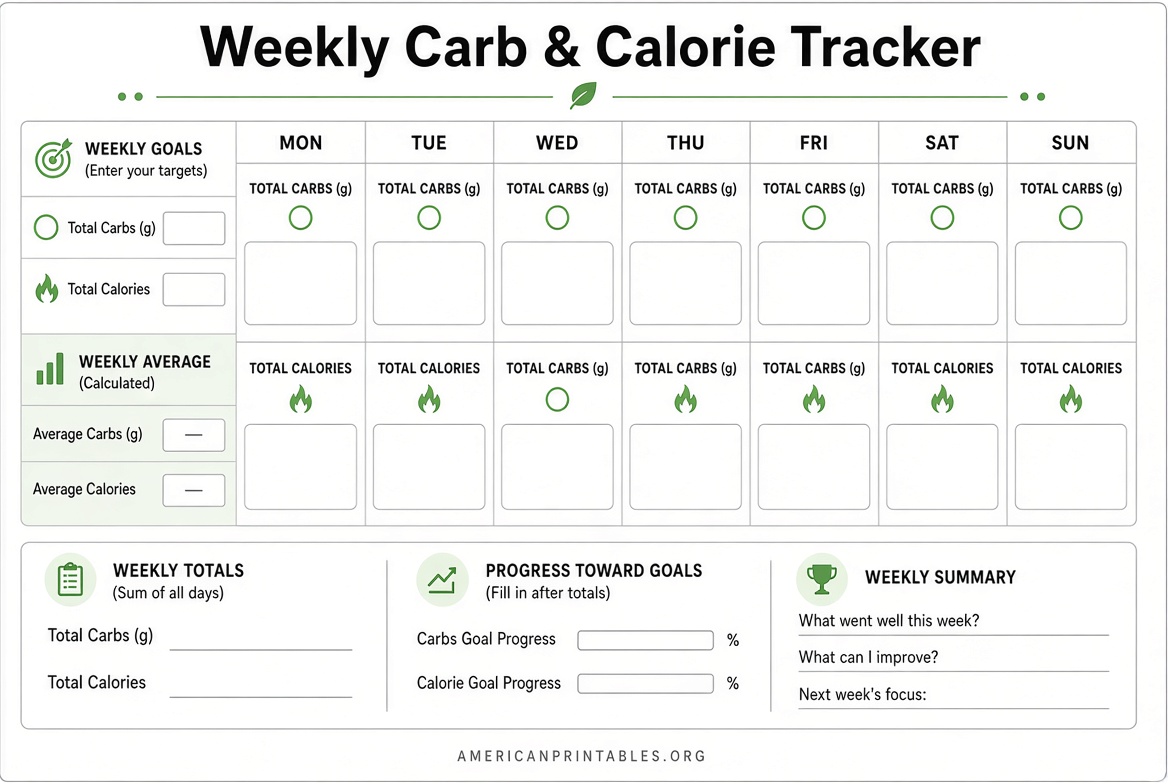
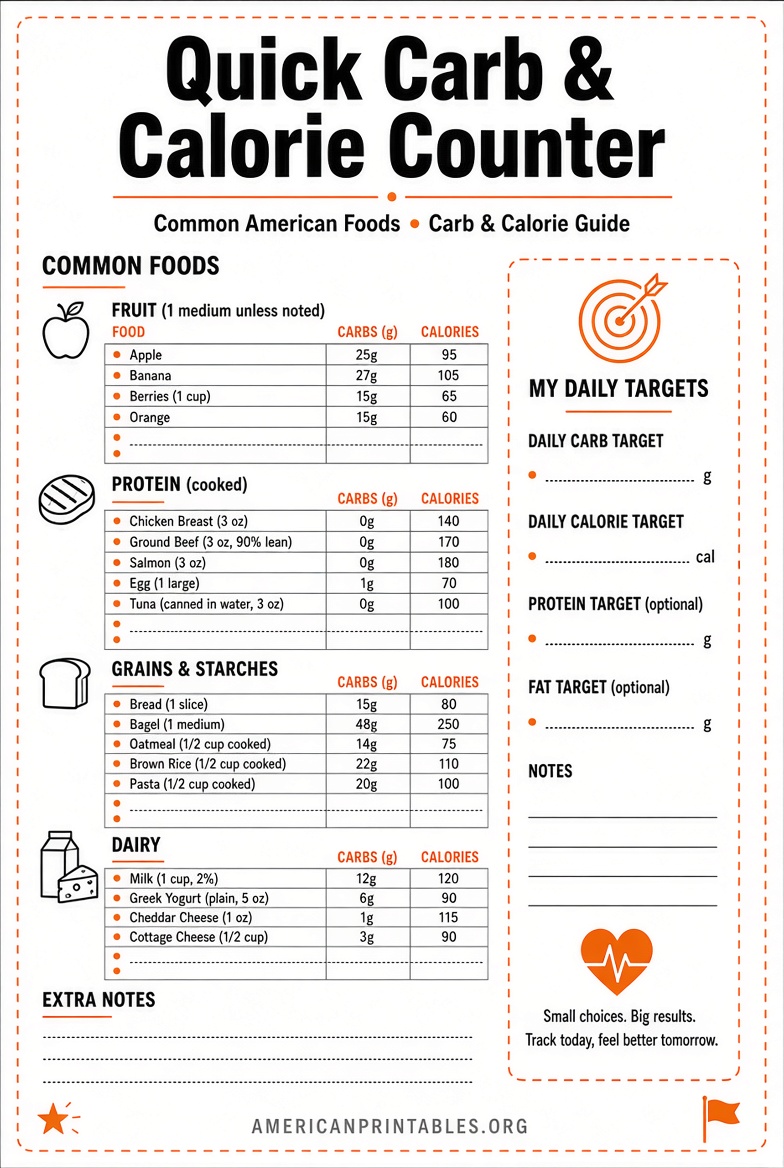
A carb and calorie counter is a chart, log, or tracker that lists common foods with their carbohydrate grams and calorie amounts per serving. Some focus mainly on net carbs (total carbs minus fiber), which is useful for low-carb or ketogenic approaches. Others track total calories along with protein, carbs, and fat.
Printable versions usually include:
- Food lists with standard serving sizes
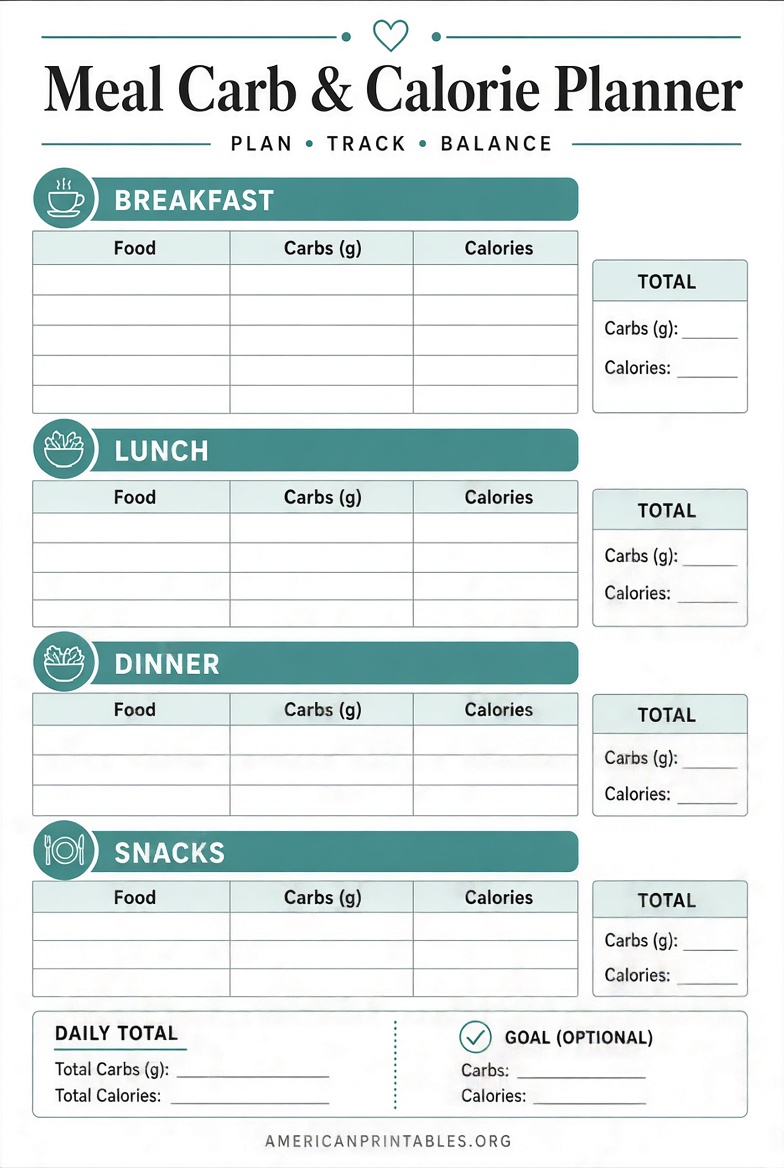
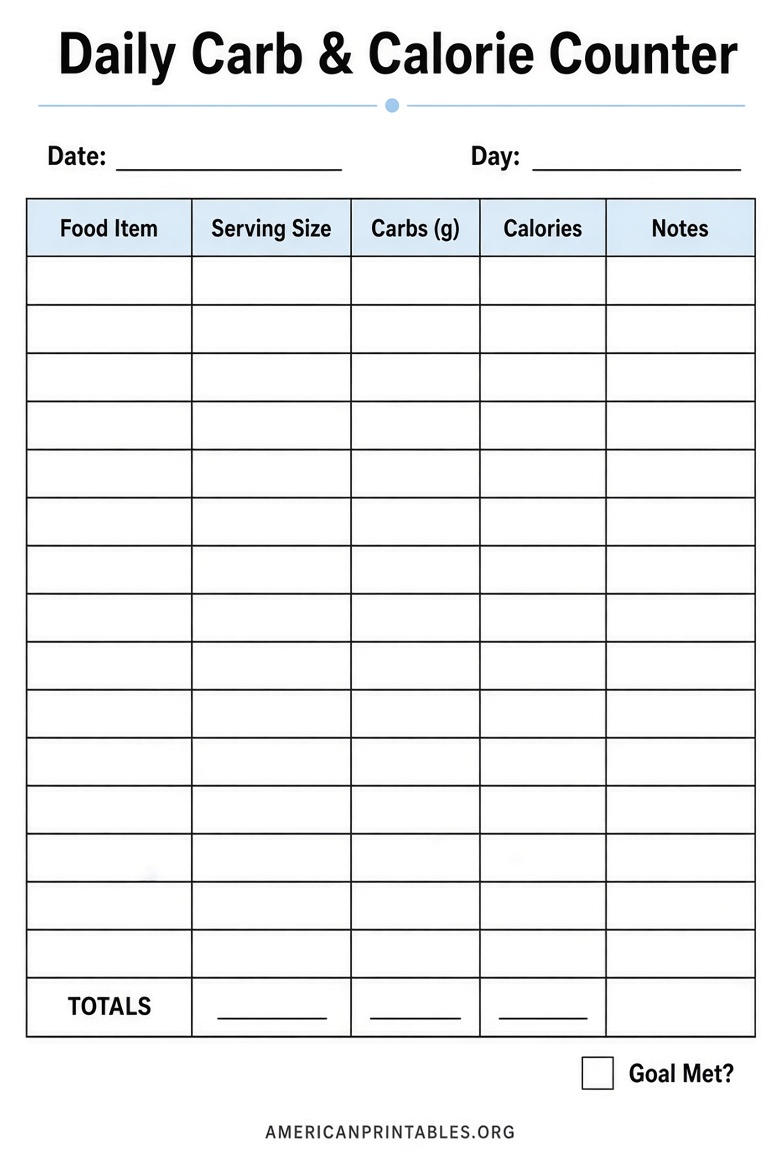
- Daily or weekly logging spaces for meals and snacks
- Space to total carbs and calories
These tools rely on data from sources such as the USDA FoodData Central database and nutrition labels.
Why Use a Free Printable Version?
Paper trackers work well when you prefer writing by hand, want to reduce screen time, or need a quick reference without internet access. Many people use them for meal planning, grocery shopping, or building awareness of portion sizes.
For people managing diabetes, consistent carb awareness supports steadier blood sugar. The Centers for Disease Control and Prevention notes that counting carbohydrates helps match food intake with insulin needs or other management strategies.
Printables are portable, customizable with a pen, and free of subscription requirements.
How to Use a Printable Carb and Calorie Counter?
- Choose a tracker that matches your goal (simple calorie log, carb chart, or full macro tracker).
- Print on standard US Letter paper.
- Record foods with realistic serving sizes (use measuring cups, a food scale, or the hand method for estimates).
- Add up daily totals and compare them to your personal targets.
- Review patterns weekly rather than focusing on single days.
One carb serving is commonly defined as about 15 grams of carbohydrate. Non-starchy vegetables are often lower in carbs and can be used more freely in many plans. Always confirm targets with a healthcare provider or registered dietitian, especially if you have diabetes or other medical conditions.
Where to Get Legitimate Free Printables?
Here are reliable places to download free printable carb and calorie resources. All links open in a new tab and use nofollow.
- Calorie and nutrition tracker template (includes spaces for calories, protein, carbs, fat, and fiber plus water intake): Download the free PDF or PNG from VectorDad. No sign-up required.
Free Calorie & Nutrition Tracker PDF - Multiple free calorie counter sheet designs: PrintBlame offers 16 different printable calorie tracker PDFs. Click any design image to open and save the PDF. Some versions also support macro tracking (protein, carbs, fat).
Free Calorie Counter Sheets - Official CDC guidance on carb counting: Clear explanation of carbohydrate types, how they are measured, sample menus, and serving examples. Useful reference alongside any printable.
CDC Carb Counting Page - Atkins Carb Counter PDF: Comprehensive net carb counts for many common foods, organized by category. Helpful for low-carb or Atkins-style plans.
Atkins Carb Counter PDF
These sources provide direct downloads or clear official information. Avoid sites that require payment after promising free files or that look unreliable.
Free Printable Carb & Calorie Counter Guide
Tips for Accurate Tracking
- Check Nutrition Facts labels for packaged foods.
- Use the USDA FoodData Central search tool for whole foods when needed.
- Measure portions regularly at first so estimates become more accurate.
- Include beverages, oils, and condiments—these add up quickly.
- Pair tracking with overall healthy patterns such as plenty of non-starchy vegetables, lean proteins, and fiber-rich choices.
Brief FAQ
Are free printable carb and calorie counters accurate?
They are as accurate as the data sources they use (USDA values, labels, or brand information). Serving size consistency is the biggest factor in real-world usefulness.
Do I need to track every day forever?
Many people track daily for a few weeks to learn portions and patterns, then shift to less frequent check-ins.
Can these help with diabetes management?
Carb awareness is a standard tool recommended by health authorities, but individual needs vary. Work with your healthcare team for personalized advice.
Is net carbs the same as total carbs?
No. Net carbs subtract fiber (and sometimes sugar alcohols). Total carbs include everything. Choose the method that matches your eating plan.
A free printable carb and calorie counter is a practical, low-tech way to stay aware of what you eat. Download one of the resources above, print a few copies, and start logging. Combine it with reliable information from sources like the CDC and consistent habits for the best results. Always consult a healthcare professional before making significant diet changes.