Free Printable Cooking Temperature Chart – A free printable cooking temperature chart is one of the simplest tools you can keep in a U.S. kitchen. It shows the safe minimum internal temperatures recommended by federal food-safety guidelines so you can cook meat, poultry, seafood, and leftovers without guessing. Color and texture alone are not reliable indicators that harmful bacteria have been killed. A chart plus an instant-read thermometer removes the uncertainty.
These charts are especially useful for busy home cooks, backyard grillers, meal-preppers, and anyone who wants to follow current USDA and FoodSafety.gov recommendations. Print one, laminate it if you like, and post it near the stove or fridge for quick reference.
Why Safe Cooking Temperatures Matter?
Bacteria such as Salmonella, E. coli, and Listeria can be present on raw foods. Cooking to the correct internal temperature for the required time (and resting certain meats afterward) is the most effective way to reduce the risk of foodborne illness. Federal guidelines list minimum temperatures measured in the thickest part of the food, away from bone or fat.
Key points for U.S. home cooks:
- Always use a calibrated food thermometer.
- Some whole cuts of meat need a short rest after cooking so the temperature can continue to rise and juices redistribute.
- Leftovers and reheated foods have their own target temperatures.
- The “danger zone” where bacteria multiply fastest is roughly 40°F–140°F (4°C–60°C). Keep cold foods cold and hot foods hot.
Official Safe Minimum Internal Temperatures
According to the USDA Food Safety and Inspection Service and FoodSafety.gov, these are the current recommended minimum internal temperatures for common foods:
- Beef, pork, veal, and lamb steaks, chops, and roasts: 145°F (63°C), rest at least 3 minutes
- Ground meats (beef, pork, veal, lamb): 160°F (71°C)
- All poultry (chicken, turkey, duck—whole, parts, or ground) and stuffing: 165°F (74°C)
- Fresh or smoked uncooked ham: 145°F (63°C), rest at least 3 minutes
- Fully cooked ham (to reheat): 140°F (60°C) if USDA-inspected packaging; otherwise 165°F (74°C)
- Fish and shellfish: 145°F (63°C) or until flesh is opaque and flakes easily
- Eggs and egg dishes: cook until yolk and white are firm or reach 160°F (71°C)
- Leftovers and casseroles: 165°F (74°C)
You can view the full official charts and download or print them directly from the government sites below.
Where to Get Legitimate Free Printable Charts?
Here are reliable, currently available free resources. All links open in a new tab and use nofollow for search engines.
- FoodSafety.gov Safe Minimum Internal Temperature Chart
The official consumer page includes a clear table plus a “Print Food Temperature Chart or Download as PDF” option. It covers meat, poultry, seafood, eggs, leftovers, and rest times.
https://www.foodsafety.gov/food-safety-charts/safe-minimum-internal-temperatures - USDA FSIS Safe Minimum Internal Temperature Chart
The Food Safety and Inspection Service version of the same core guidelines, presented in a simple table format. Ideal as a quick official reference.
https://www.fsis.usda.gov/food-safety/safe-food-handling-and-preparation/food-safety-basics/safe-temperature-chart - Favorite Printables Kitchen Cheat Sheet
A free 8.5 × 11 printable that combines common measurement conversions with temperature recommendations for beef, chicken, pork, and fish. Direct PDF download with no email required.
https://favoriteprintables.com/kitchen-cheat-sheet/
(Direct PDF: Download PDF) - AuditBinder Safe Food Temperature Chart (2026 PDF)
A one-page print-ready card focused on cooking minimums, holding temperatures, the danger zone, cooling steps, and reheating. Free download with no email required; based on FDA Food Code numbers useful for both home and small commercial kitchens.
https://www.audit-binder.com/blog/food-temperature-chart
These four sources stay well under the limit of five external links and prioritize government and straightforward free-print resources.
Free Printable Cooking Temperature Chart
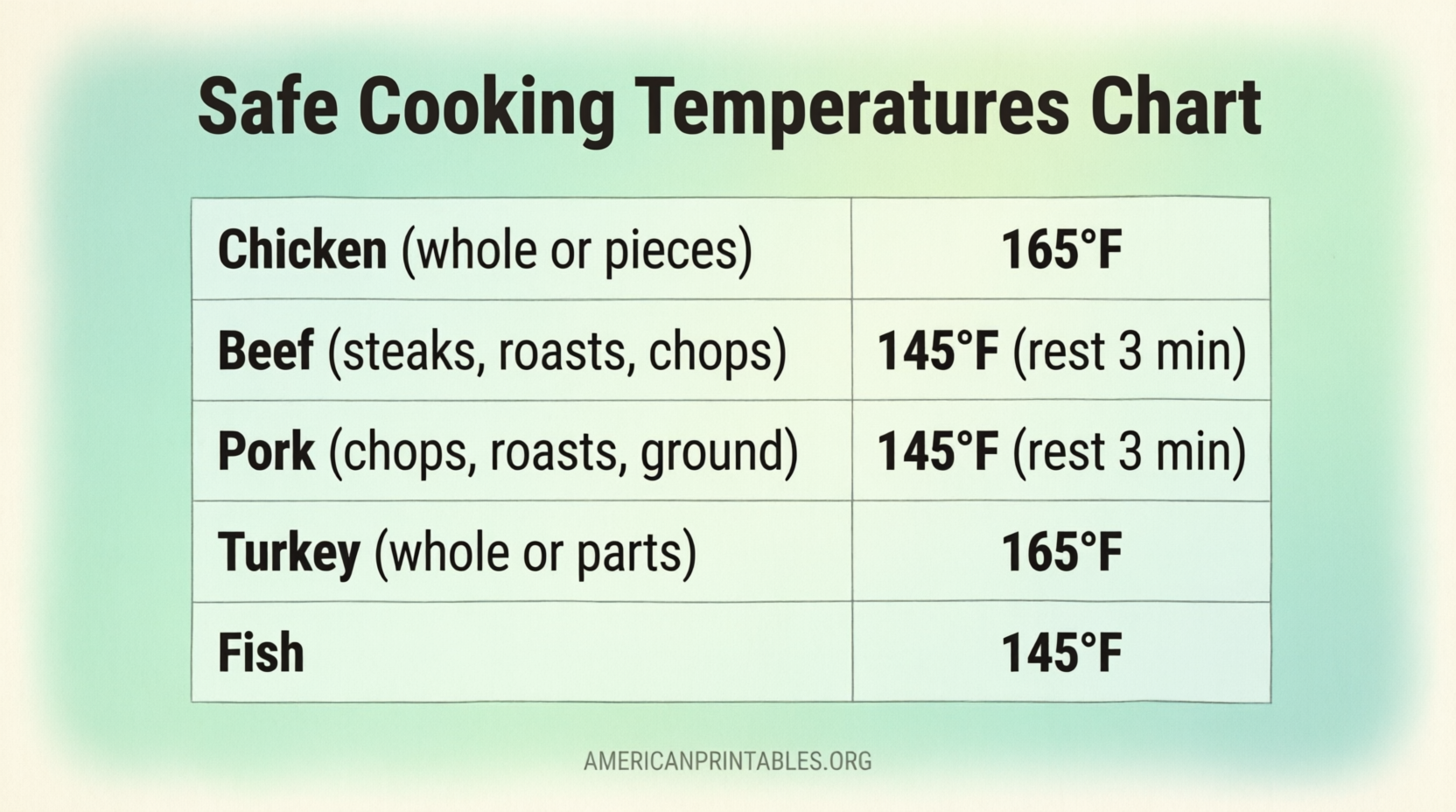
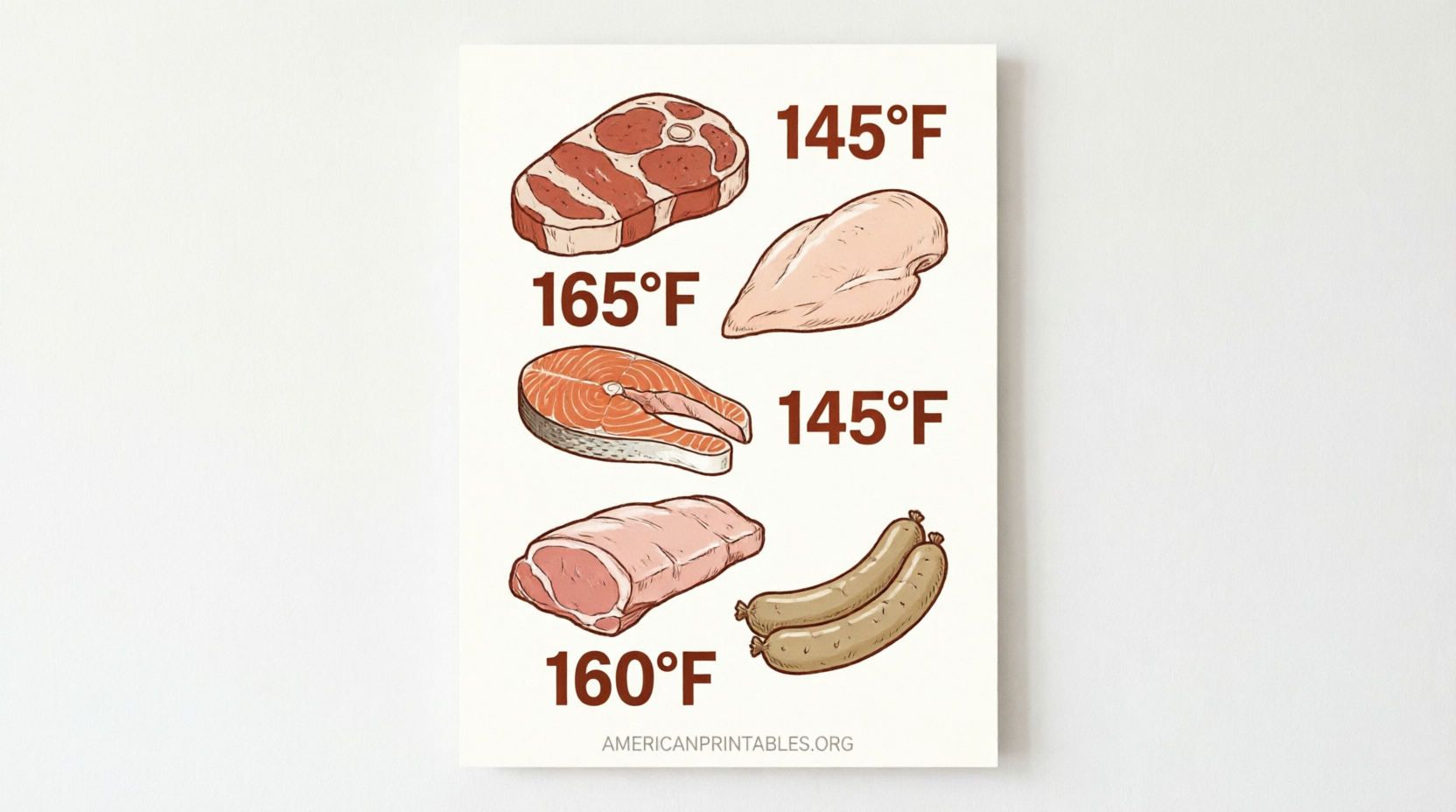
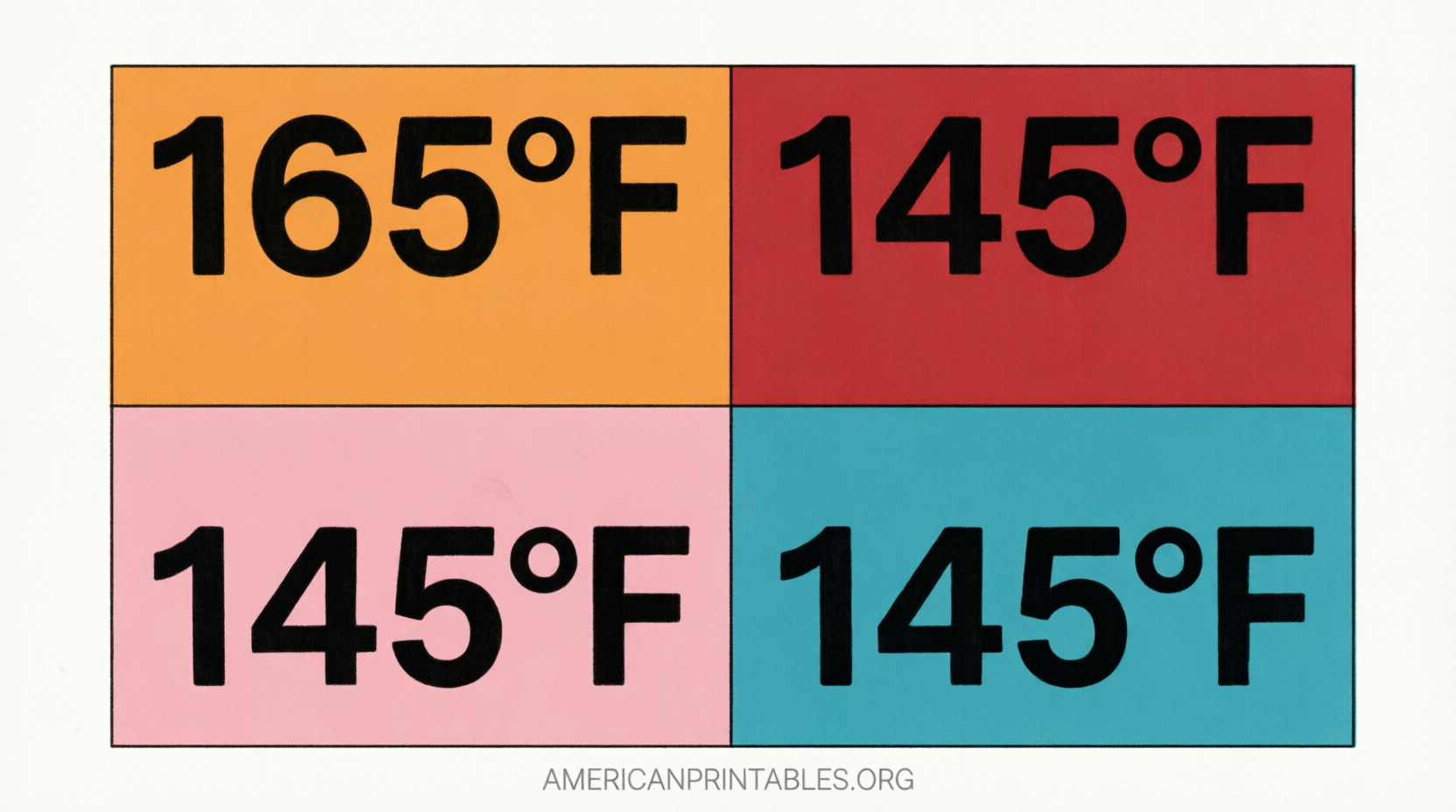
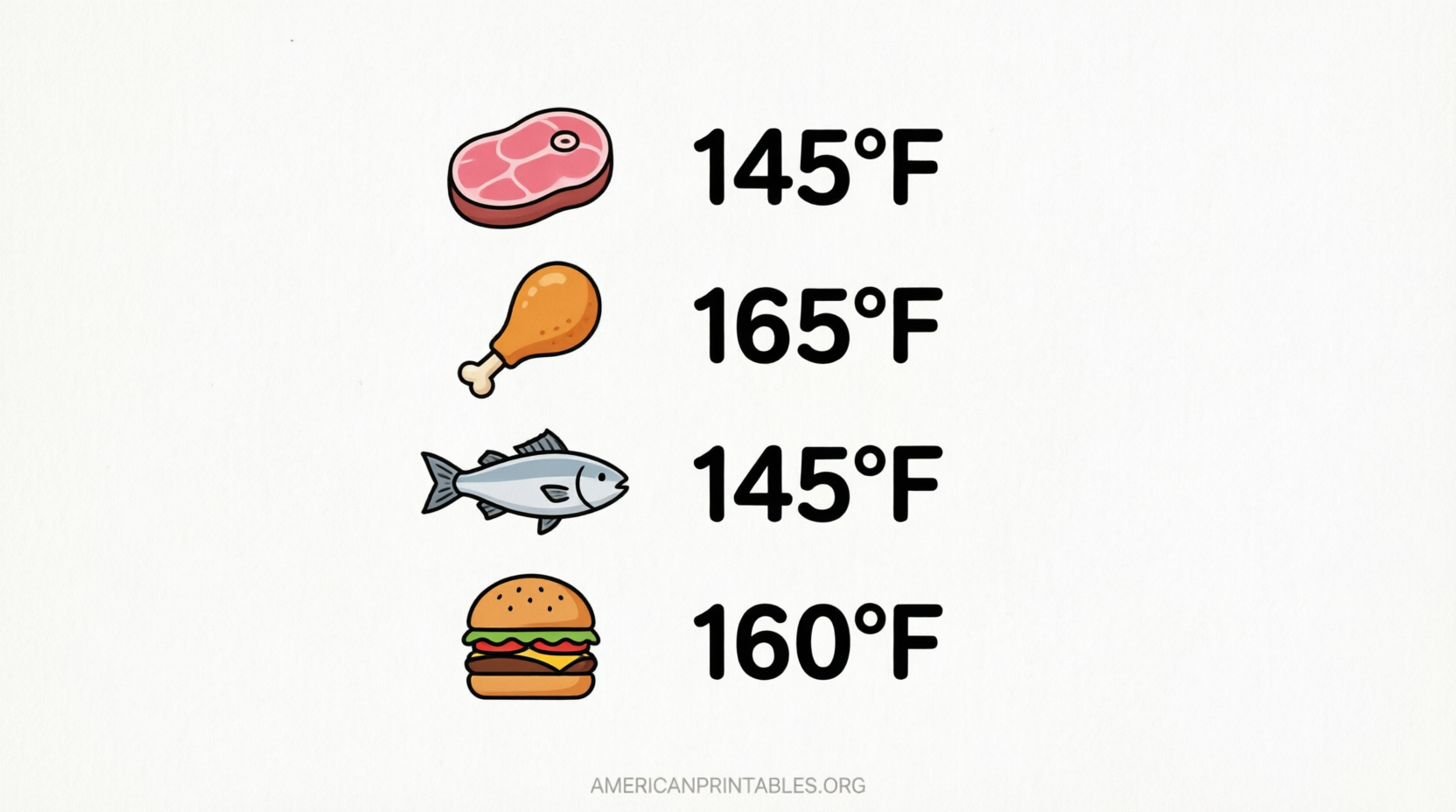
How to Use Your Printed Chart?
- Print on regular letter-size paper or cardstock.
- Laminate or cover with clear packing tape so it survives kitchen splashes.
- Keep a second copy near the grill or outdoor cooking area.
- Pair it with an instant-read thermometer and check temperatures in the thickest part of the food.
- Remember rest times for whole cuts of beef, pork, veal, and lamb.
- Reheat leftovers to 165°F and never leave cooked food in the danger zone longer than two hours (one hour if the air temperature is above 90°F).
FAQ
Do I still need a thermometer if I have a chart?
Yes. Charts give the target numbers; only a thermometer tells you when the food has actually reached them.
Are the temperatures the same for grilling, oven roasting, and air frying?
The safe minimum internal temperatures stay the same regardless of cooking method. Time and surface temperature will vary.
Can I cook meat to a higher temperature for preference?
Absolutely. The listed numbers are minimums for safety. Many people prefer steaks or pork cooked beyond the minimum for personal taste.
Where can I find more official charts?
FoodSafety.gov also publishes roasting time charts and cold-storage guidelines that complement the temperature chart.
Keeping a free printable cooking temperature chart in plain sight makes food safety automatic. Download one of the trusted versions above, print it, and cook with confidence.