Free Printable Eye Wash Station Inspection Sheet – A free printable eye wash station inspection sheet helps U.S. workplaces document weekly checks of emergency eyewash equipment. Regular inspections confirm stations work when needed and support compliance with OSHA rules and industry best practices.
Why Eye Wash Station Inspections Matter?
OSHA requires suitable facilities for quick flushing of the eyes and body wherever employees may be exposed to injurious corrosive materials. The regulation appears in 29 CFR 1910.151(c).
While OSHA’s language is broad, the widely followed ANSI/ISEA Z358.1 standard fills in the details. It calls for weekly activation of plumbed eyewash stations to flush stagnant water, verify flow, and confirm the unit is ready. An annual full-performance inspection checks flow rate, temperature, spray pattern, and installation. Documenting these checks creates a clear record for internal audits and external reviews.
What to Check on a Weekly Inspection Sheet?
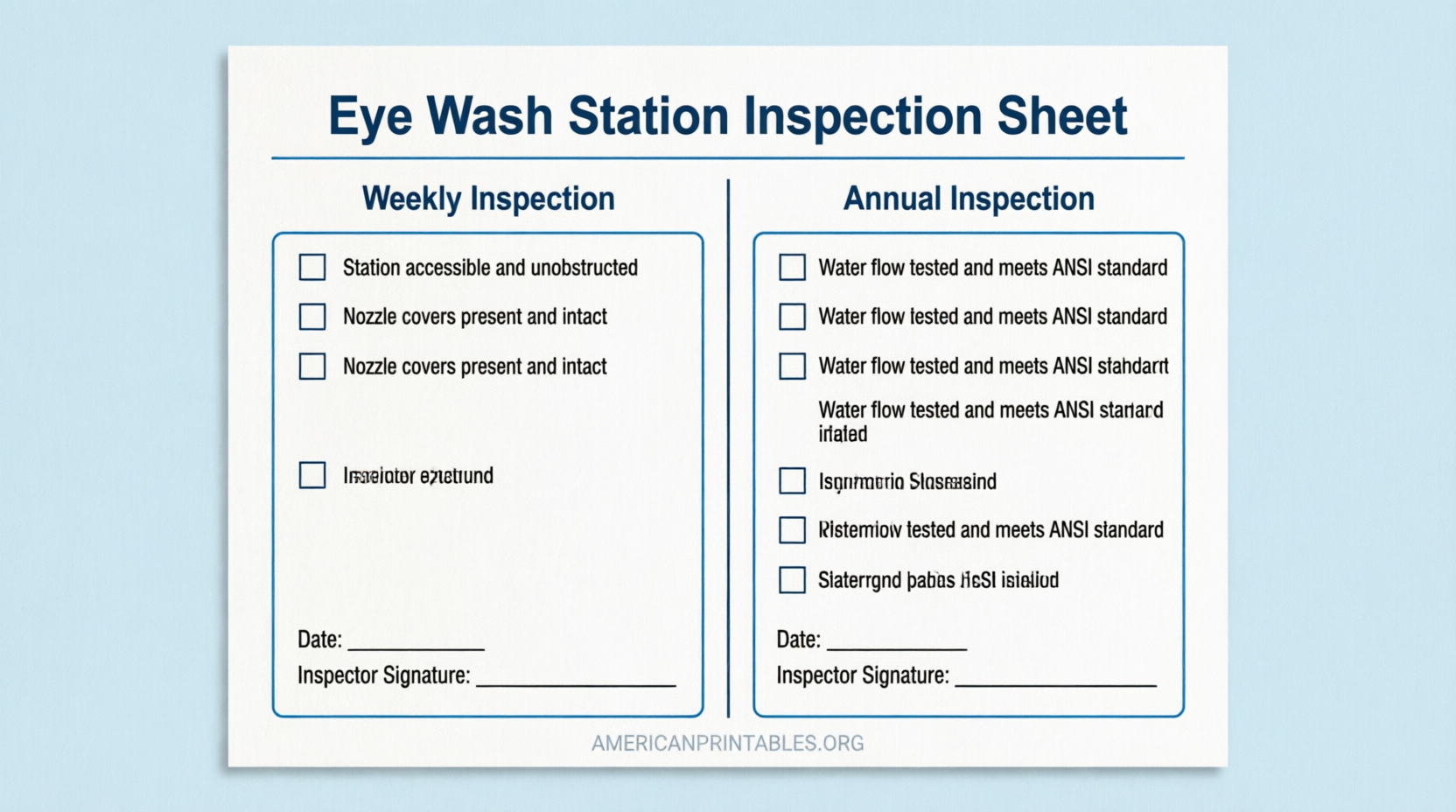
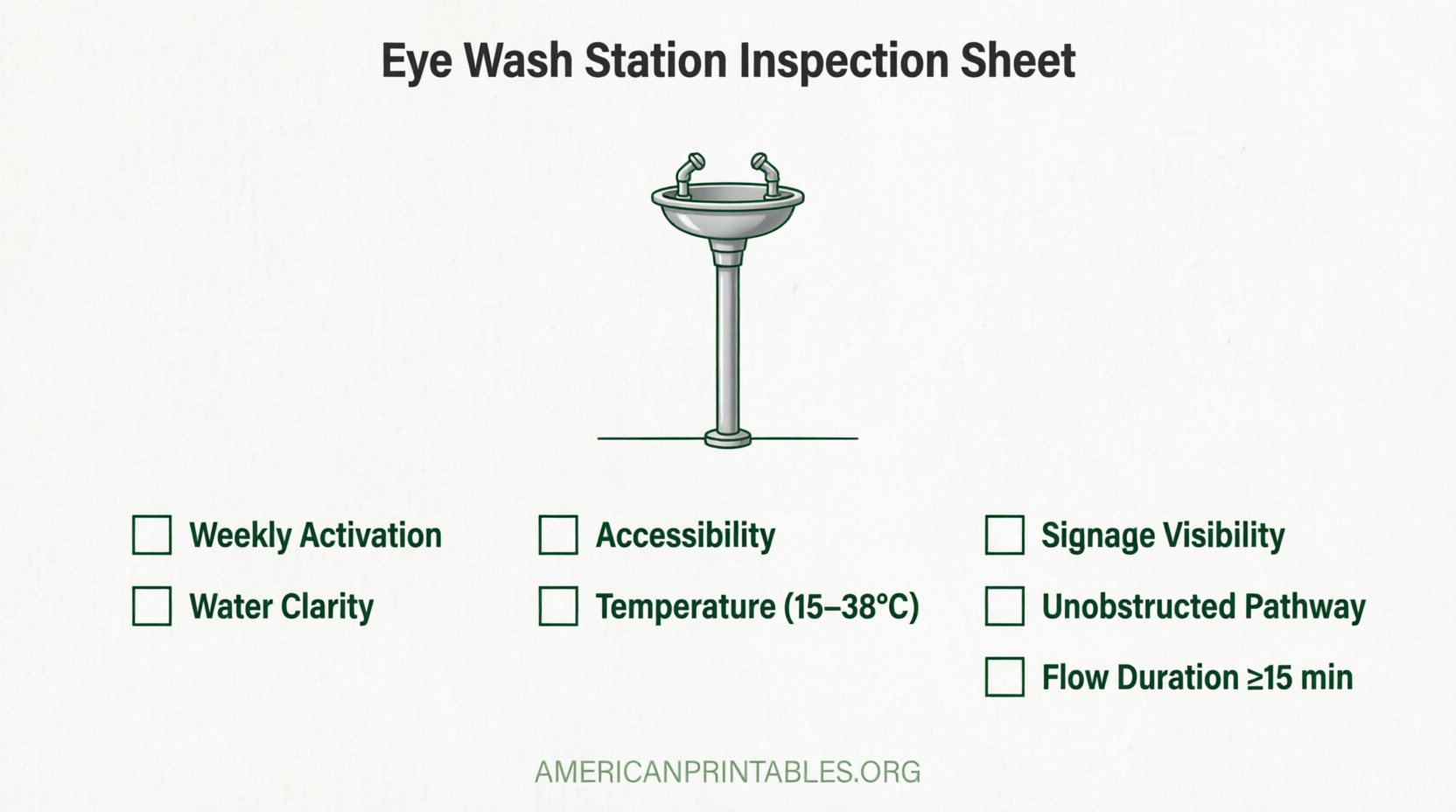
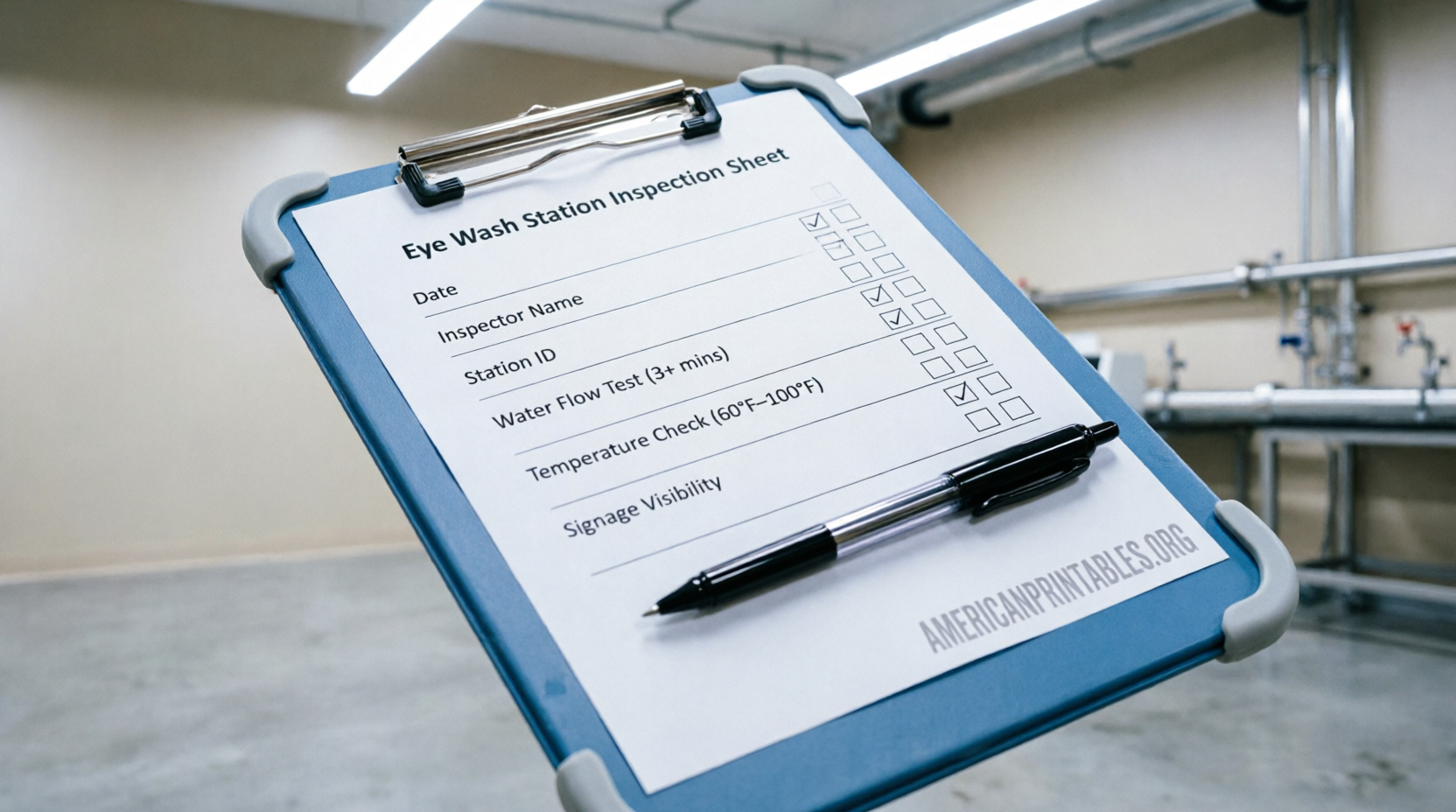
A practical free printable eye wash station inspection sheet usually covers these points:
- Station is clearly marked with a highly visible sign and well lit.
- Path and area around the unit are free of obstructions (at least 6 inches clearance recommended).
- Unit activates easily in one second or less and stays on hands-free.
- Water flows evenly and continuously from both nozzles.
- Water is clear with no unusual odor or sediment.
- Dust covers or caps open automatically on activation and are clean and undamaged.
- No leaks in plumbing.
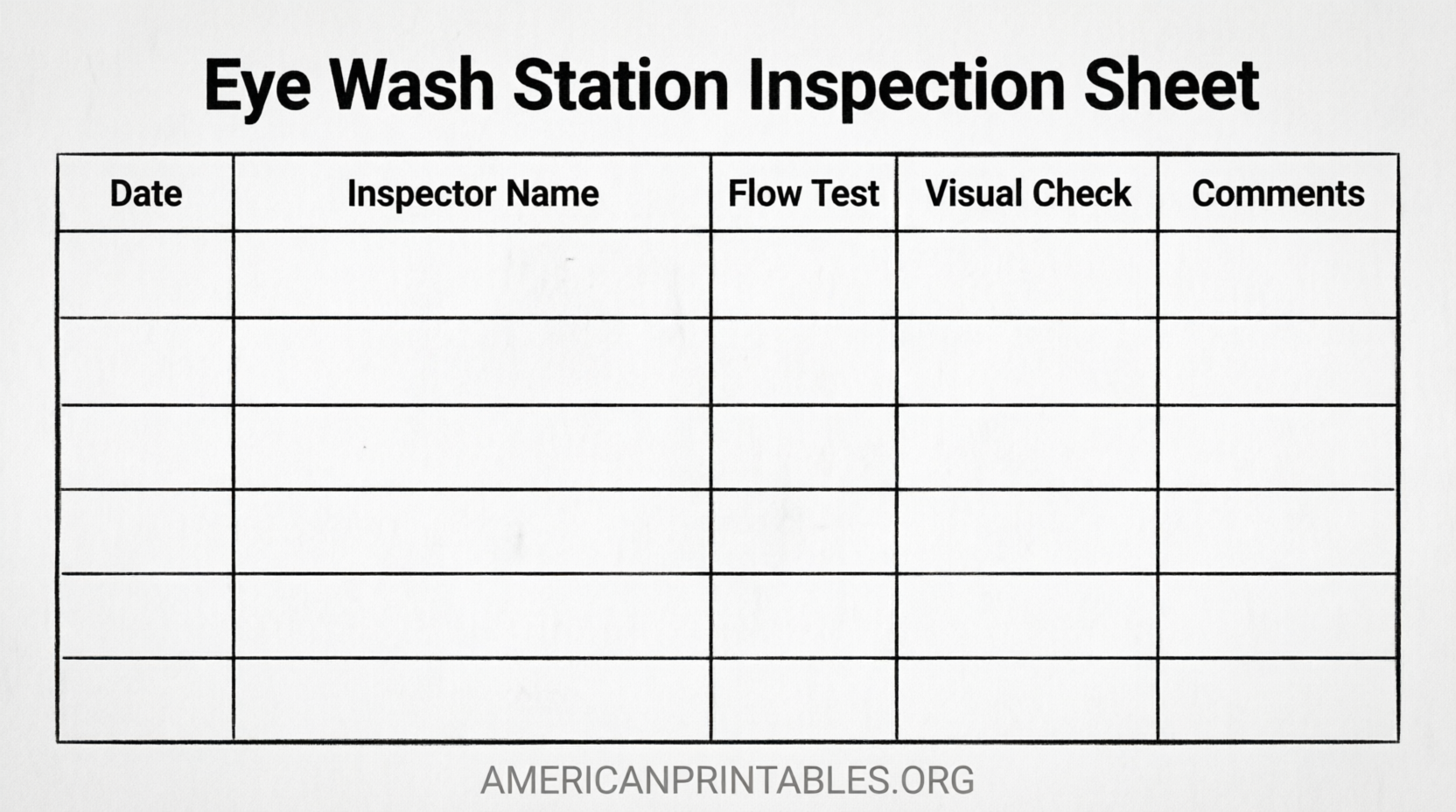
- Date, inspector initials or signature, and any comments or corrective actions.
Flush the unit for at least 30 seconds (some programs use longer) during the weekly test. Clean up any spilled water afterward.
Self-contained or portable units follow manufacturer instructions for fluid level, expiration dates, and visual checks.
Where to Get Free Printable Eye Wash Station Inspection Sheets?
Here are reliable free resources you can download and print today:
- University of Arkansas Environmental Health & Safety provides a straightforward weekly inspection checklist and log sheet in PDF format. It includes step-by-step testing guidance and space for multiple dates and initials.
Download the University of Arkansas free printable PDF - ITU AbsorbTech offers a free weekly eyewash station inspection checklist PDF designed around OSHA and ANSI considerations.
Get the free ITU AbsorbTech checklist (PDF download available on the page) - Frontline Data Solutions provides a free downloadable eyewash station inspection form in Word format that you can print or edit.
Download the free Frontline Data Solutions form
For the official OSHA regulation text, visit:
OSHA 29 CFR 1910.151 – Medical services and first aid
Print the sheet, post a copy near each station or keep it in a central log, and complete it every week. Train designated employees on the process so inspections stay consistent across shifts and locations.
Free Printable Eye Wash Station Inspection Sheet
Tips for Using Your Inspection Sheet Effectively
Keep the form simple and repeatable. Use the same checklist for every station. Note problems immediately and track repairs. Review the full program annually or when new hazards appear. Pair weekly activation tests with employee training so everyone knows where stations are and how to use them correctly (flush for at least 15 minutes, hold eyelids open, etc.).
Brief FAQ
How often should eye wash stations be inspected?
ANSI Z358.1 recommends weekly activation tests for plumbed units plus a thorough annual inspection. Self-contained units follow the manufacturer’s schedule, typically including weekly visual checks.
Does OSHA require a specific inspection form?
No. OSHA requires suitable facilities but does not prescribe a particular form or exact frequency. Documented weekly checks following ANSI guidance are widely accepted as good practice.
What is “tepid” water?
The ANSI standard defines tepid flushing fluid as roughly 60–100°F (16–38°C) so users can tolerate a full 15-minute flush.
Can I use a digital checklist instead of paper?
Yes. Many free digital templates exist, but a printed sheet works well for posting near the station and creating a quick paper trail.
Using a free printable eye wash station inspection sheet makes weekly checks simple, consistent, and easy to document. Download one of the resources above, print copies for each station, and start recording inspections this week. Consistent documentation helps keep emergency equipment ready and supports a safer workplace.