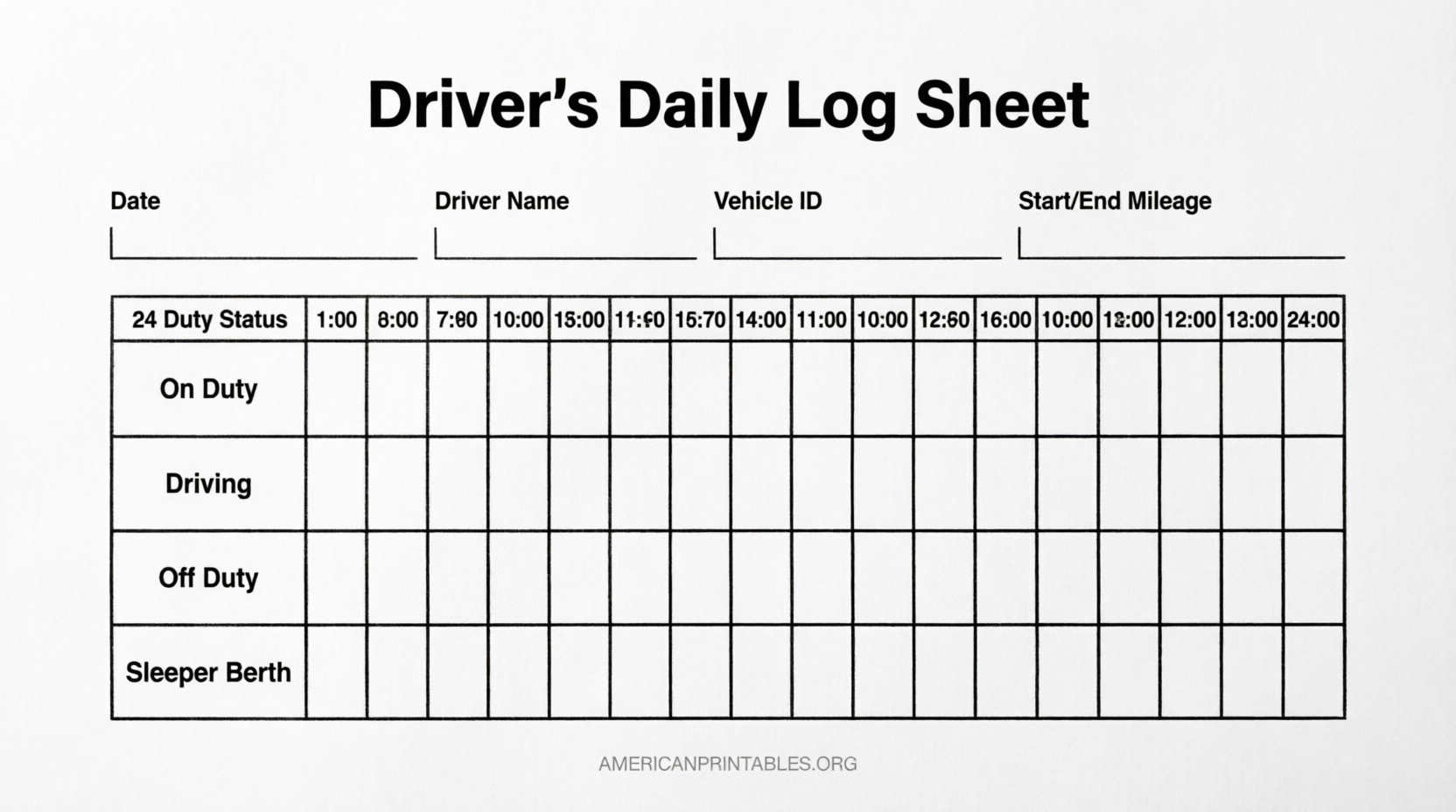
Free Printable Drivers Daily Log Sheet (USA) – A drivers daily log sheet (also called a driver’s record of duty status or RODS) is the standard form commercial motor vehicle drivers in the United States use to track their hours of service. It records time spent off duty, in the sleeper berth, driving, and on duty but not driving across each 24-hour period.
Even with the Electronic Logging Device (ELD) mandate in place for most interstate carriers, free printable drivers daily log sheets remain useful. Drivers need paper backups during ELD malfunctions, for certain short-haul exemptions, pre-2000 vehicles, training, or simple fleet tracking outside full ELD requirements. Accurate logs help maintain compliance with Federal Motor Carrier Safety Administration (FMCSA) rules under 49 CFR Part 395 and support roadside inspections and audits.
Why Drivers Still Need a Printable Daily Log Sheet?
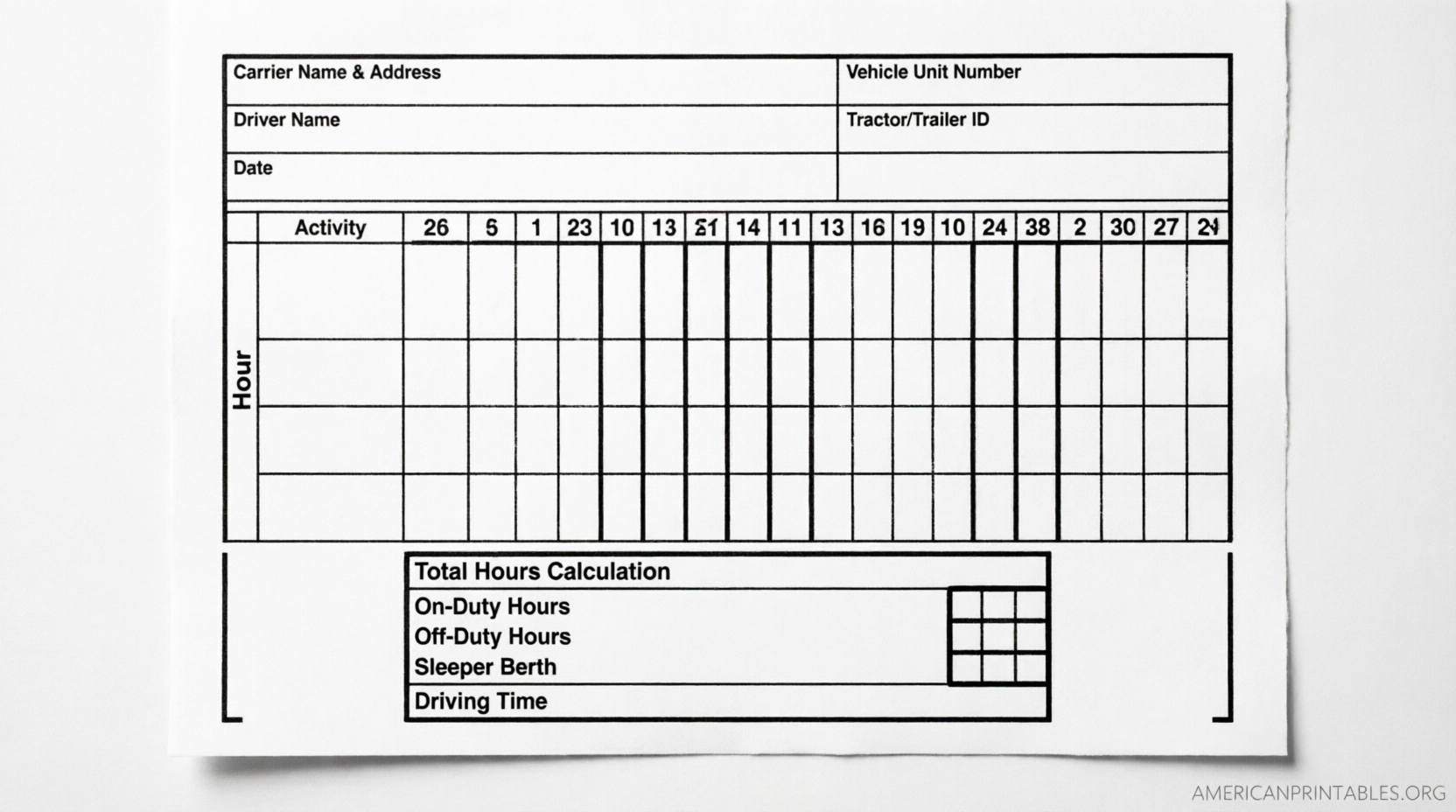
FMCSA hours-of-service rules limit driving time (generally 11 hours within a 14-hour window after 10 consecutive hours off duty for property-carrying drivers) and set weekly limits (60 hours in 7 days or 70 hours in 8 days). The log must include a 24-hour graph grid with the four duty statuses, plus required header details such as date, total miles driven, vehicle numbers, carrier name, driver’s signature, locations of status changes, and shipping document information when applicable.
Paper logs serve as the required reconstruction tool when an ELD fails (current day plus the previous seven days) and remain acceptable for drivers who qualify for exemptions. Keeping clean, complete records protects drivers and carriers from violations and supports safety.
What a Complete Free Printable Drivers Daily Log Sheet Includes?
A useful free printable typically features:
- Date and 24-hour starting time (usually midnight at the home terminal time zone)
- Carrier name, main office, and home terminal addresses
- Driver name, signature/certification, co-driver if any
- Truck/tractor and trailer numbers or license plates
- Total miles driven that day
- The four-row duty status grid (Off Duty, Sleeper Berth, Driving, On Duty Not Driving) marked in 15-minute increments
- Remarks section noting city/state (or mile marker) for every status change
- Shipping document numbers or shipper/commodity details
- Daily totals and a recap section for 60/70-hour calculations
Many free templates also leave space for notes on fuel, inspections, or incidents.
Where to Get Legitimate Free Printable Drivers Daily Log Sheets?
Here are reliable places to download free, printable versions suitable for U.S. use. Always verify the template meets your specific needs and current regulations before relying on it for compliance.
One strong option is a free PDF with the classic 24-hour duty status grid designed to align with FMCSA 49 CFR 395.8 RODS requirements. You can download it directly (email may be requested for the file) from MapTrack’s free drivers daily log with duty status grid.
For a wide selection of free templates in PDF, Word, and Excel formats (including truck-driver-focused versions), visit TemplateLab’s collection of printable driver’s daily log books. Many are ready to print or customize.
SafetyCulture also offers a free, editable Drivers Daily Log template created according to FMCSA/DOT guidelines. It covers on-duty/off-duty status, mileage, and supporting documents: SafetyCulture Drivers Daily Log free template.
For official guidance, examples of completed records of duty status, and explanations of the hours-of-service rules, refer to the FMCSA Hours of Service Examples page. This resource helps drivers and carriers understand proper logging across various scenarios.
Free Printable Drivers Daily Log Sheet (USA)
How to Fill Out a Drivers Daily Log Sheet Correctly?
- Complete the header information (date, carrier, vehicle numbers, etc.) before or at the start of the duty period.
- Mark the grid with a continuous horizontal line on the correct duty-status row. Draw a vertical line at each status change and continue on the new row. Aim for accuracy to the nearest 15 minutes.
- Record the location (city and state abbreviation) and a brief note for every change in the remarks section.
- At the end of the 24-hour period, total the hours in each status, complete any recap calculations, and sign the certification that the entries are true and correct.
- Submit the original to the carrier within 13 days (or sooner if company policy requires) and keep the required copy available while on duty.
Keep supporting documents such as bills of lading, fuel receipts, and dispatch records. Motor carriers must retain RODS and supporting documents for six months.
Tips for Staying Compliant
- Use the home terminal time zone consistently.
- Never falsify or leave gaps in the log.
- Reconstruct paper logs promptly if an ELD malfunctions and notify the carrier.
- Review current FMCSA guidance, as rules and exemptions can be updated.
- For short-haul drivers who qualify for exemptions, simpler time records may suffice instead of a full RODS grid—confirm eligibility carefully.
Brief FAQ
Do I still need paper logs if I use an ELD?
Most of the time the ELD handles the record. Paper is required for reconstruction during malfunctions and remains useful for exempt operations, training, or backup.
Are free printable templates official FMCSA forms?
No single official blank form is distributed by FMCSA for everyday use. The regulation specifies the required information and grid format. Free templates that follow those requirements are widely used; always ensure completeness.
How long must logs be kept?
Drivers generally keep the previous seven (or eight, depending on interpretation and situation) days’ copies available while on duty. Carriers retain records for six months.
A good free printable drivers daily log sheet helps keep records clear, consistent, and ready for inspection. Download one of the templates linked above, print a supply, and pair it with knowledge of the current hours-of-service rules. Safe travels.