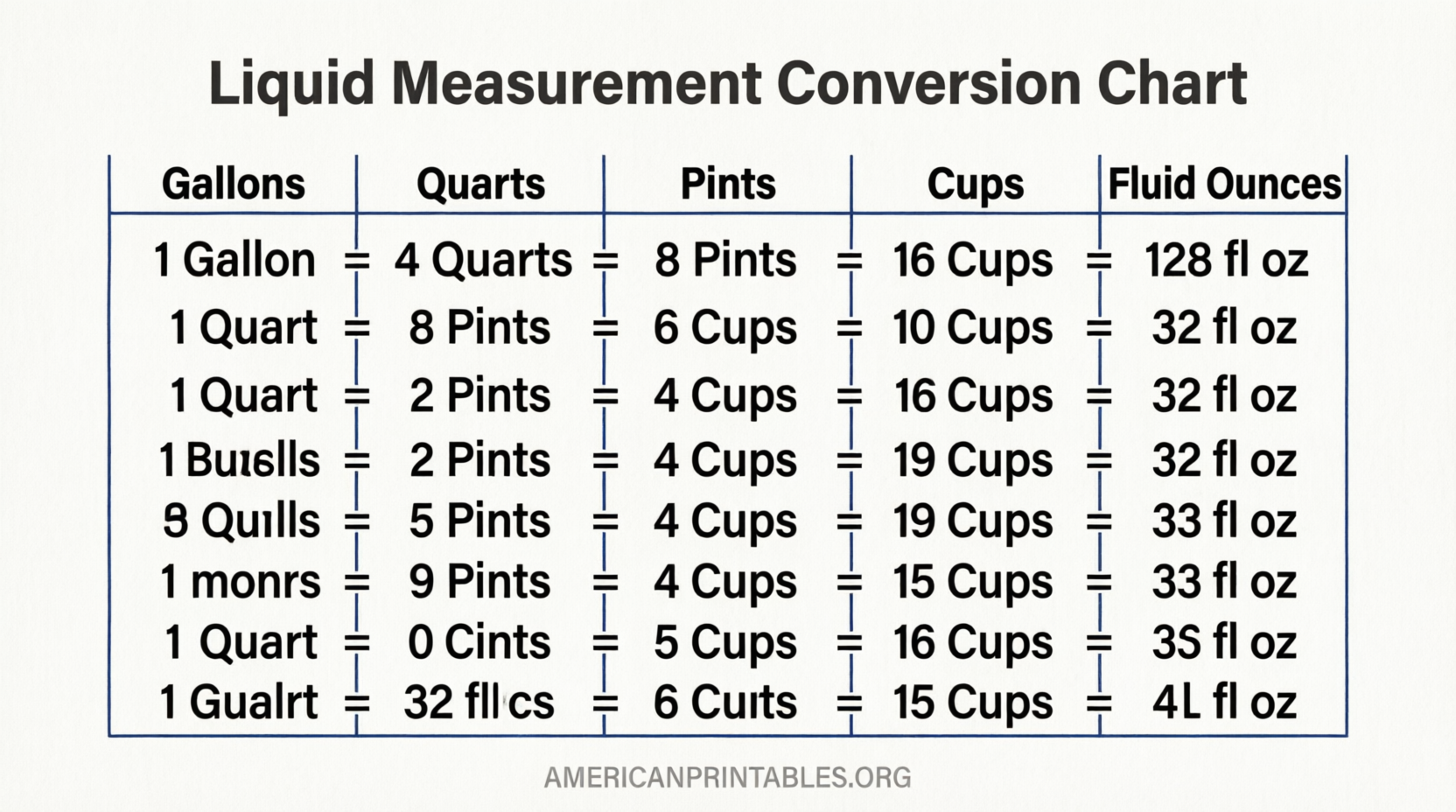
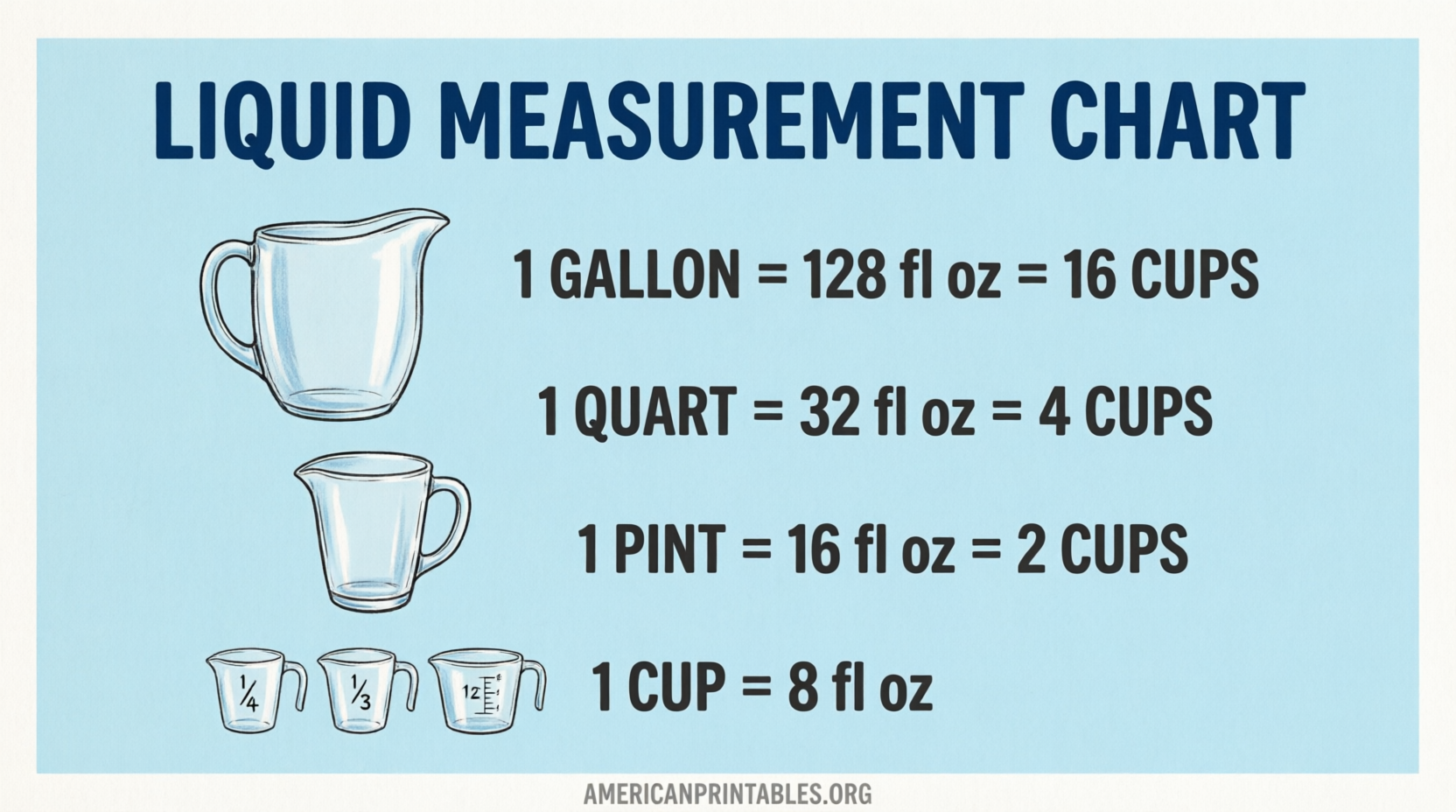
Free Printable Liquid Measurement Chart – A free printable liquid measurement chart is one of the most useful kitchen tools for anyone cooking or baking in the United States. It quickly shows how cups, fluid ounces, pints, quarts, gallons, teaspoons, tablespoons, milliliters, and liters relate to each other so you never have to stop mid-recipe to do the math.
Whether you are scaling a family recipe, following an international cookbook, or teaching kids about volume, a clear liquid measurement chart keeps measurements accurate and stress-free. Below you will find practical explanations, the most common US customary conversions, and direct links to legitimate free printable charts from trusted sources.
Why You Need a Liquid Measurement Chart?
US recipes almost always use the customary system (cups, fluid ounces, pints, quarts, and gallons). Many packaged foods and international recipes use metric units (milliliters and liters). A printable chart bridges both systems at a glance.
Common situations where the chart helps:
- Converting a recipe written in cups to fluid ounces or milliliters
- Doubling or halving a recipe without calculation errors
- Measuring liquids accurately for baking, where precision matters
- Teaching children the relationships between cups, pints, quarts, and gallons
Keep a laminated copy on the refrigerator or inside a cookbook for instant reference.
Basic US Liquid Measurement Conversions
Here are the core relationships used in American kitchens:
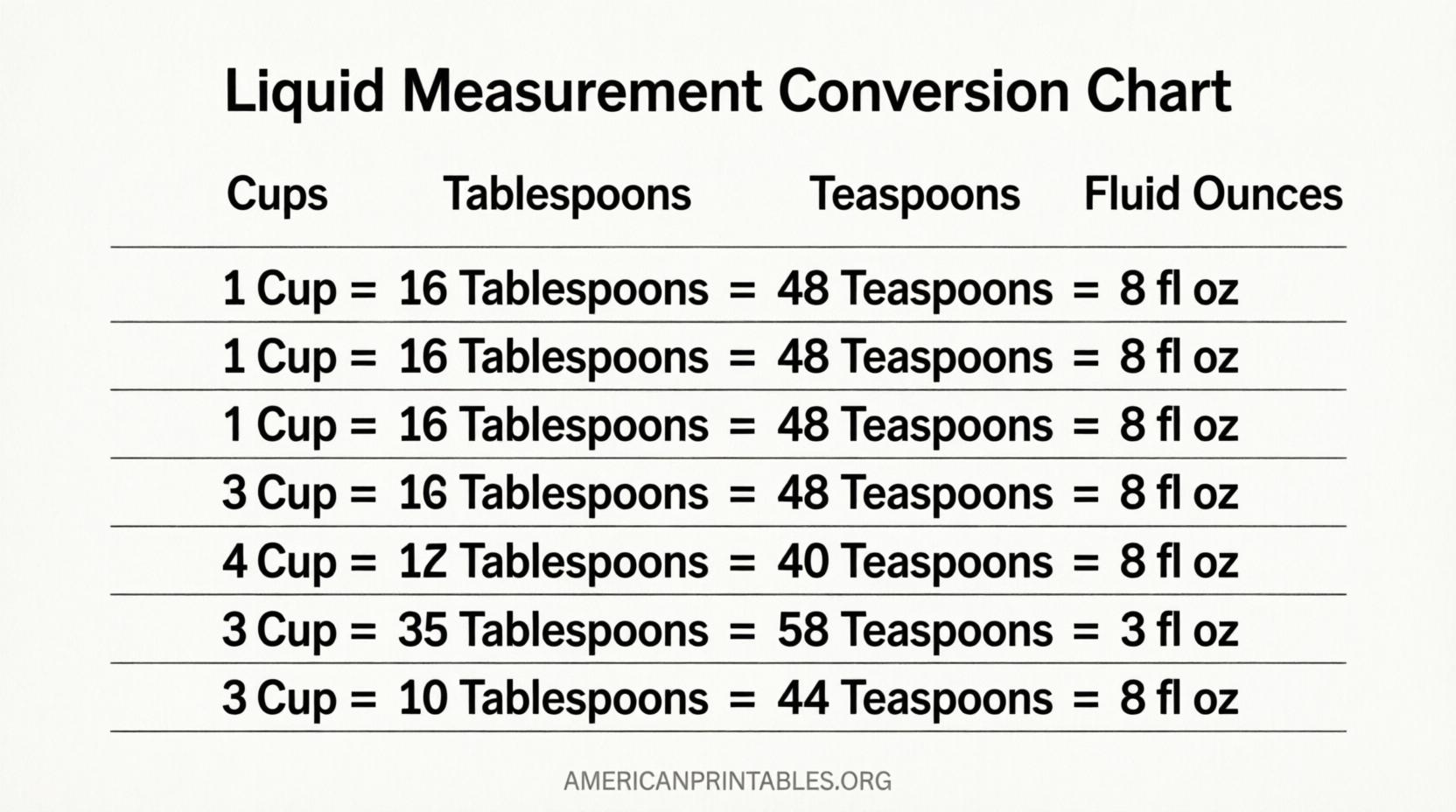
- 3 teaspoons = 1 tablespoon
- 2 tablespoons = 1 fluid ounce
- 8 fluid ounces = 1 cup
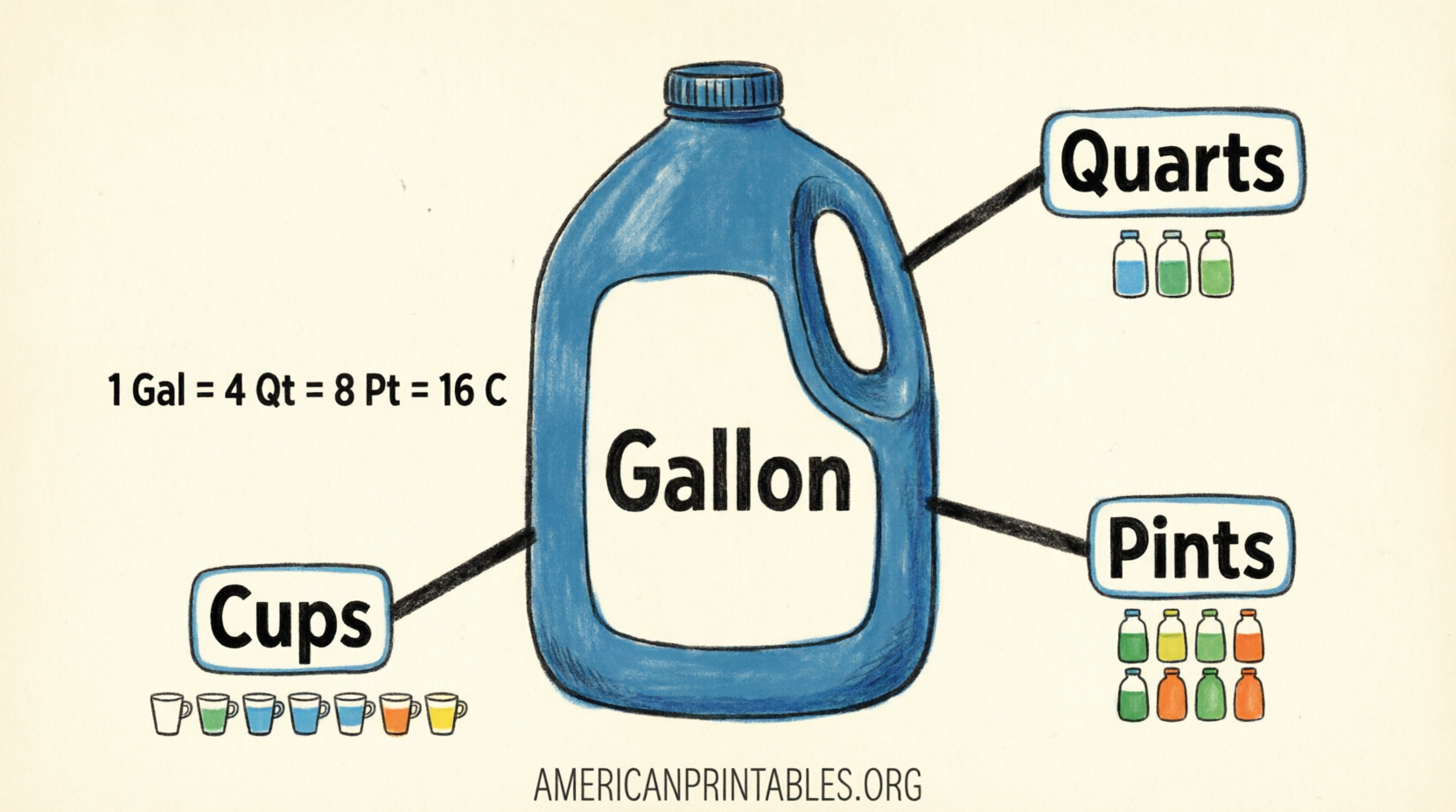
- 2 cups = 1 pint
- 2 pints = 1 quart
- 4 quarts = 1 gallon
In metric terms (approximate values commonly used in home cooking):
- 1 teaspoon ≈ 5 mL
- 1 tablespoon ≈ 15 mL
- 1 fluid ounce ≈ 30 mL
- 1 cup ≈ 240 mL (or 237 mL exact)
- 1 pint ≈ 473 mL
- 1 quart ≈ 946 mL
- 1 gallon ≈ 3.785 liters
These figures come from standard US customary definitions and are the ones you will see on most reliable kitchen charts.
Where to Get Free Printable Liquid Measurement Charts?
Trusted sources offer clean, free PDF charts you can download and print right away. All links below go to official download pages or free printable resources.
Betty Crocker’s Kitchen Conversions chart is designed for everyday cooking and baking. It includes volume, weight, and temperature conversions in a printer-friendly format. Download the free 8½ × 11 chart or the tablet-size version directly from Betty Crocker:
Betty Crocker Kitchen Conversions Chart
Taste of Home provides a clear cooking measurement conversions chart that covers teaspoons through gallons plus metric volume equivalents. The free PDF is available for immediate download:
Taste of Home Cooking Measurement Conversions PDF
The same information appears in their full article with additional measuring tips:
Taste of Home Cooking Measurement Conversion Guide
For official equivalency tables used in household and kitchen contexts, the National Institute of Standards and Technology (NIST) publishes clear metric and US customary capacity units:
NIST Metric Kitchen Cooking Measurement Equivalencies
These four resources give you high-quality, free printable options without registration walls or misleading “free” claims.
Free Printable Liquid Measurement Chart
Tips for Using Your Liquid Measurement Chart
Print the chart on regular paper or cardstock. Laminate it if you want a spill-proof version that lasts for years.
Use liquid measuring cups (the clear ones with a spout and markings) for liquids such as water, milk, oil, or broth. Place the cup on a flat surface and read the measurement at eye level.
For sticky liquids such as honey or syrup, lightly coat the measuring cup or spoon with cooking spray first so the ingredient slides out cleanly.
Remember that dry measuring cups are designed for flour, sugar, and similar ingredients; they are not ideal for liquids.
Brief FAQ
Is a US cup the same as a metric cup?
No. A US cup is about 237–240 mL. A metric cup is exactly 250 mL. Most American recipes use the US cup.
How many fluid ounces are in a gallon?
There are 128 fluid ounces in 1 US gallon.
Can I use the same chart for dry ingredients?
Liquid volume charts are for liquids. Dry ingredients are best measured by weight (grams or ounces) for accuracy, especially in baking.
Are the free charts above truly free?
Yes. The linked Betty Crocker, Taste of Home, and NIST resources provide free downloadable or printable charts with no payment required.
A free printable liquid measurement chart removes guesswork and helps every recipe turn out consistently. Download one of the trusted charts above, print it, and keep it handy in your kitchen. Accurate measurements start with a clear reference you can trust.