Turkey Drawing Template for Tracing (Free PDF) – Gives kids a friendly way to practice drawing a Thanksgiving bird, one line at a time. These four black-and-white worksheets start with clear dotted paths and make room for children to add color, details, and their own ideas. Choose the page that fits your child’s confidence and the time you have, or print the full set for a fall art station.
Turkey Drawing Template for Tracing (Free PDF)
Which turkey worksheet should you print?
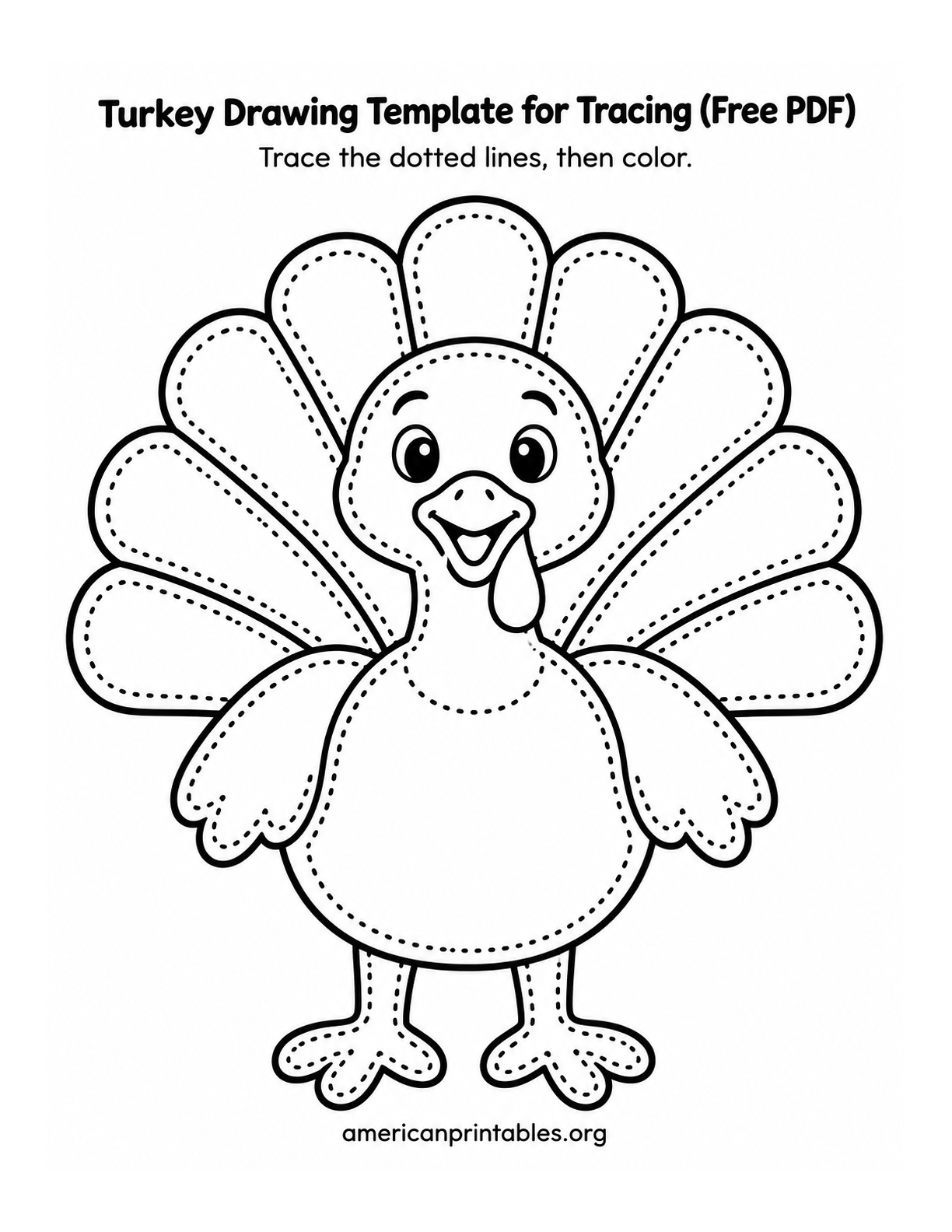
Start with the large dotted outline if a child wants a recognizable result right away. The friendly front-facing turkey fills most of the page. Its tail, face, wings, body, legs, and feet offer plenty of curves to follow, while the open shapes are easy to color afterward. Younger artists can trace a few feathers at a time and come back to the rest later.
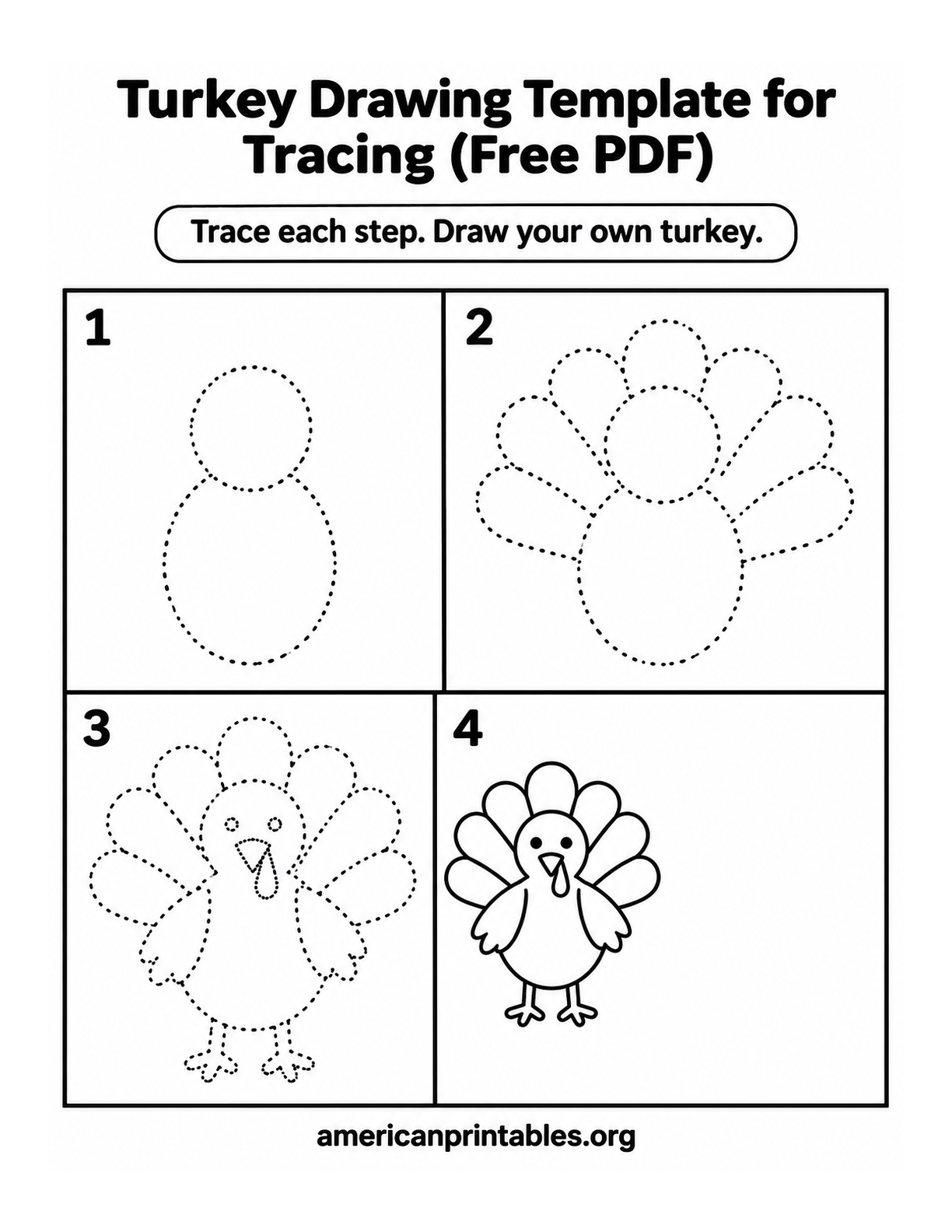
The four-step guide breaks a turkey into manageable shapes. Children trace a head and body first, add the fan tail next, and then follow the dotted details for the face, wings, and feet. The last panel shows a finished turkey alongside open drawing space. It works well when a child is ready to try the same sequence without a dotted outline beneath every mark.
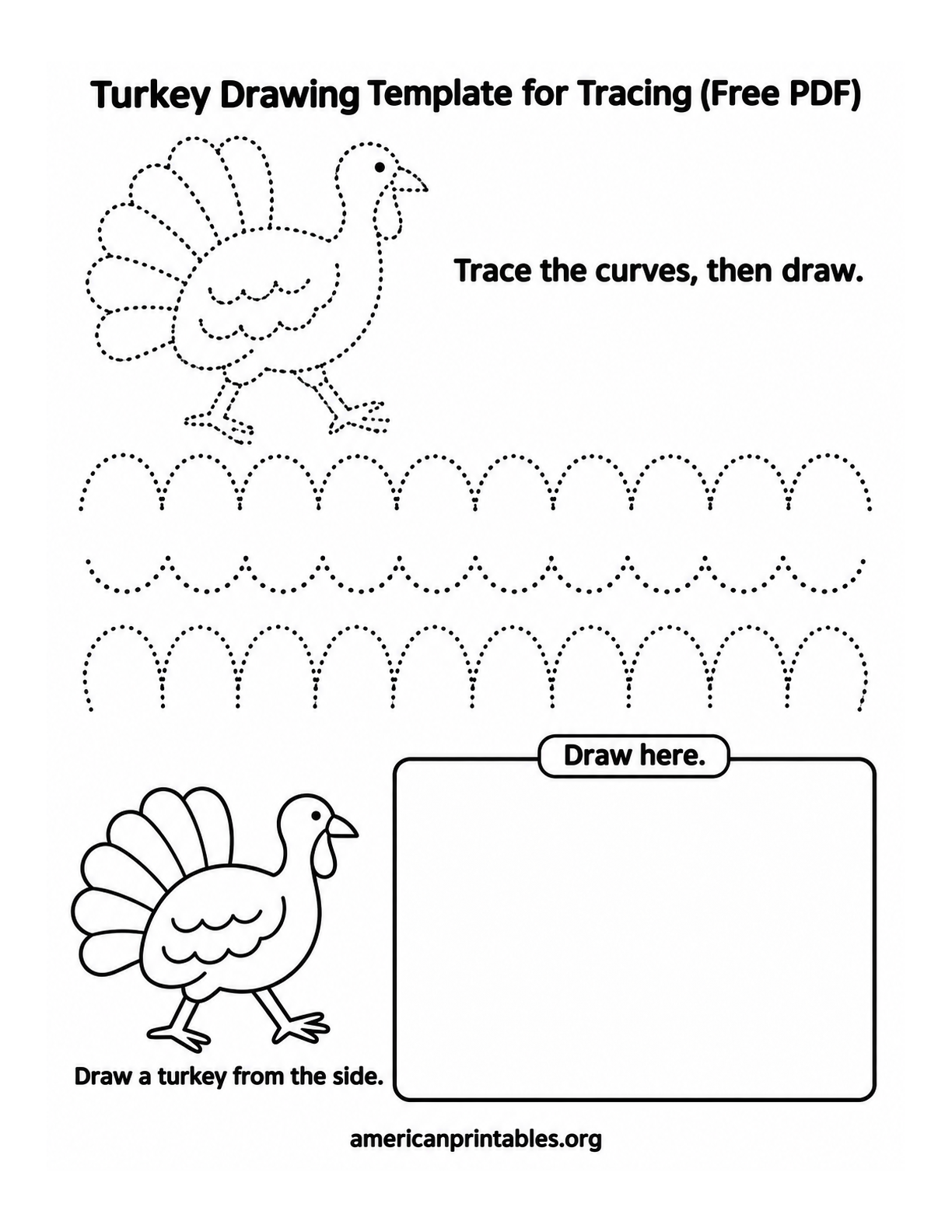
For a different view, try the side-profile page. A dotted walking turkey at the top introduces the shape. Three rows of repeated curves let children warm up their pencil movements before drawing a side-view bird in the blank box. A small finished example offers a reference without filling the practice space.
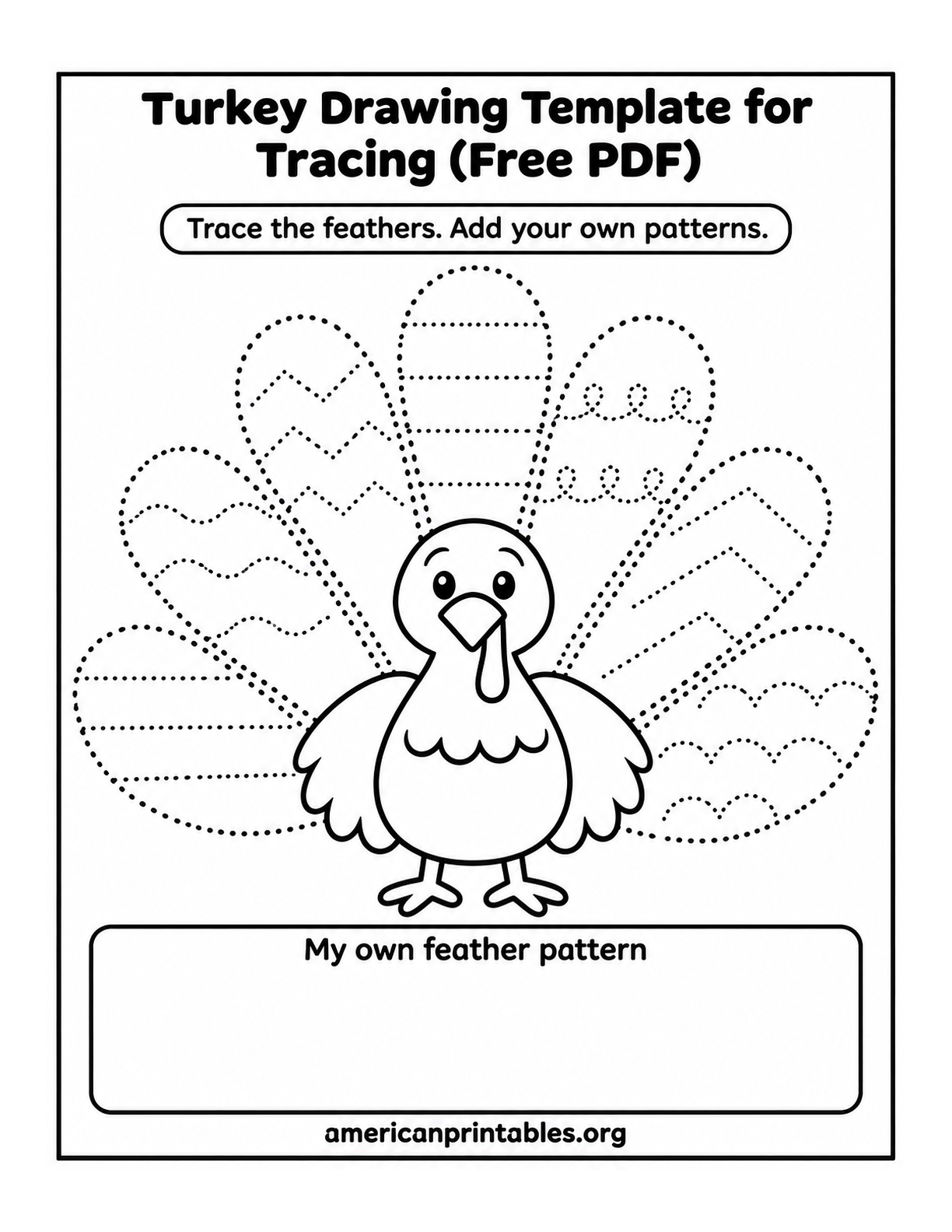
The feather-pattern page is a good choice for children who enjoy decorating. The turkey’s body is already outlined, while seven dotted fan feathers carry stripes, waves, loops, and zigzags to trace. The empty box below invites an original pattern. After tracing, children can choose a color for each feather or repeat a favorite pattern across the whole tail.
How to print the tracing pages?
Click the download link directly beneath the worksheet you want. Save the original WebP image to your device, then open it in a photo viewer or insert it into a document before printing. Select US Letter paper, portrait orientation, and “fit to page” or a comparable setting that keeps the entire design inside your printer’s margins. Print at normal or high quality for clear dotted lines.
These are image downloads rather than PDF files. If you need a PDF for a classroom packet or easy sharing, use your device’s Print dialog and choose “Save as PDF.” Check the preview before saving so the title, footer, and drawing area all appear. The word “PDF” in the worksheet title describes that convenient printable option; the download links here supply the original lossless WebP artwork.
Ordinary white copy paper is fine for pencil tracing and crayons. If children will use markers, put a spare sheet underneath to protect the table, or print on heavier paper. For repeated use, place a page in a clear sleeve and trace it with a dry-erase marker. Wipe it clean and let another child try the same design.
Simple ways to use the pages
Invite children to trace slowly with a finger before picking up a pencil. A light pencil line is easy to adjust; once the basic turkey is complete, they can go over selected outlines with a dark crayon or marker. Remind them that the dotted marks are guides, not a speed test. Pausing and rotating the paper can make the tail curves more comfortable to follow.
For a short Thanksgiving activity, print one page for each child and set out crayons in warm browns, reds, oranges, and yellows. Children can choose realistic colors or invent a bright, patterned turkey. The large outline is especially useful for a quick coloring session, while the step-by-step guide gives children a clear drawing challenge.
For a longer art lesson, begin with the curve rows on the side-profile sheet. Ask children to notice where an arch rises, rounds off, and comes back down. Then have them use similar curves for feathers in their own drawings. On the pattern sheet, compare a straight stripe with a wave or a loop, and let each child make a new design in the blank space.
Finished pages can become a refrigerator display, a classroom bulletin board, or a handmade Thanksgiving greeting. If you plan to cut out a turkey, trace and color it first, then leave a little white space around the outer edge as you cut. An adult should help younger children with scissors. You can glue the cutout to construction paper and add a short message about something the child is thankful for.
More printable turkey drawing ideas
For another tracing activity, the University of Illinois Extension offers a Thanksgiving activity book PDF with a hand-tracing turkey page. It is a useful follow-up when children want to turn the outline of their own hand into feathers.
Crayola also provides an animal tracing pack PDF that includes a turkey. Children can compare its side-view silhouette with the side-profile worksheet here and notice how different artists show the tail, wings, and feet.
Pick the page that feels inviting, print one clean copy, and let the child’s pencil take the lead. The goal is a pleasant bit of drawing practice and a turkey that looks like their own.