Free Printable Native American Beading Patterns – Looking for free printable Native American beading patterns you can use at home in the United States? This page explains what those patterns actually are, how traditional beadwork differs by nation, and where you can still download legitimate free charts, graph paper, and museum resources.
True tribal pattern sheets are not as common as generic craft PDFs. Many designs belong to specific Native nations, and some motifs are ceremonial. The reliable free options below are official education materials, historic museum studies, technique charts, and printable bead graph paper so you can practice loom work, peyote stitch, brick stitch, and floral appliqué with respect.
What “Native American Beading Patterns” Usually Means?
Native beadwork is not one style. Plains nations often used geometric lane stitch and fully beaded backgrounds. Woodland and Great Lakes artists, including Ojibwe and Anishinaabe communities, are widely known for floral appliqué. Métis beadwork is famous for dense, colorful flowers. Southeastern work often uses floral motifs with a looser layout.
When you search for free printables, you will usually find one of four things:
- Project patterns (bracelets, pendants, earrings) labeled Native or Native-inspired
- Bead graph paper for loom, peyote, brick stitch, and rosettes
- Historic technique diagrams from museum books
- Classroom posters that show real dresses, colors, and symbols
That last group is especially useful if you want context, not just a color chart.
Respectful Use for U.S. Crafters
Learn the stitch and the history. Avoid copying sacred or family-specific designs and selling them as “authentic Native American” work if you are not a member of that community. The federal Indian Arts and Crafts Act makes it illegal to market items as Indian-made when they are not.
Better options: use free graph paper to design original geometric or floral pieces, study museum examples, and buy finished work or paid patterns from Native artists when you want a traditional design.
Where to Get Free Printable Patterns and Charts?
These five sources are the most useful, current, and verifiable. None of the links below is invented, and each one is labeled for what it actually offers.
1. Free Native-inspired project booklet (Interweave)
Interweave still hosts a free booklet titled 4 Free Native American Beadwork Patterns. It includes history notes drawn from David Dean’s Beading in the Native American Tradition, plus four projects: a Painted Desert strung necklace, a peyote-stitched tube necklace, a bead-loom bracelet, and loom pendants or earrings (including an Ojibwe-style pendant technique).
Download it from the official page:
Interweave: 4 Free Native American Beadwork Patterns
Expect an email signup on many Interweave free downloads. The projects are Native-inspired contemporary jewelry, not unmarked copies of ceremonial designs.
2. Smithsonian teaching poster on Plains beadwork
The National Museum of the American Indian published A Life in Beads, a free printable teaching poster about Plains dressmaking, quillwork, and beadwork. It follows Assiniboine/Sioux artists in the Growing Thunder family and includes maps, photos, student activities, and notes on symbols used on a Give Away Horses dress.
Open the official PDF:
NMAI: A Life in Beads (PDF poster)
This is the strongest free U.S. museum handout for classrooms, homeschoolers, and anyone who wants real cultural context with their printables.
3. Free seed bead graph paper you can print today
If you want a sheet you can color, photocopy, and bead from tonight, start with graph paper. Loom paper is the closest match to many Plains-style strips. Brick-stitch paper is what most free earring charts use. Peyote paper is used for tubes, amulet bags, and gourd stitch.
Artbeads offers free PDFs for brick stitch, peyote, square stitch, and loom work, with separate grids for round seed beads and cylinder beads (Delicas/Treasures):
Artbeads: Free Printable Seed Bead Graph Paper
Print at 100% scale. Size 11/0 seed beads are the usual starting point in U.S. craft stores.
4. Historic pattern and technique plates (Smithsonian Libraries)
William C. Orchard’s Beads and Beadwork of the American Indians is a museum study based on collections now connected to the National Museum of the American Indian. The book is free to read on Internet Archive. It is not a modern “color-by-number” earring PDF, but it does include technique plates for square weave, bow loom, bias weave, sewing methods, and edgings—the backbone of traditional beadwork.
Read or download it here:
Internet Archive: Beads and Beadwork of the American Indians
Use it to understand how a loom strip or appliqué line is built, then draft your own chart on graph paper.
5. NativeTech technique diagrams and design blocks
NativeTech is a long-running educational site on Native technologies. Its beadwork section covers Eastern Woodland beads, glass-bead appliqué, lane stitch, edgings, woven loom methods, wampum weaving, and “floral and geometric design building blocks.” It is a reference for how patterns are constructed, not a pack of trendy earring charts.
Browse the beadwork pages here:
NativeTech: Native American Beadwork
Free Printable Native American Beading Patterns
How to Turn a Printable Into a Finished Piece?
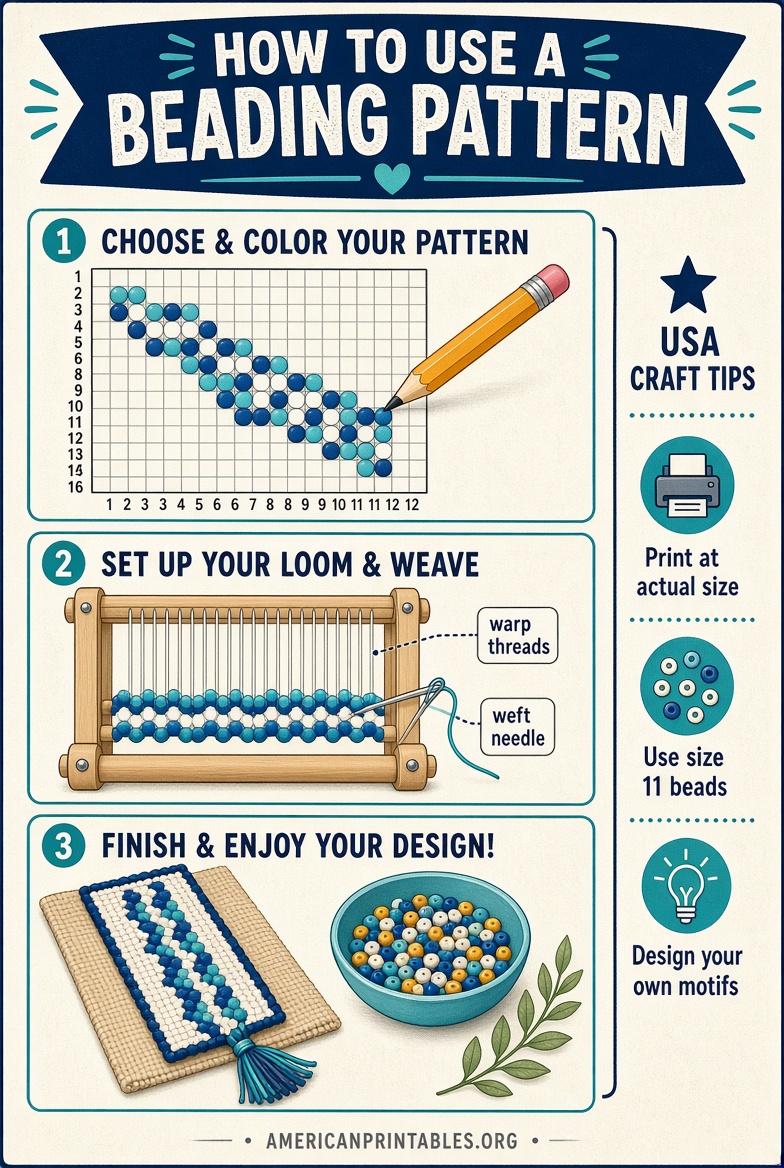
- Choose the stitch first. Loom and lane stitch suit geometric strips (bracelets, hatbands, belt drops). Overlay/applique suits Woodland-style flowers. Brick stitch suits fringe earrings. Peyote suits tubes and medallions.
- Print the matching graph paper at actual size.
- Mark a simple repeat: triangles, stepped diamonds, stripes, or a small floral sprig. Keep first projects under 20 beads wide.
- Use size 11/0 seed beads, Nymo or FireLine, and a size 10 or 12 beading needle. A small metal or wood loom helps for strips.
- Color the chart with pencils that match your bead colors before you start. That saves ripping out rows.
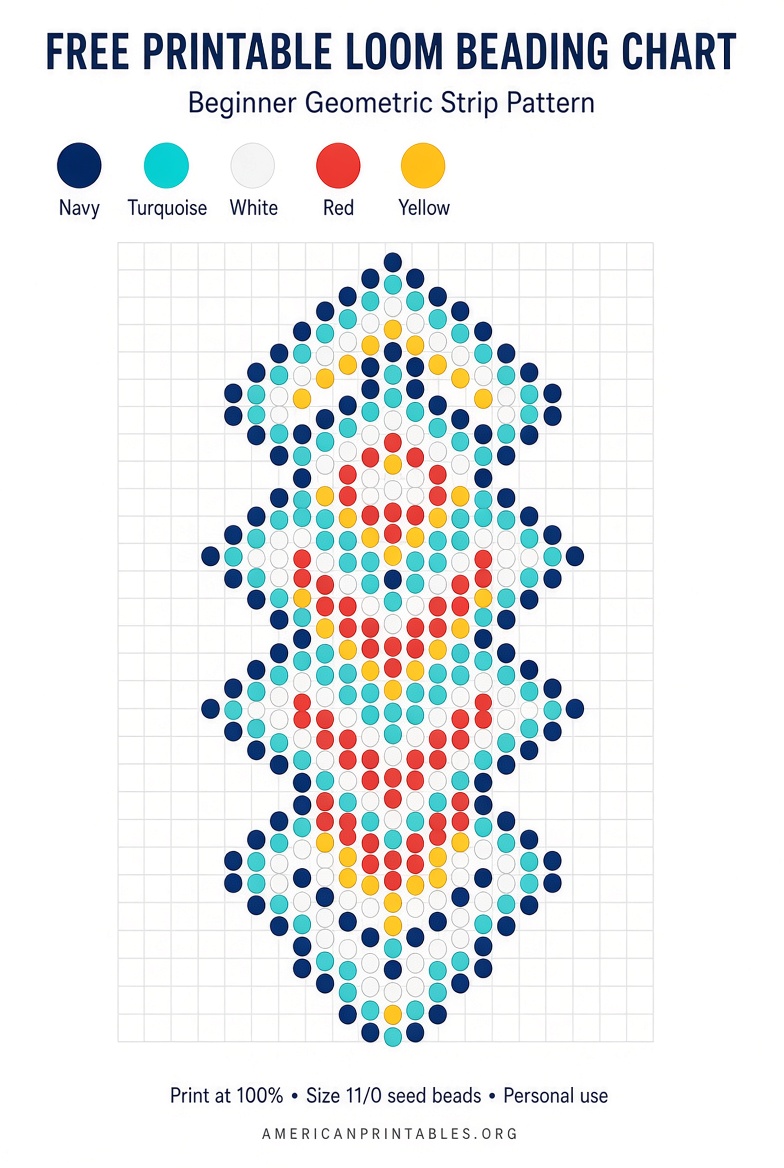
Typical U.S. supply list for a first loom strip: one pack each of chalk white, navy, turquoise, red, and yellow 11/0 beads, a cheap loom, and beading thread. Those colors show up often in historic Plains palettes, but they are not a rule for every nation.
Beginner Projects That Match Free Printables
- Loom bookmark or hatband: 8–12 beads wide, repeating triangles. Use loom graph paper.
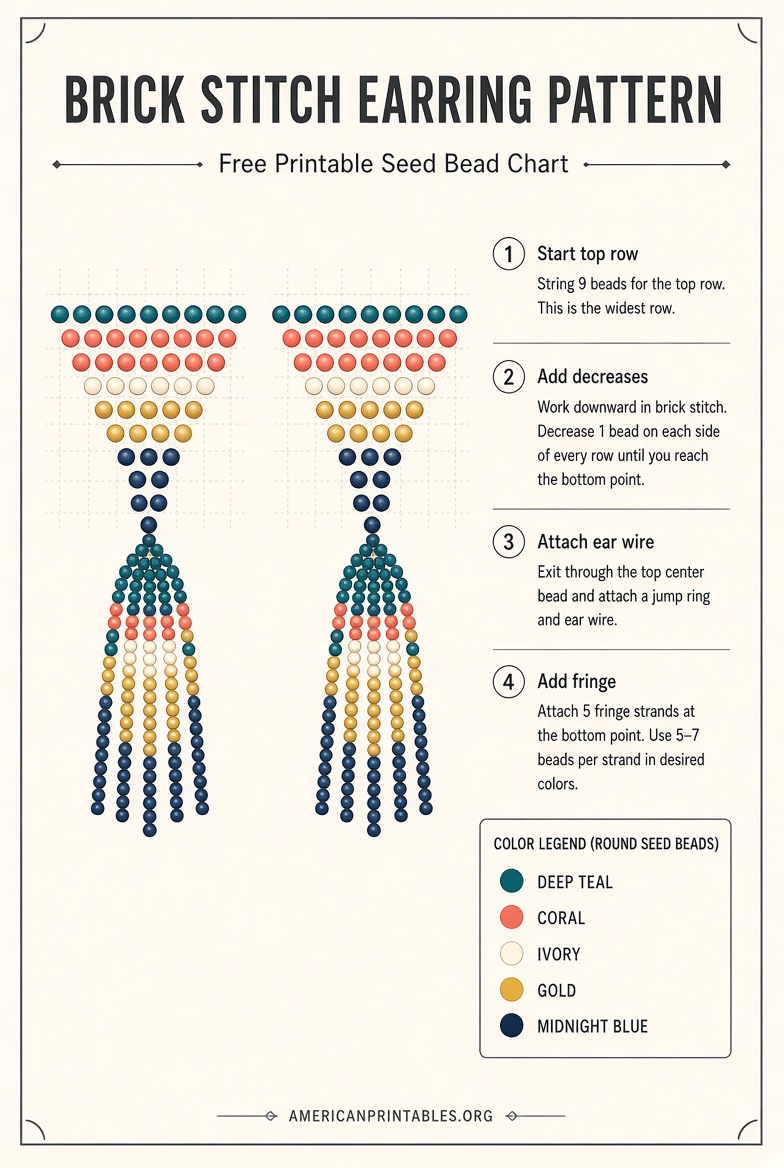
- Brick-stitch fringe earrings: a small triangle plus three to five fringe strands. Common contemporary form inspired by Native earring styles.
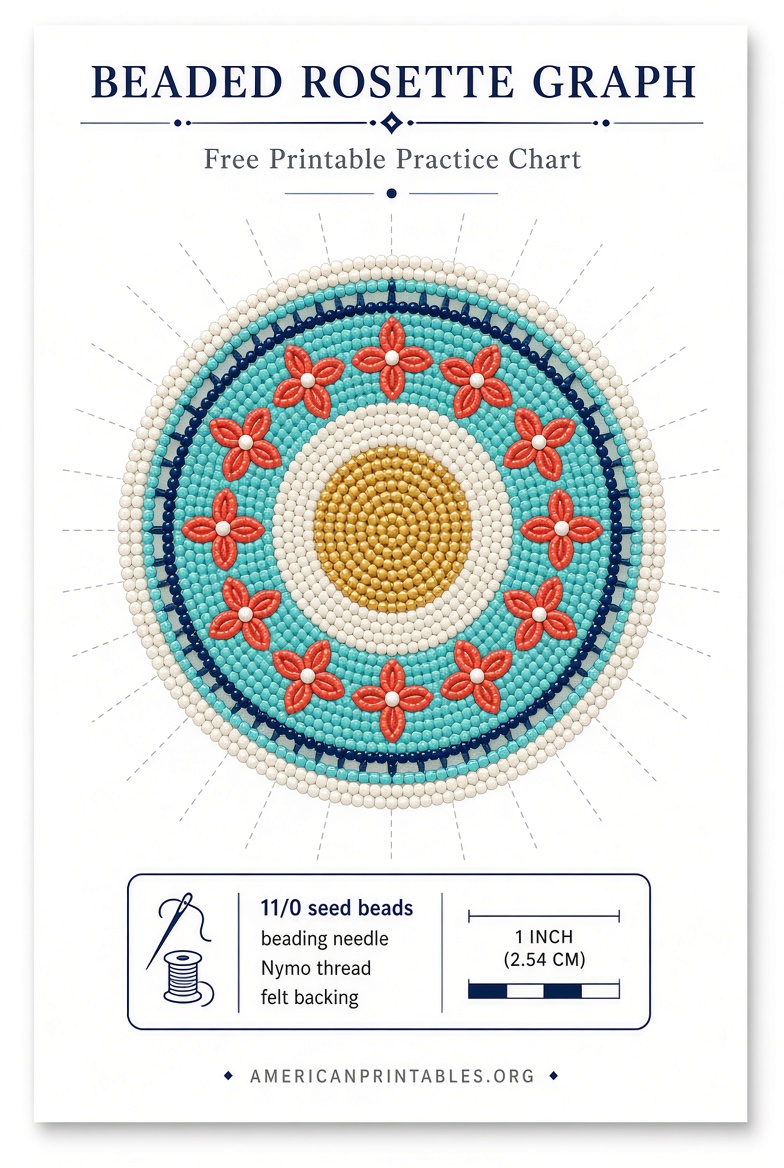
- Small rosette: circle graph paper, used on bags and medallions.
- Peyote tube: the Interweave booklet walks through a tubular peyote necklace.
Start small. A two-inch strip teaches tension faster than a full belt.
What You Will Not Find for Free?
Full copyrighted books of 70-plus tribal charts, such as Dover’s North American Indian Beadwork Patterns, are sold, not given away. Many Etsy “Native American pattern” PDFs are modern designs by non-Native sellers. If a site promises hundreds of “authentic tribal PDFs” with no museum, nation, or author name, skip it.
If you want traditional floral templates created for community teaching, look for work by Native educators and artists rather than random Pinterest collages.
FAQ
Are free Native American beading patterns legal to use?
Yes for personal practice when the publisher offers them free. Do not claim the finished jewelry is Native-made unless you are a member of a federally or state-recognized tribe (or otherwise meet the Indian Arts and Crafts Act rules). Do not copy living artists’ charts.
What paper should I print on?
Plain letter-size copy paper is fine for planning. Card stock holds up better on a clipboard next to a loom.
Which stitch is best for beginners?
Loom weaving and brick stitch are the easiest to read from a printed grid. Peyote takes more practice because the beads sit in offset columns.
Can teachers use these in a U.S. classroom?
Yes. The NMAI Life in Beads poster is written for grades 4–6. Pair it with graph-paper design time so students invent a pattern instead of tracing a sacred motif.
Where should I buy beads in the United States?
Any major craft chain carries 11/0 seed beads. For colors closer to historic palettes, specialty bead shops and suppliers that serve powwow and regalia makers are more useful than fashion-jewelry aisles.
Quick Recap
Use the Interweave booklet for free project instructions, the NMAI poster for authentic Plains context, Artbeads PDFs for paper you can print immediately, the Orchard museum book for historic technique plates, and NativeTech for stitch diagrams. That combination is more honest—and more useful—than a folder of unlabeled “tribal” clip art.
Print a loom or brick-stitch grid, keep the first design simple, and let the beads teach you the structure that Native artists refined over generations.