Free Printable Food Temperature Log Sheets – A free printable food temperature log helps home cooks, restaurants, food trucks, caterers, and other food businesses in the USA track refrigerator, freezer, hot-holding, cooking, and cooling temperatures. Consistent records support food safety, reduce waste, and prepare you for health inspections that often review temperature documentation first.
The FDA Food Code and USDA guidance emphasize controlling time and temperature for safety (TCS) foods. Bacteria multiply quickly in the “danger zone” between 41°F and 135°F. Proper logging shows that cold foods stayed at or below 41°F (commonly cited as 40°F or below for home refrigerators), freezers stayed at 0°F or below, and hot foods stayed at 135°F or higher.
Why Keep a Food Temperature Log?
Temperature control is one of the most effective ways to prevent foodborne illness. A simple daily or shift log creates an audit trail: date, time, unit or food item, actual reading, staff initials, and any corrective action taken. Inspectors look for complete, legible entries made at the time of the check rather than later from memory. Home users benefit too—especially after power outages—by knowing whether food stayed safe.
Key U.S. reference temperatures (always confirm local health department rules, which may adopt specific versions of the FDA Food Code):
- Refrigerator / cold holding: 41°F (5°C) or below (FDA Food Code commercial guidance); 40°F or below commonly recommended for home use.
- Freezer: 0°F (−18°C) or below.
- Hot holding: 135°F (57°C) or above.
- Safe minimum internal cooking temperatures (USDA): poultry and leftovers 165°F; ground meats 160°F; whole cuts of beef, pork, veal, lamb, and fish 145°F with a 3-minute rest for some cuts.
Use a calibrated food thermometer and an appliance thermometer. Place the appliance thermometer in the warmest part of the fridge (often near the door) and check regularly.
What a Good Free Printable Food Temperature Log Includes?
Look for these fields:
- Date and time of each check
- Equipment ID or food item description
- Actual temperature reading
- Target/critical limit
- Staff initials or signature
- Corrective action notes (essential—blank boxes after an out-of-range reading create risk)
- Optional manager verification or weekly review section
Many templates cover multiple units on one page or provide separate sheets for refrigerators/freezers versus cooking/hot holding/cooling.
Free Printable Food Temperature Log Sheets
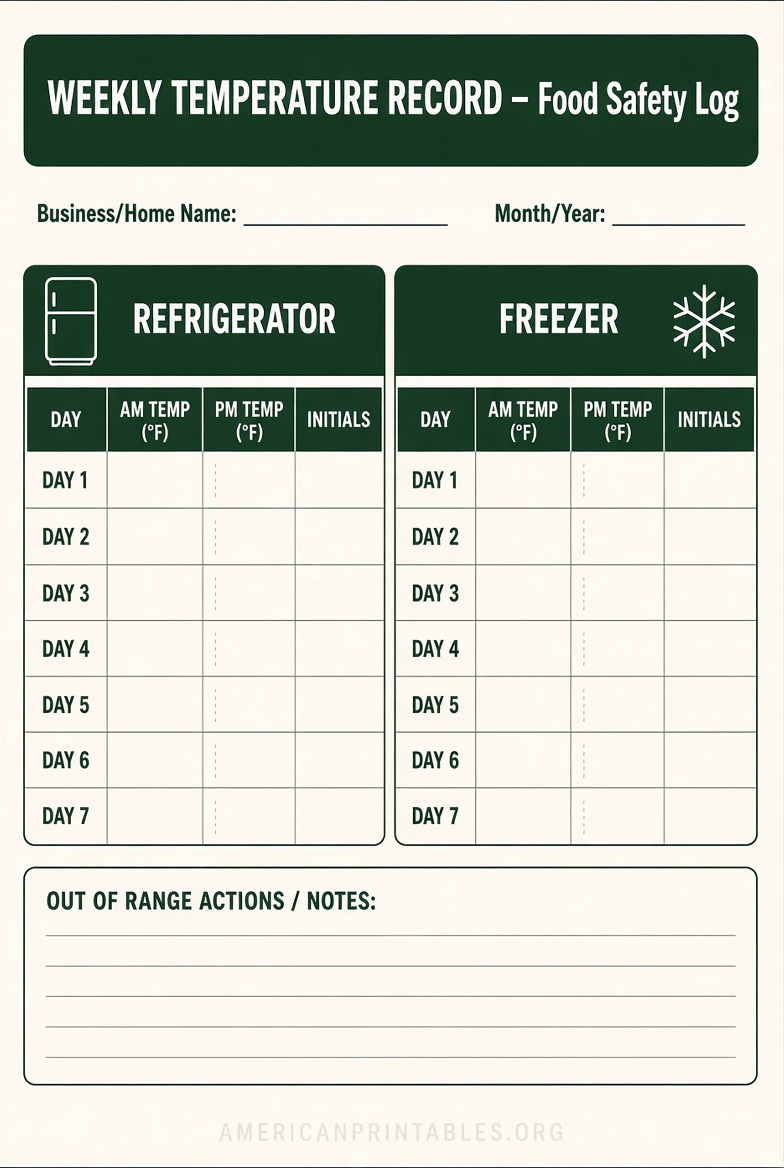
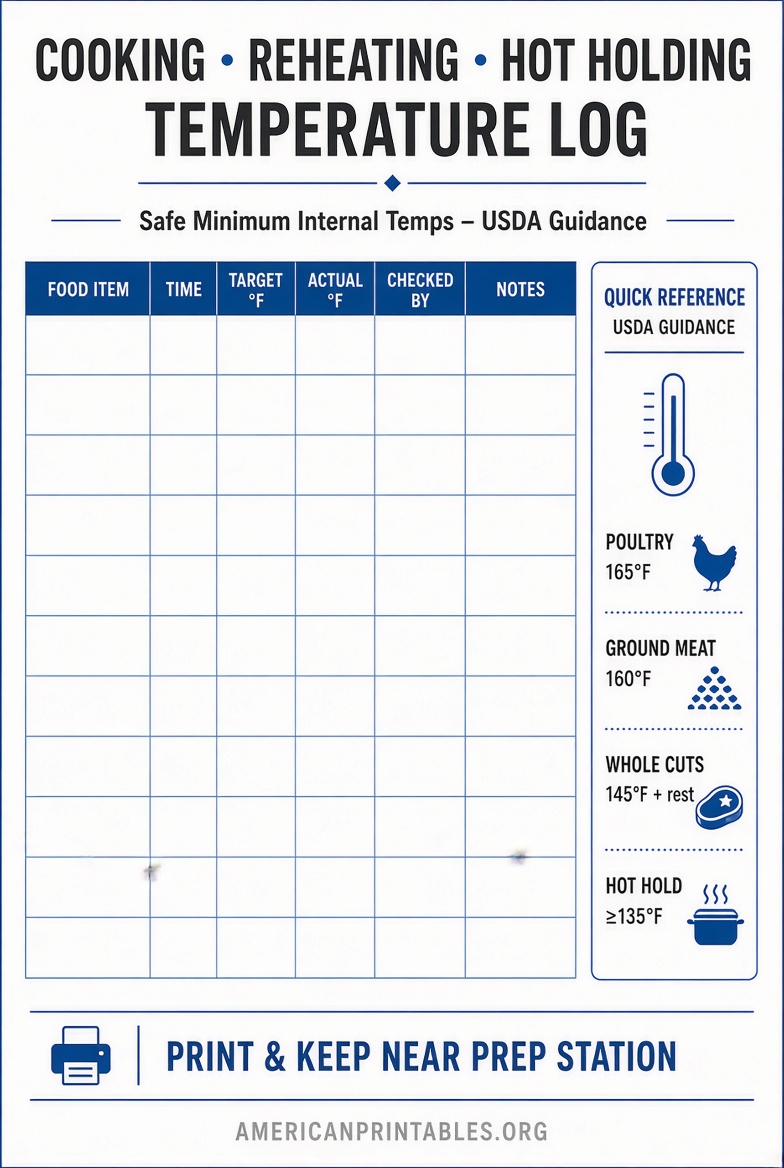
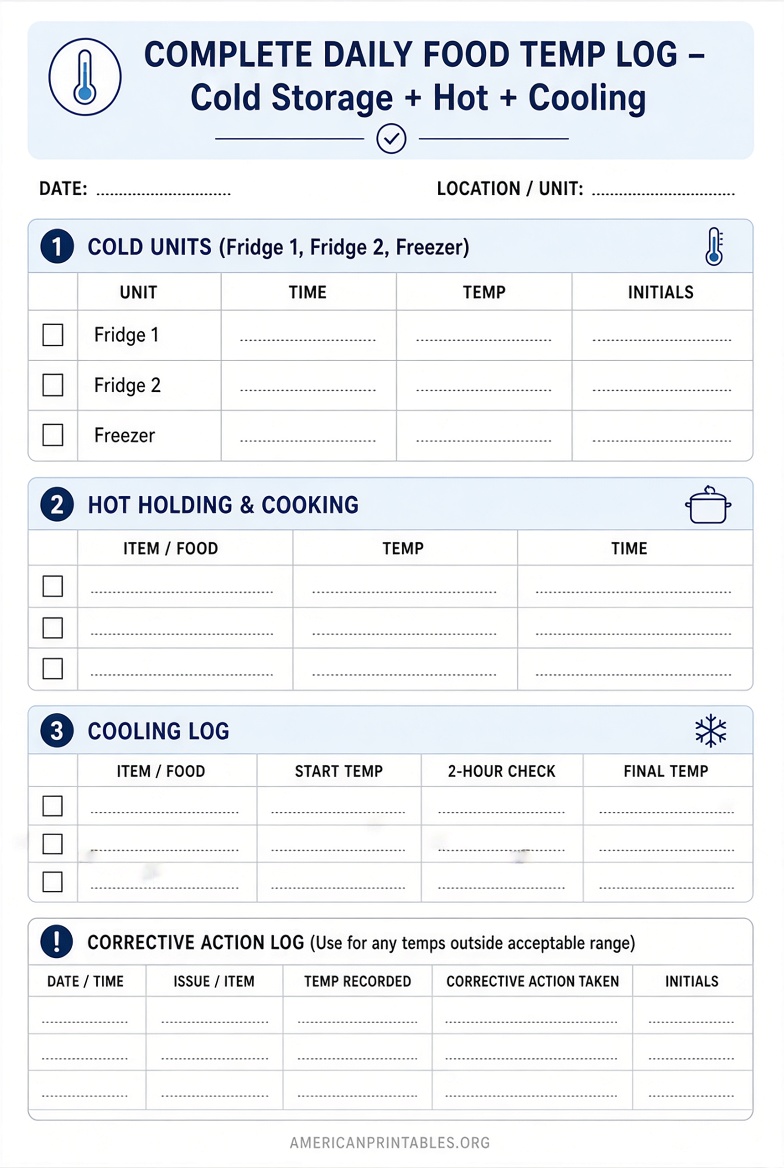
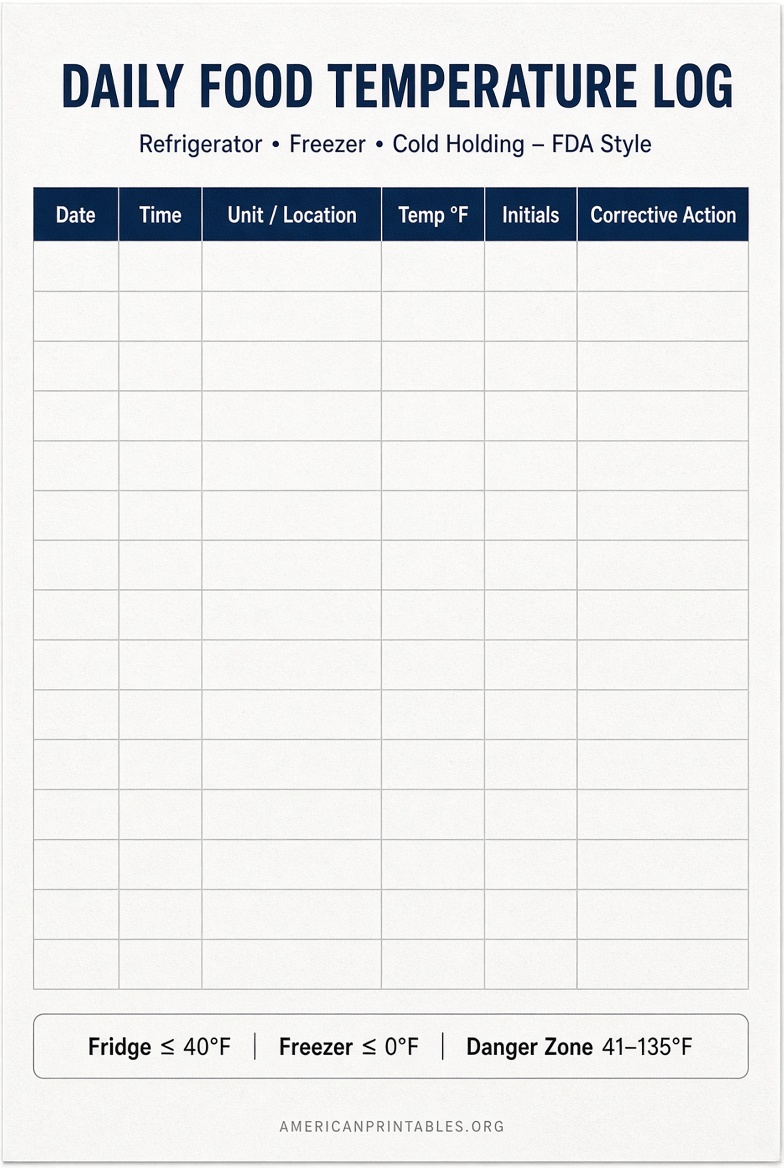
Where to Get Legitimate Free Printable Food Temperature Logs?
Here are reliable, current free resources (no invention of links or free claims). Always verify the download works and adapt the form to your local requirements.
- AuditBinder Daily Temperature Log (2026 audit-ready PDF)
Print-ready sheet with fields for date, time, equipment ID, temperature, critical limits, initials, and corrective action. No email required for the free download.
Download free Daily Temperature Log template (or the direct PDF linked on that page). - Miratag Free Daily Temperature Log (°F / FDA)
All-in-one daily log covering cold holding, hot holding, cooking temperatures by food type, and two-stage cooling aligned with FDA Food Code guidance. Free printable PDF available.
Get the free FDA-aligned Daily Temperature Log PDF. - PrintBlame Refrigerator Temperature Logs
Multiple free printable PDF styles focused on refrigerator (and often freezer) monitoring, with space for AM/PM readings and corrective actions. Click the images on the page to open and download the PDFs.
Browse and download free refrigerator temperature log sheets.
For authoritative temperature guidance and thermometer use (not a log template itself), refer to the USDA Food Safety and Inspection Service:
USDA Food Thermometers and Safe Minimum Internal Temperatures.
And FDA refrigerator guidance:
FDA Refrigerator Thermometers – Cold Facts About Food Safety.
These five links prioritize official or clearly free, practical sources. Avoid sites that require payment, heavy sign-ups, or unclear terms.
Practical Tips for Using Your Food Temperature Log
- Check at consistent times (opening and closing is a common minimum for many operations; higher-risk settings may need more frequent checks).
- Record the actual number, not just a checkmark.
- Act immediately on out-of-range readings: adjust the unit, move food if needed, discard product that has been in the danger zone too long, call for service, and document everything.
- Calibrate thermometers regularly (ice-point method is simple and effective).
- Store completed logs for the retention period required by your local health authority (often months to a few years).
- Keep the blank log near the equipment so staff fill it in real time.
- Label each unit clearly if you monitor more than one fridge or freezer.
For home kitchens, a simple monthly fridge/freezer log plus a cooking temperature check for high-risk items is usually sufficient. Commercial operations should align the log with their HACCP plan or local permitting requirements.
Brief FAQ
How often should temperatures be logged?
Many health departments expect at least twice daily for refrigeration units. Follow your local code or food safety plan.
Do I need a log for a home kitchen?
It is not usually required, but it is useful for power-outage decisions and general food safety habits.
What if a reading is out of range?
Document the reading, the immediate action taken, what happened to the food, and any follow-up. A blank corrective-action space is a common inspection concern.
Are digital logs better than paper?
Both can work. Paper is simple and visible; digital options often add timestamps and easier searching. Choose what your team will actually complete consistently.
A free printable food temperature log is an inexpensive, high-impact tool. Download one of the templates above, print a few copies, place them where the checks happen, and start recording. Consistent use protects customers, staff, and your operation while making inspection day far less stressful. Always cross-check the latest local health department rules, as adoption of FDA Food Code provisions can vary by jurisdiction.