Rice Diet Plan Menu Free Printable Guide – The rice diet is a low-sodium, low-fat, high-carbohydrate eating plan originally developed in the late 1930s by Dr. Walter Kempner at Duke University. It was created to help patients with severe hypertension and kidney disease and later adapted for weight loss. Modern versions, popularized in books such as The Rice Diet Solution, emphasize whole grains (especially rice), fruits, vegetables, beans, and limited nonfat dairy or lean protein while keeping sodium very low.
This guide explains the plan clearly for a U.S. audience, shares practical sample menus you can adapt and print, and points you to legitimate free or official resources. Always consult your doctor before starting any restrictive diet, especially if you take medications for blood pressure, diabetes, or kidney issues, as the low sodium and calorie levels can require medical supervision.
What Is the Rice Diet and How Does It Work?
The original Kempner rice diet was extremely strict: mostly white rice, fruit, fruit juice, sugar, and vitamins, with sodium often under 150–200 mg per day. It produced dramatic improvements in blood pressure and related conditions under close medical monitoring.
Today’s popular adaptations (such as those in The Rice Diet Solution) use three flexible phases with portion-based guidelines rather than strict calorie counting:
- Phase 1 (Detox/Cleansing, roughly 800 calories): Focuses on starches (rice, other grains, potatoes, bread) and fruit. Vegetables, beans, and nonfat dairy are gradually added.
- Phase 2 (Weight Loss, roughly 1,000 calories): Continues low sodium (often 300–500 mg) with more variety.
- Phase 3 (Maintenance): Higher calories and more flexibility while keeping sodium controlled.
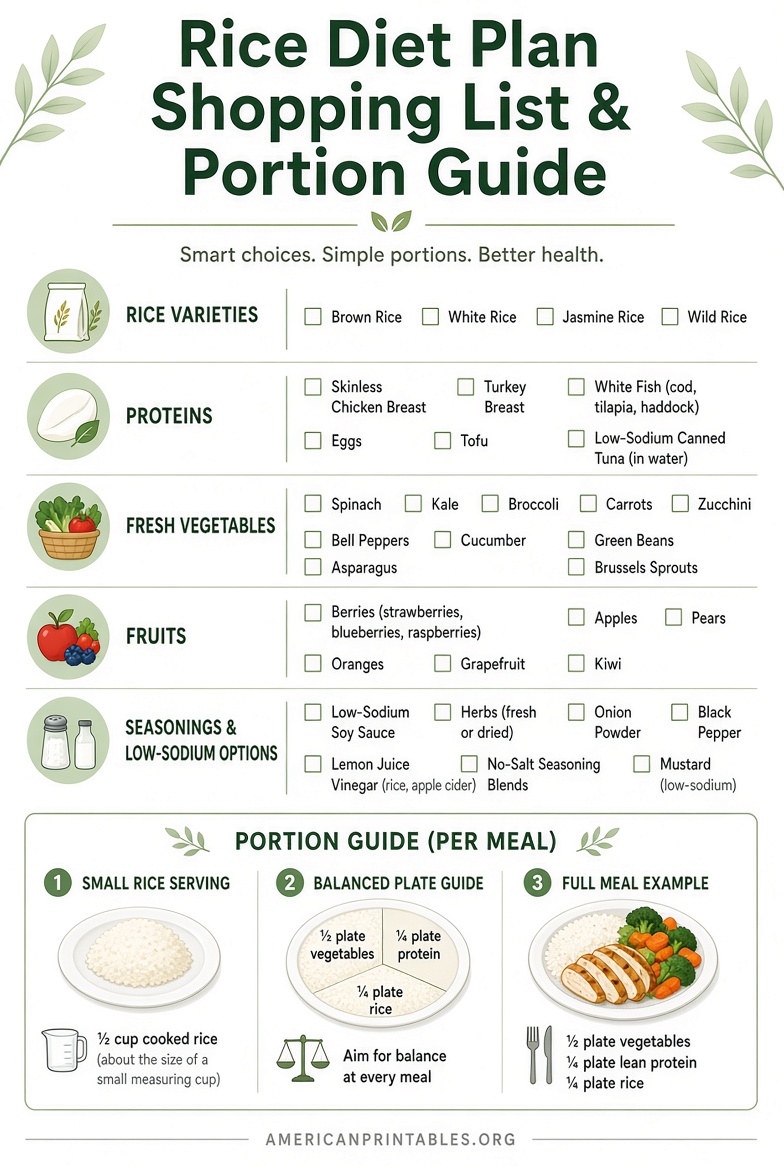
Foods are measured in “exchanges” or simple portions. Typical starch portions include about ⅓ cup cooked rice or beans, ½ cup other cooked grains/pasta, or 1 slice bread. Fruit is usually 1 medium piece or 1 cup. Vegetables are 1 cup raw or ½ cup cooked. Sodium stays very low by avoiding added salt, processed foods, and most sauces.
Benefits often reported include rapid initial water-weight loss, improved blood pressure for some people, and simplified meal planning. It is not a long-term everyday diet for most healthy people and can be low in protein, calcium, and certain nutrients if followed strictly without professional guidance.
Sample Rice Diet Plan Menu You Can Print
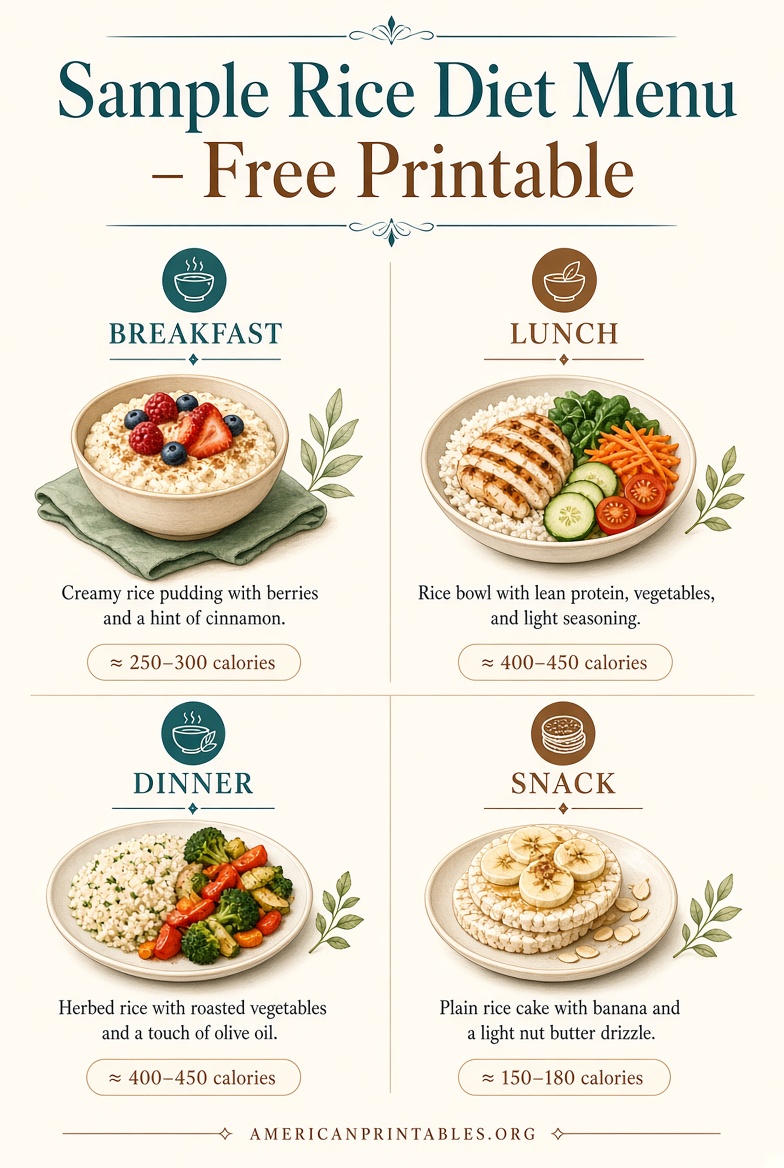
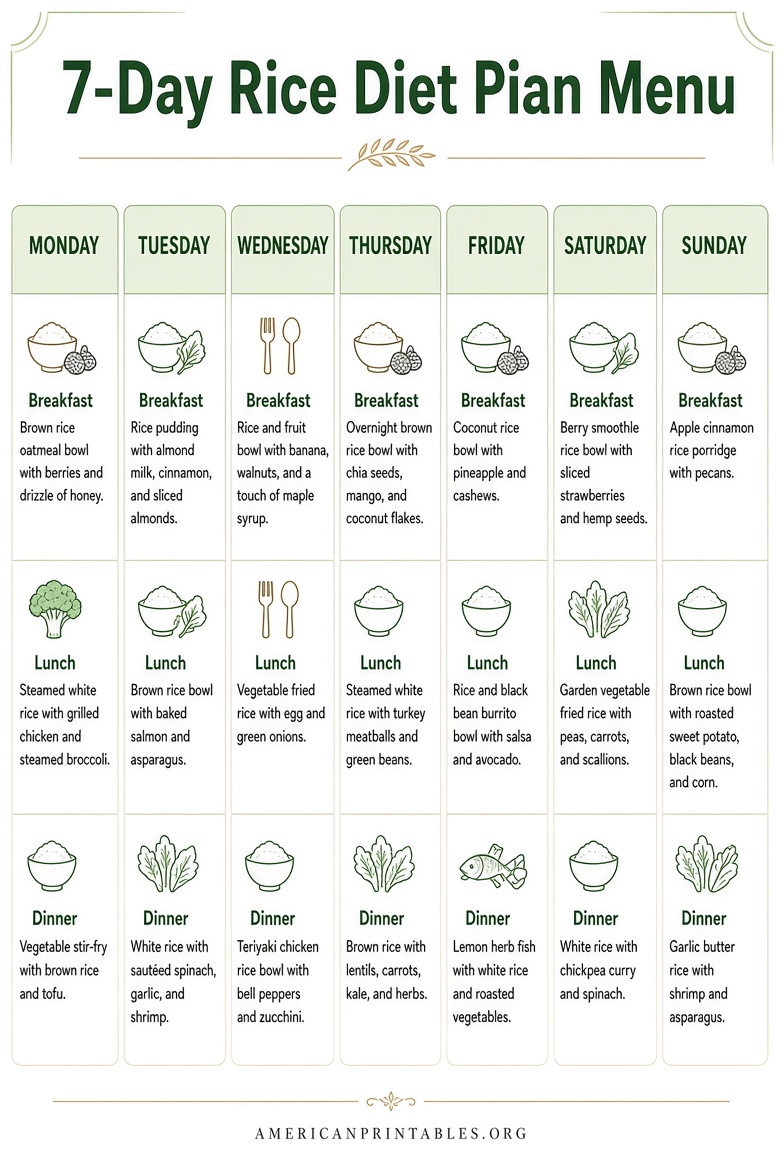
Here is a practical, printable-style sample based on publicly described Phase 1–2 guidelines. Adjust portions to your needs and medical advice. Use plain cooked rice (white or brown), fresh fruit, no-salt-added vegetables, and herbs for flavor. Print this section or copy it into a free meal-planner template.
Daily structure (approximate):
Breakfast · Lunch · Dinner · Optional fruit or starch snack if needed within guidelines.
Day 1 (Basic/Cleansing style – starches + fruit)
- Breakfast: 1 cup cooked oatmeal or rice + 1 medium banana + 1 cup berries
- Lunch: ⅓–½ cup cooked brown rice + 1 medium apple + 1 orange
- Dinner: ⅓–½ cup cooked rice or quinoa + 1 cup mixed fruit
Days 2–7 (Expanded – add vegetables, beans, nonfat dairy)
- Breakfast: 1 slice whole-grain toast or ½ cup cooked grain + 1 cup nonfat milk or yogurt + 1 fruit
- Lunch: 1 cup cooked brown rice or beans + 2–3 cups mixed salad or steamed vegetables (no salt) + 1 fruit
- Dinner: 1 cup cooked grains/beans + 2–3 cups vegetables + 1 fruit
Vary the grains (brown rice, quinoa, barley, oatmeal), fruits (berries, apples, oranges, melon), and vegetables (broccoli, leafy greens, carrots, zucchini, tomatoes). Season with herbs, vinegar, or lemon. Keep total sodium low by choosing no-salt-added products.
These sample menus draw from the portion framework described in reliable summaries of the modern rice diet.
Where to Find Legitimate Free or Official Resources?
No widely available official free printable “Rice Diet Plan Menu” PDF is distributed by the original program for unrestricted home use. Instead, use these trusted sources:
- Detailed explanations of phases, allowed foods, and how the plan works: WebMD Rice Diet overview
- Guidelines, phases, and safety notes: Medical News Today Rice Diet article
- Free low-sodium, low-fat recipe ideas from the Rice Diet Program: Rice Diet Program recipes page
- Historical and clinical background on Dr. Kempner’s original work: Dr. McDougall summary of Walter Kempner and the rice diet
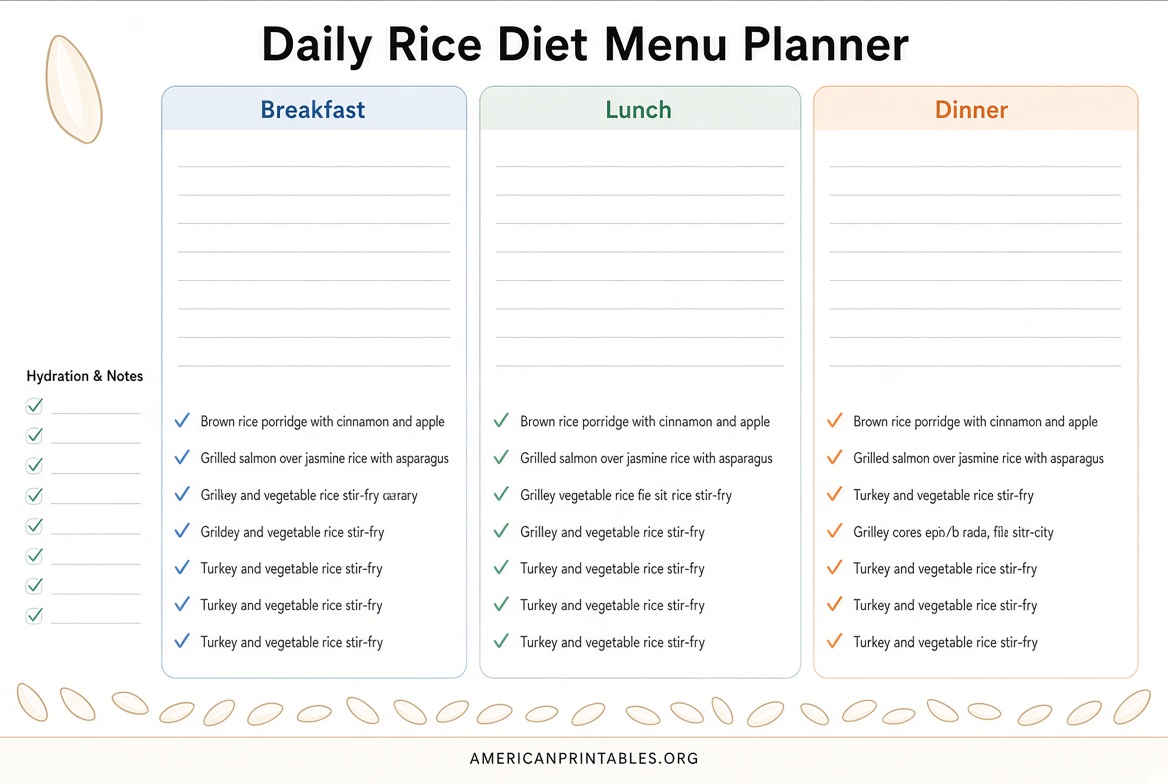
For a blank printable meal planner you can fill with the sample menus above, many free weekly templates are available from general productivity sites. Print this article’s sample section or use your browser’s print-to-PDF feature for a quick personal chart.
Books such as The Rice Diet Solution and The Rice Diet Cookbook contain fuller weekly menus and recipes; check libraries or authorized retailers rather than unofficial file-sharing sites.
Rice Diet Plan Menu Free Printable Guide
Practical Tips for Following a Rice Diet Plan in the USA
- Shop for plain rice, fresh produce, no-salt-added beans, and nonfat dairy at any major grocery store.
- Batch-cook plain rice and grains at the start of the week.
- Track sodium carefully—most restaurant and packaged foods exceed the plan’s limits.
- Stay hydrated and consider a multivitamin if recommended by your doctor.
- Monitor how you feel; rapid weight loss can include water and muscle if protein is too low.
- Transition to a more balanced long-term pattern once goals are met.
Brief FAQ
Is there an official free printable rice diet menu?
No single official free printable is widely distributed. Use the sample menus here, print trusted articles, or fill a free general meal planner with the portion guidelines.
How long should I follow it?
Phase 1 is typically short (about a week). Phase 2 continues until weight goals are approached, always under medical advice. It is not intended as a permanent exclusive diet for most people.
Can I use brown rice instead of white?
Yes. Modern versions commonly include brown rice and other whole grains for extra fiber.
Is the rice diet safe?
It can be restrictive. People with medical conditions or on certain medications need professional supervision. Results and safety vary by individual.
This resource page gives you clear information, usable sample menus, and direct links to authoritative sources so you can decide whether a rice diet approach fits your health goals. Print the sample section, adapt it, and discuss it with your healthcare provider for the safest start.