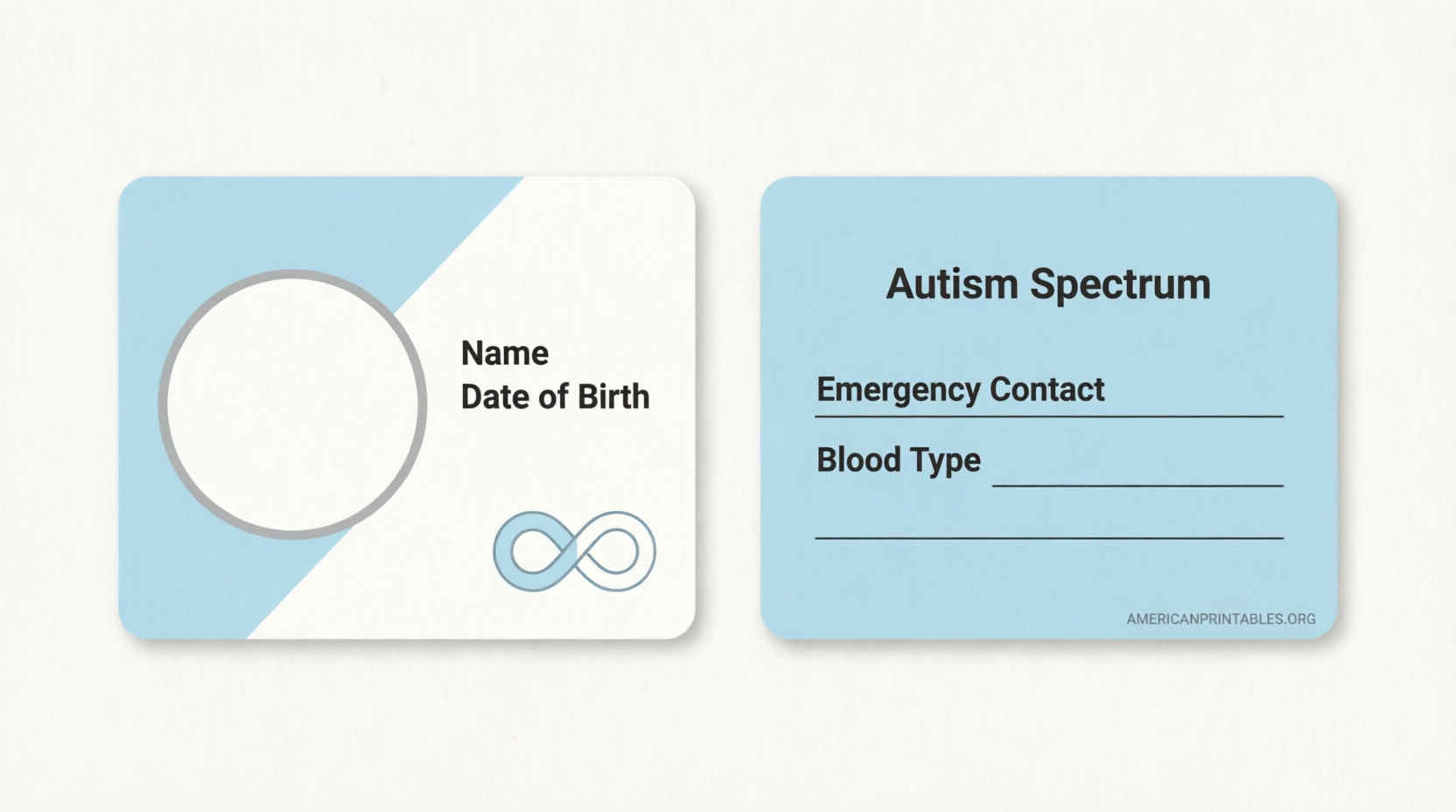
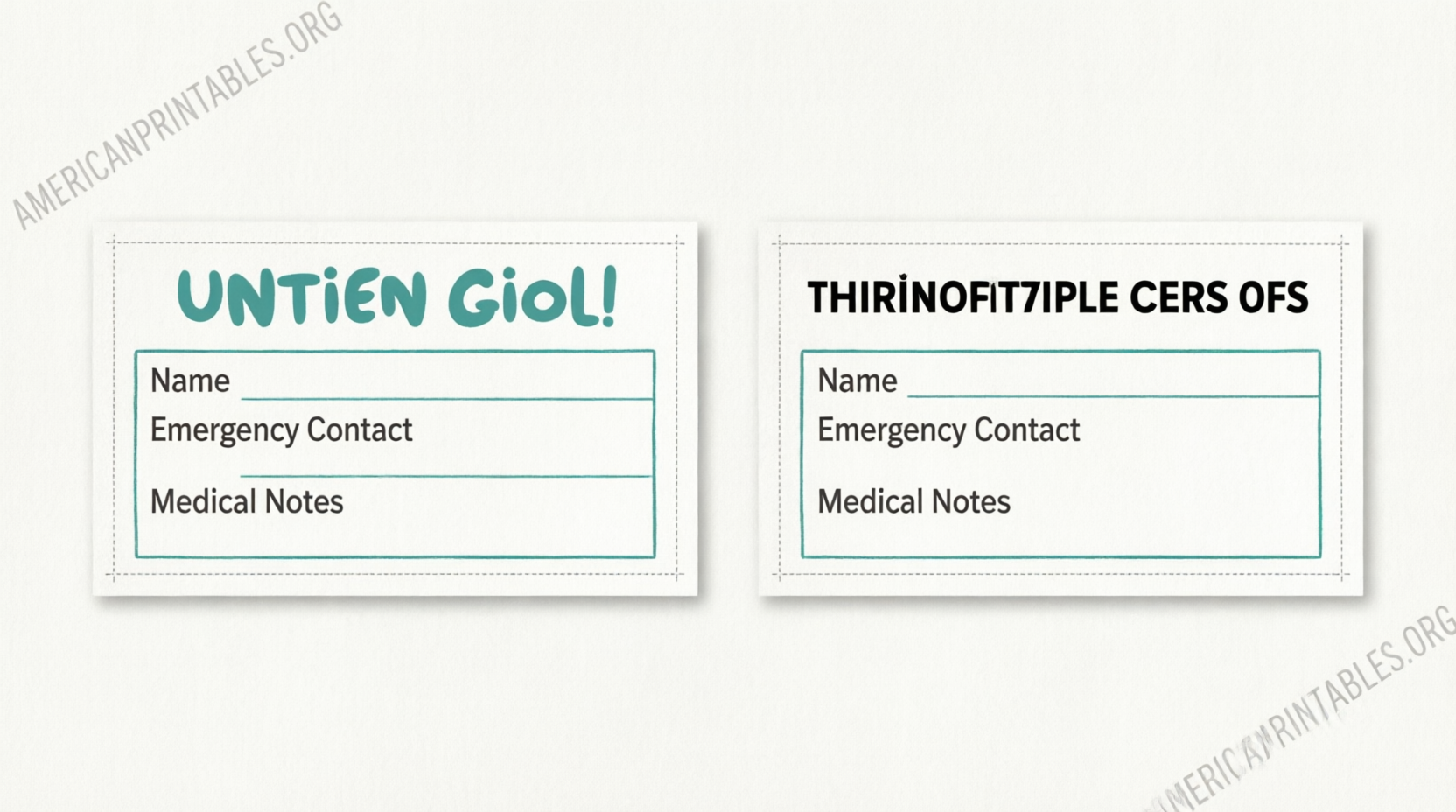
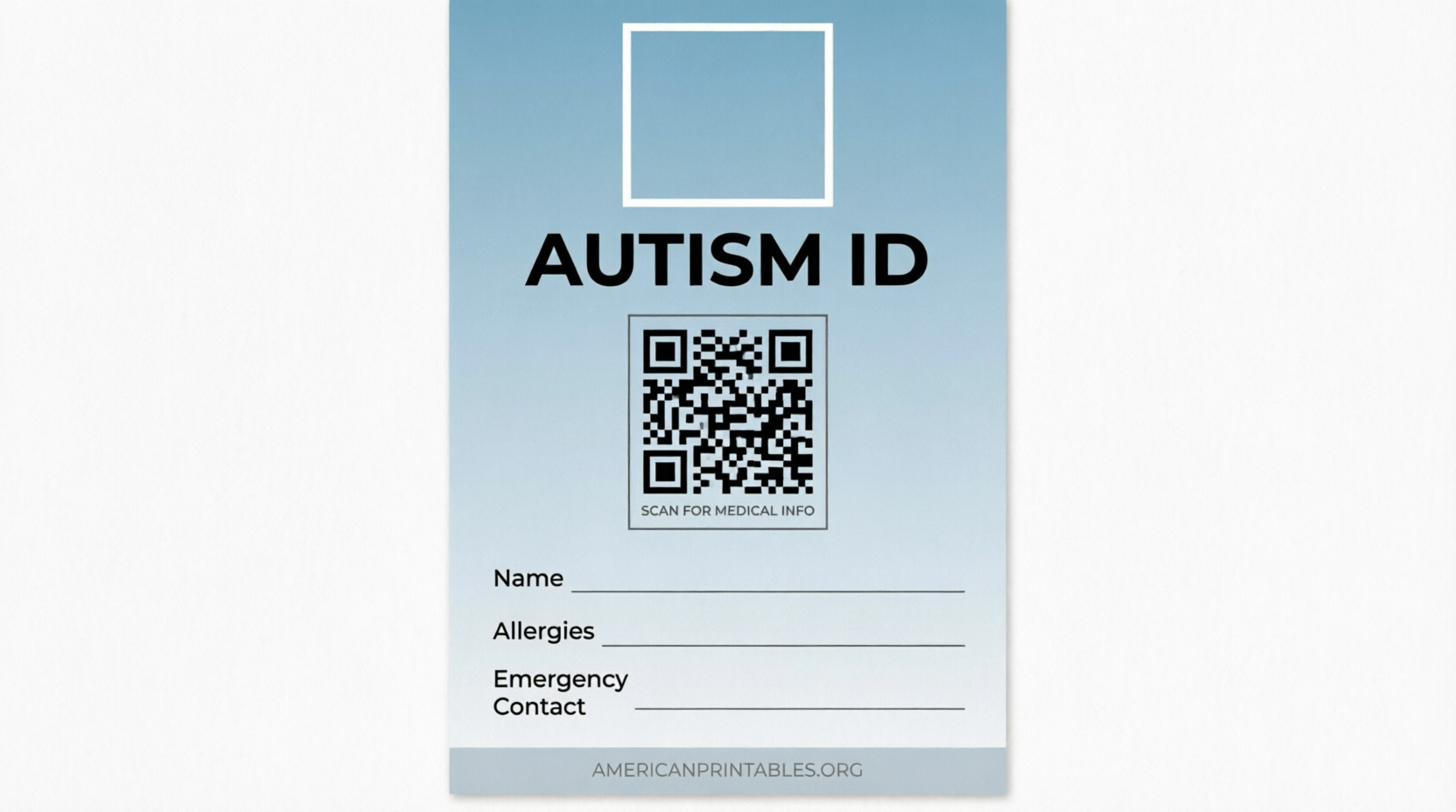
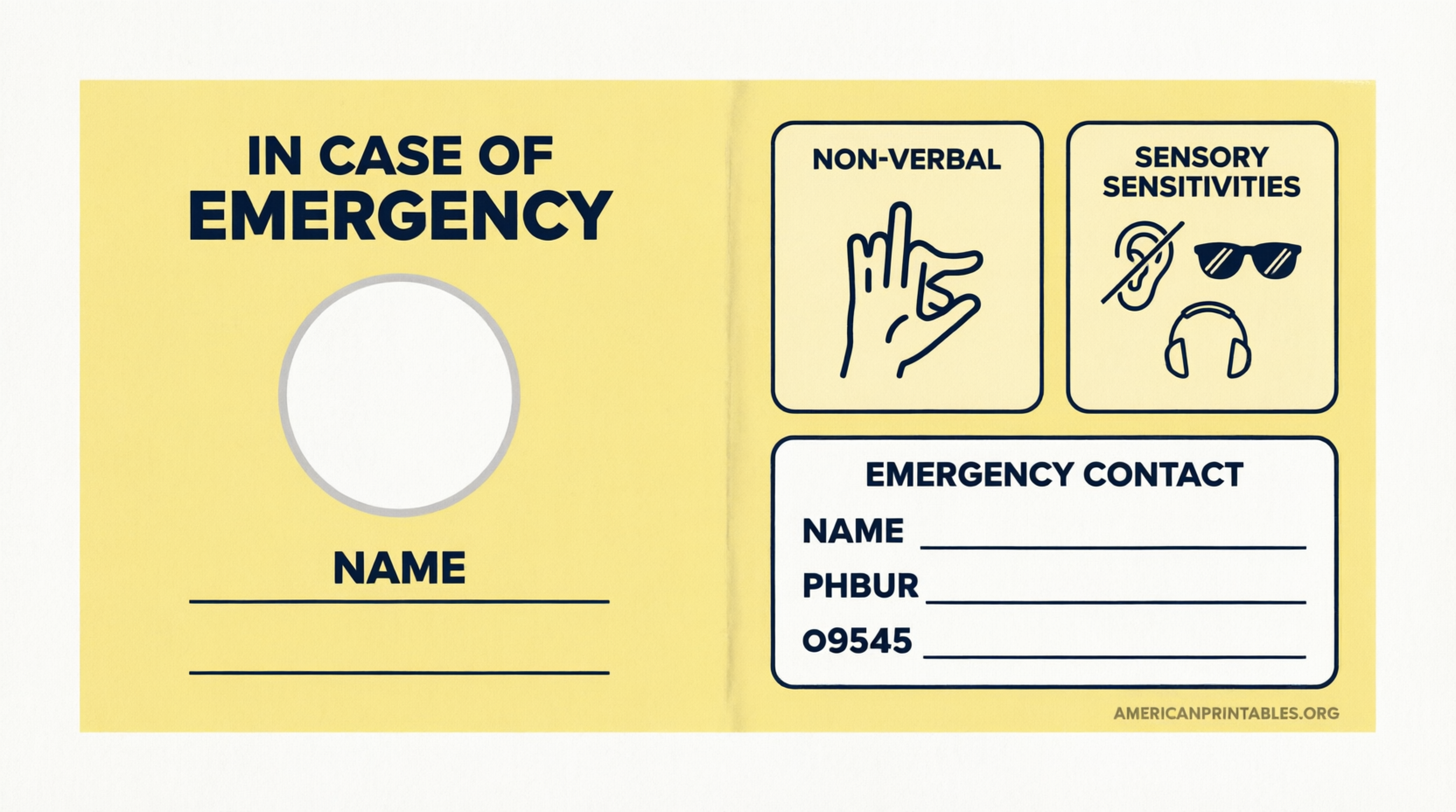
Free Printable Autism ID Cards for Safety – A free printable autism ID card is a simple, wallet-sized or backpack-friendly tool that helps autistic individuals and their families communicate important information during emergencies, interactions with first responders, or situations where verbal communication is difficult. These cards typically include a photo or description, name, diagnosis note, emergency contacts, communication preferences, sensory needs, and tips for responders (such as speaking calmly, avoiding sudden touch, or using simple language).
For families in the USA, these cards support safety around wandering/elopement risks, community outings, school, or encounters with police, EMTs, or store staff. They are not official government IDs in most states (Alabama offers a state-issued version for a fee), but they serve as practical awareness and information tools. Always customize them with accurate, current details and practice using them in low-stress settings.
Why Carry an Autism ID Card?
Autistic people may experience challenges with communication, sensory processing, or understanding instructions under stress. A card can:
- Quickly inform responders that the person has autism and may need accommodations.
- Provide emergency contact numbers so help arrives faster.
- Reduce misunderstandings that could escalate a situation.
- Support non-speaking or minimally speaking individuals by offering a way to share key facts.
Printable versions are ideal because you can create multiple copies, laminate them for durability, and update them as needs change. Place one in a wallet, backpack, phone case, car glovebox, or on a lanyard.
Where to Get Legitimate Free Printable Autism ID Cards?
Here are trusted, currently available free options focused on useful downloadable templates or cards (prioritizing direct, no- or low-barrier access). Always verify the download works and review content before printing.
- The Autism Foundation offers a free two-sided printable autism ID card (emailed after a $0 checkout process). It is designed to be printed back-to-back for wallet use. Access it here: Autism Foundation free Autism ID Card.
- Kori at Home provides free DIY printable autism ID card templates with no email opt-in required. These include space for the child’s information on one side and guidance for first responders on the reverse. Download directly from the page: Free Printable Autism ID Cards.
- The Autism Society of America offers a free Emergency Identification Sheet (printable PDF) that captures personal details, contacts, medical info, sensory needs, communication methods, and calming strategies. It works well as a more detailed companion to a wallet card or for emergency binders: Autism Society Emergency Identification Sheet.
- My Family ID provides a free blank printable autism ID card PDF and a customizable Canva template. These are straightforward to personalize and print: visit their resource page for the downloads (search for the free autism ID card template and blank PDF options on the site).
Limit external links to these high-value sources. Avoid sites that require payment, heavy upsells, or unverified claims. Some educational blogs and classroom resource sites also share editable PowerPoint or basic templates—search carefully and prefer established autism-focused creators.
Free Printable Autism ID Cards for Safety
How to Customize and Use Your Free Printable Autism ID Card?
- Download the template and open it in a PDF reader, word processor, or Canva (free account often suffices).
- Add essential details: full name or preferred name, recent photo if desired, emergency contacts (at least two), diagnosis note (“I have autism”), communication style (e.g., non-speaking, uses AAC, needs extra processing time), sensory sensitivities, and specific helpful tips (e.g., “Please speak slowly and give me time to respond. Avoid sudden touch.”).
- Keep language clear and concise. Focus on what responders need to know in the moment.
- Print on cardstock or regular paper, cut to size, and laminate for durability. Make several copies.
- Teach the autistic person (when appropriate) how and when to present the card. Practice role-playing calm scenarios. Note that reaching for a card during a high-stress police encounter should generally wait until identification is requested, for safety.
- Update the card regularly and store extras in key locations. Pair it with other safety tools such as medical alert jewelry, GPS trackers if suitable, and a family emergency plan.
These cards complement—not replace—other measures like teaching safety skills, securing the home, notifying neighbors or local responders about potential wandering risks, and registering with relevant community programs where available.
Tips for Maximum Usefulness
- Laminate and consider a hole punch for a lanyard or keyring attachment.
- Include only necessary personal information to balance safety and privacy.
- For school or therapy settings, share a version with staff (with permission).
- Check local resources: some states or police departments have autism awareness training or registries that work well alongside a personal card.
- Digital backups (photos of the card on a phone or secure apps) can serve as a secondary option, though physical cards remain reliable offline.
Brief FAQ
Are free printable autism ID cards officially recognized by police?
They are helpful awareness tools but generally not official government IDs except in limited cases like Alabama’s fee-based state card. Their value depends on responders reading and using the information.
Can I make my own from scratch?
Yes. Use a simple template or create one with the sample language found on reputable sites. Include name, contacts, and clear instructions for helpers.
Is there a cost?
The resources linked above offer free downloads. Printing and laminating are low-cost at home or a local print shop.
What if my child is non-speaking?
Cards are especially useful. Pair them with any existing communication system and practice presentation skills in safe environments.
A free printable autism ID card is a practical, accessible step toward greater safety and understanding. Download a trusted template today, personalize it, and keep copies ready. For broader safety planning, consult established autism organizations and local first-responder resources.