Free Printable Anger Thermometer PDFs | Kids & Adults – A free printable anger thermometer is one of the simplest tools families, teachers, and counselors in the United States use to talk about big feelings before they boil over. Instead of waiting until someone is yelling, slamming a door, or shutting down, the chart turns anger into a scale you can see, name, and plan for.
This page explains what an anger thermometer is, how to use one at home or school, and where to download legitimate free printables. Every download link below goes to a real resource page or official workbook. None of these links is invented, and paid worksheets are not listed as free.
What Is an Anger Thermometer?
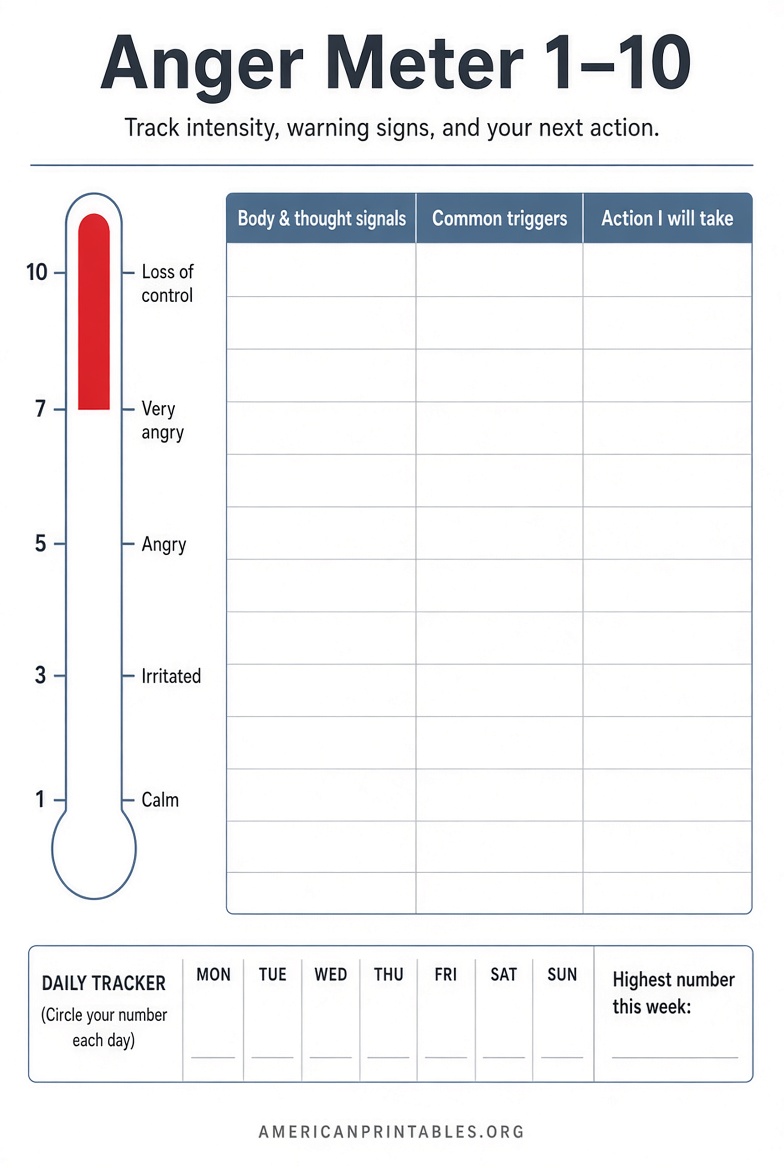
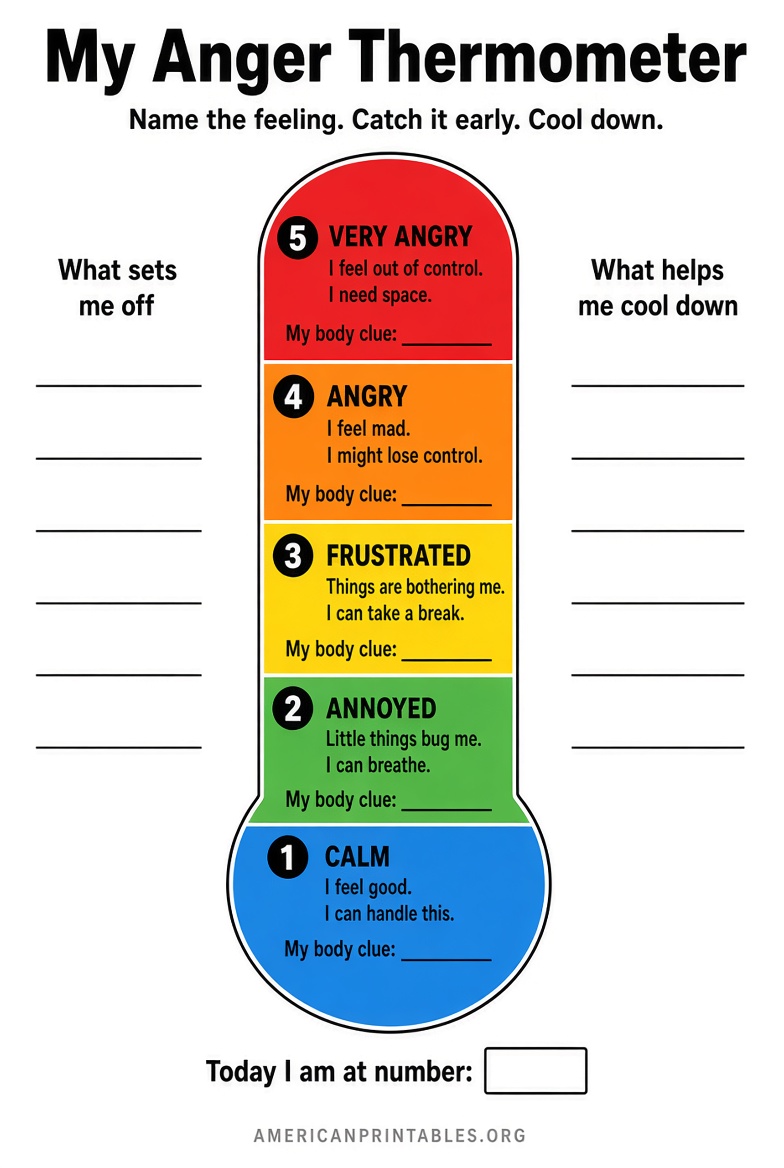
An anger thermometer (sometimes called an anger meter, anger scale, or feelings thermometer) is a visual chart that rates anger from calm to out of control. Most versions use a 3-point, 5-point, or 10-point scale.
A typical scale looks like this:
- 1: Calm, relaxed, in control
- 3: Annoyed or frustrated
- 5: Clearly angry; voice rising, body tense
- 7–8: Very angry; hard to think clearly
- 10: Explosive anger, loss of control, or unsafe behavior
The goal is not to pretend anger is bad. Anger is a normal human emotion. The goal is to catch it early, notice body signals, and use a coping skill before the “temperature” hits the top.
School counselors and therapists often pair the chart with:
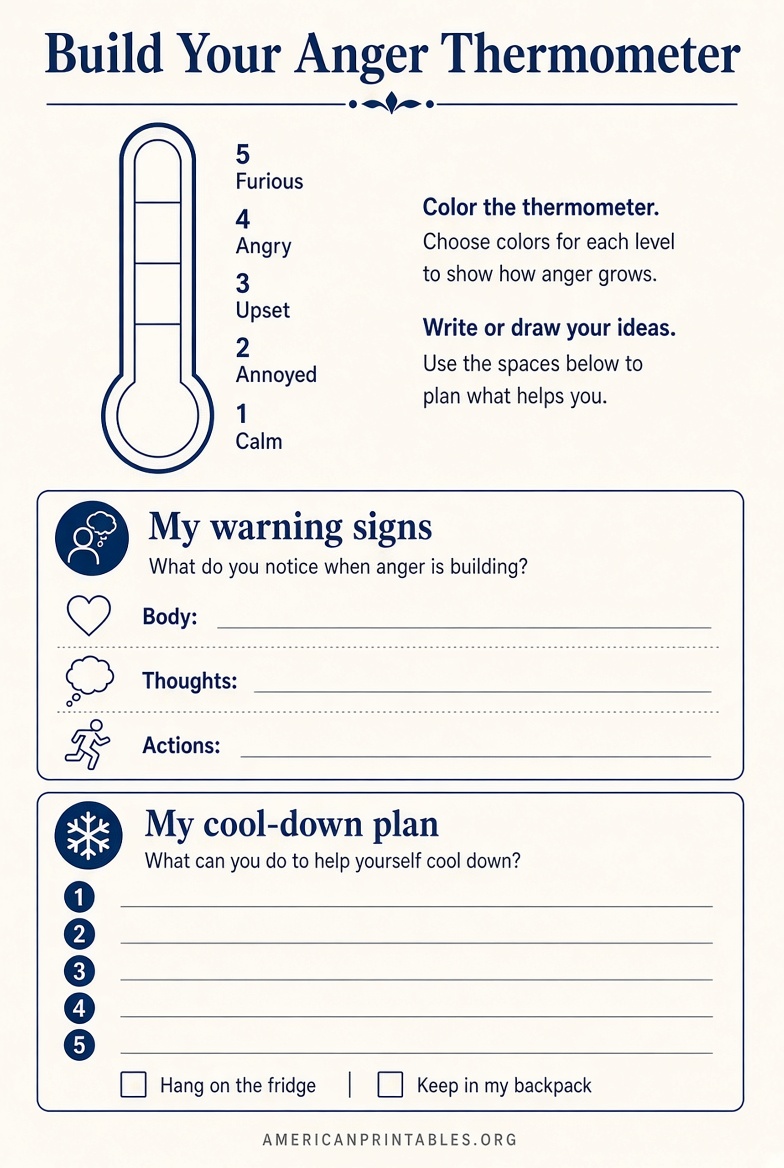
- Body clues (tight fists, hot face, racing heart)
- Common triggers (homework, siblings, traffic, feeling unheard)
- A matching calm-down plan for each level
Why This Tool Helps Kids and Adults?
Anger rarely jumps from zero to ten in one second. It usually climbs. A printed thermometer makes that climb visible.
Parents use it on the fridge for after-school check-ins. Teachers use it in calm-down corners and social-emotional learning lessons. Therapists use it so clients can describe intensity without having to find the perfect words.
It is especially useful when a child or teen:
- Has ADHD, autism, anxiety, or sensory overload
- Melts down quickly and later cannot explain what happened
- Needs a shared language with parents and teachers
Adults use the same idea in anger-management programs. The federal Substance Abuse and Mental Health Services Administration (SAMHSA) teaches a 1-to-10 “anger meter” in its free participant workbook so people can track the highest level they reached each day and practice an anger-control plan before they hit 10.
How to Use a Free Printable Anger Thermometer?
Introduce the chart when everyone is calm. Do not roll it out for the first time in the middle of a blowup.
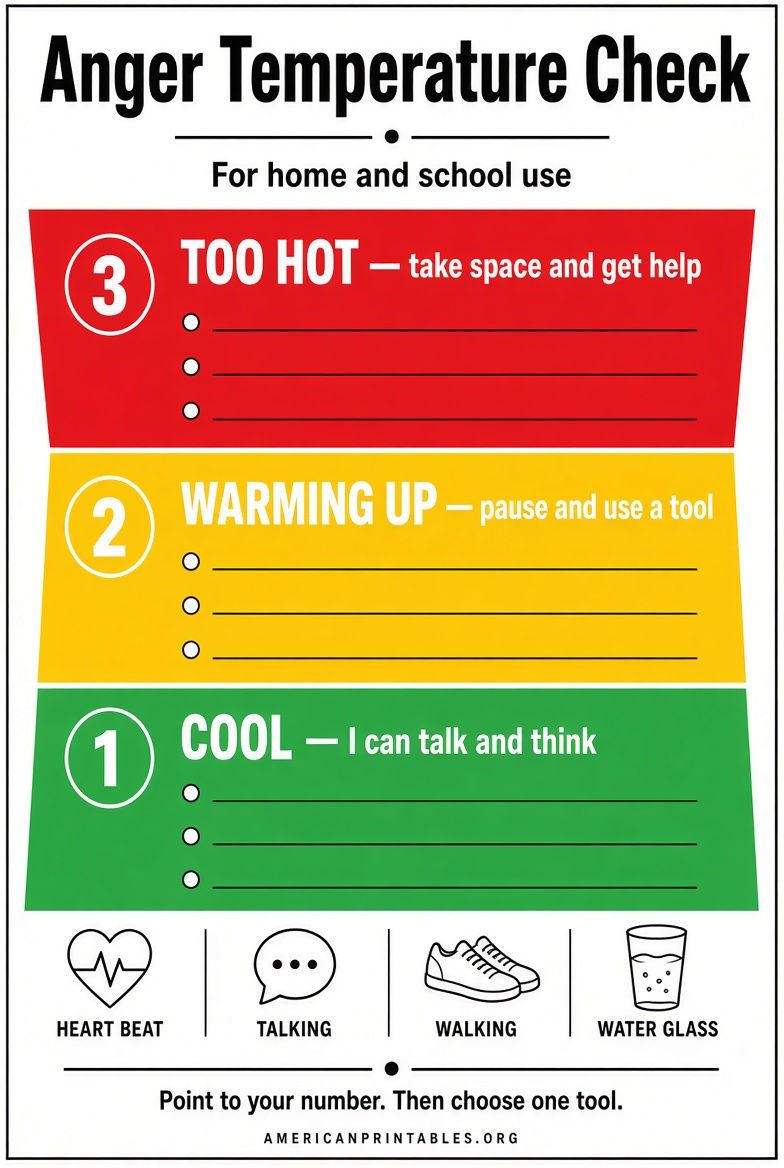
- Print the version that matches the person’s age. Preschoolers do better with 3 levels (calm / upset / very angry). School-age kids often use 5. Teens and adults can use 5 or 10.
- Label each level together. Use the child’s real words: “annoyed,” “mad,” “about to explode.”
- Add body signals. “At a 3 my jaw gets tight. At a 7 I want to yell.”
- Add one coping skill per level. Early levels work best with breathing, a drink of water, or asking for space. High levels need a safe timeout, movement, or adult help.
- Practice with a past example. “Think of a time you were at a 5. What happened first?”
- Post it where it will be seen: fridge, backpack folder, classroom calm-down corner, or therapy folder.
- Check in later, not only during a crisis. A quick “What number are you right now?” builds the habit.
Print on card stock and laminate if you will reuse it with dry-erase markers.
Where to Get a Free Printable Anger Thermometer?
These five sources offer real free tools. Open them in a new tab. Some pages include several versions on one download.
1. Dr. Stephanie Margolese (3-point, 5-point, and 10-point charts)
Licensed psychologist Dr. Stephanie Margolese explains how to match the scale to a child’s age and then offers three downloadable anger thermometer worksheets created with Elaheh Bos of Plant Love Grow. Use the 3-point chart with young children, the 5-point chart with school-age kids, and the 10-point chart with teens or adults.
Download the free anger thermometer worksheets from Dr. Margolese
2. Reward Charts 4 Kids (1–5, 1–10, and blank editable PDF)
This page includes a 10-point anger meter, a 5-point meter, and a blank thermometer you can type into before printing. The blank version is useful if you want custom labels such as “hangry,” “overstimulated,” or classroom-friendly wording.
Get the free printable anger thermometer PDFs
3. Very Special Tales (11 kid-friendly templates)
This pack is built for home and classroom use. It includes illustrated 3-point and 5-point thermometers, blank templates, activity pages for triggers and coping skills, and a fridge-style chart. It is one of the most complete free printable anger thermometer collections for children.
Download the free printable anger thermometer pack
4. PsychPoint worksheet by GinaMarie Guarino, LMHC
This free therapy worksheet is written for older kids, teens, and adults. Users color in the thermometer for a specific situation, then reflect on what they usually do and whether that response helps. It works well in counseling, groups, or as homework between sessions.
Download the free PsychPoint anger thermometer worksheet
5. SAMHSA Anger Management Participant Workbook (official U.S. resource)
SAMHSA’s free 2019 participant workbook includes the Anger Meter, daily tracking, and a full 12-session cognitive-behavioral program used across U.S. treatment settings. Choose this if you want an adult, clinic-style tool rather than a cartoon chart for young children.
Download SAMHSA’s free Anger Management workbook
A worksheet is a practice tool, not a diagnosis and not a substitute for therapy. If anger is frequent, violent, or tied to depression, trauma, or substance use, talk with a licensed clinician or your child’s pediatrician.
Practical Tips for Home and School
For parents
Keep the chart in one predictable place. Praise the check-in, not only a “low number.” After a hard moment, wait until everyone is regulated, then review: “What number were you? What could we try next time at a 4?”
For teachers and school counselors
Use the same numbers the family uses at home when possible. A 5-point anger thermometer fits easily into morning meetings, IEP or 504 emotional-regulation goals, and calm-down corners. Pair it with a short list of classroom-safe strategies: wall push-ups, a water break, a quiet seat, or a help card.
For teens and adults
Skip babyish clip art if it feels condescending. A 10-point meter plus notes on thoughts, body signs, and next actions is usually enough. Track the highest number each day for a week. Patterns show up fast: hunger, poor sleep, certain people, or after-school crash.
Printing notes for U.S. households
Standard letter size (8.5″ x 11″) works for every resource above. Black-and-white versions save ink and can be colored in. If a site asks for an email, that is optional on some blogs; the five links listed here are resource pages or official downloads, not paid products.
When a Printable Is Not Enough?
Seek extra support if anger includes threats, hitting, property damage, self-harm, or fear in the home. In the United States you can:
- Call or text 988 for the Suicide & Crisis Lifeline
- Call SAMHSA’s National Helpline at 1-800-662-HELP (4357) for treatment referrals
- Ask a pediatrician, school counselor, or primary-care doctor for a local therapist who treats emotion regulation
A chart helps people notice the climb. Professional care helps when the climb is frequent or dangerous.
FAQ
Is an anger thermometer the same as a feelings thermometer?
Almost. A feelings thermometer can track several emotions. An anger thermometer focuses on one emotion and the actions that go with each level.
What age is a free printable anger thermometer for?
Ages 4–7 usually need 3 levels and pictures. Ages 7–12 do well with 5 levels. Teens and adults can use 5 or 10 levels and write their own labels.
Do I need to pay for a good worksheet?
No. The sources above offer free printable anger thermometer PDFs or official workbooks. Some popular therapy sites keep similar worksheets behind a paid membership. Those are not listed here as free.
Can I use this in a classroom?
Yes, as a teaching and self-regulation aid. It does not replace a behavior plan, counseling, or crisis protocol. Follow your school’s privacy and mental-health guidelines.
What if my child refuses to use it?
Model it yourself first. Rate your own frustration out loud in a calm voice. Keep sessions short. Let the child decorate a blank thermometer so the tool feels like theirs.
A free printable anger thermometer will not erase anger. Used consistently, it gives kids and adults a shared scale, earlier warning signs, and a plan for cooling down before the top of the chart.