Free Printable Antecedent Behavior Consequence Chart – An Antecedent-Behavior-Consequence (ABC) chart is a simple, practical tool that helps teachers, parents, therapists, and caregivers understand why challenging behaviors occur. By tracking what happens before, during, and after a behavior, you can spot patterns, identify triggers, and develop more effective support strategies. This resource page explains the ABC model clearly and points you to legitimate free printable charts you can download and use right away.
What Is an Antecedent Behavior Consequence Chart?
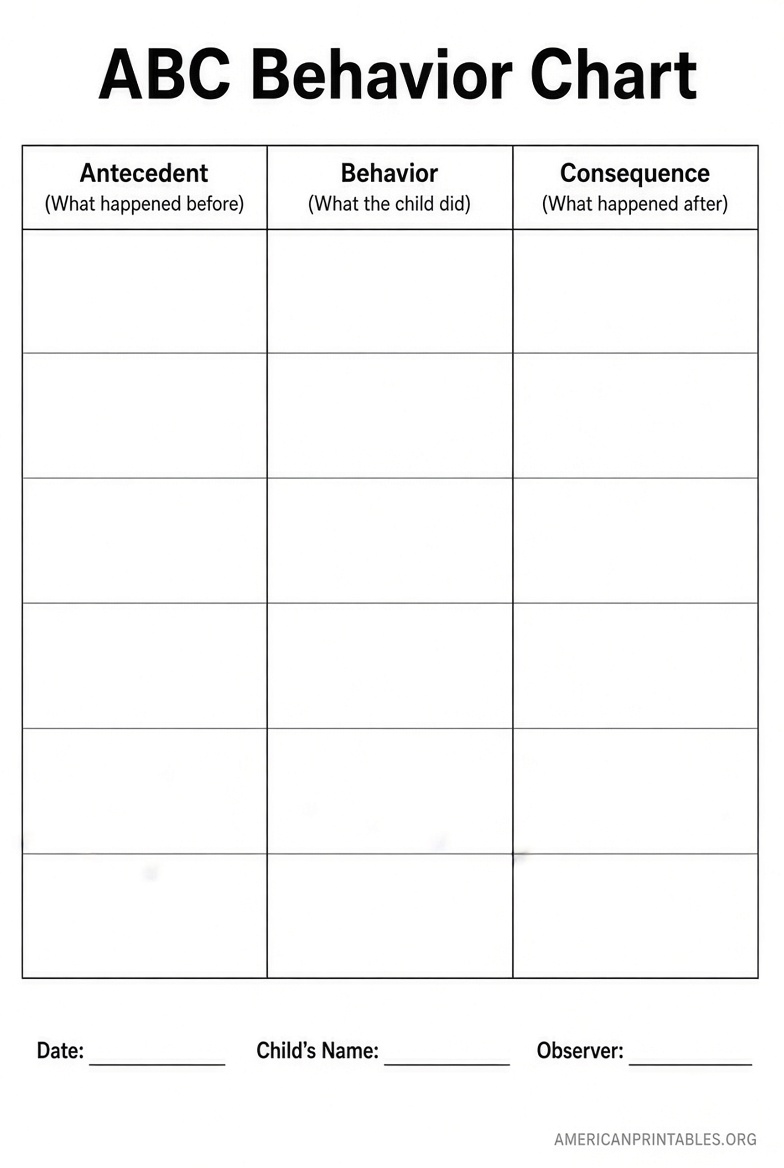
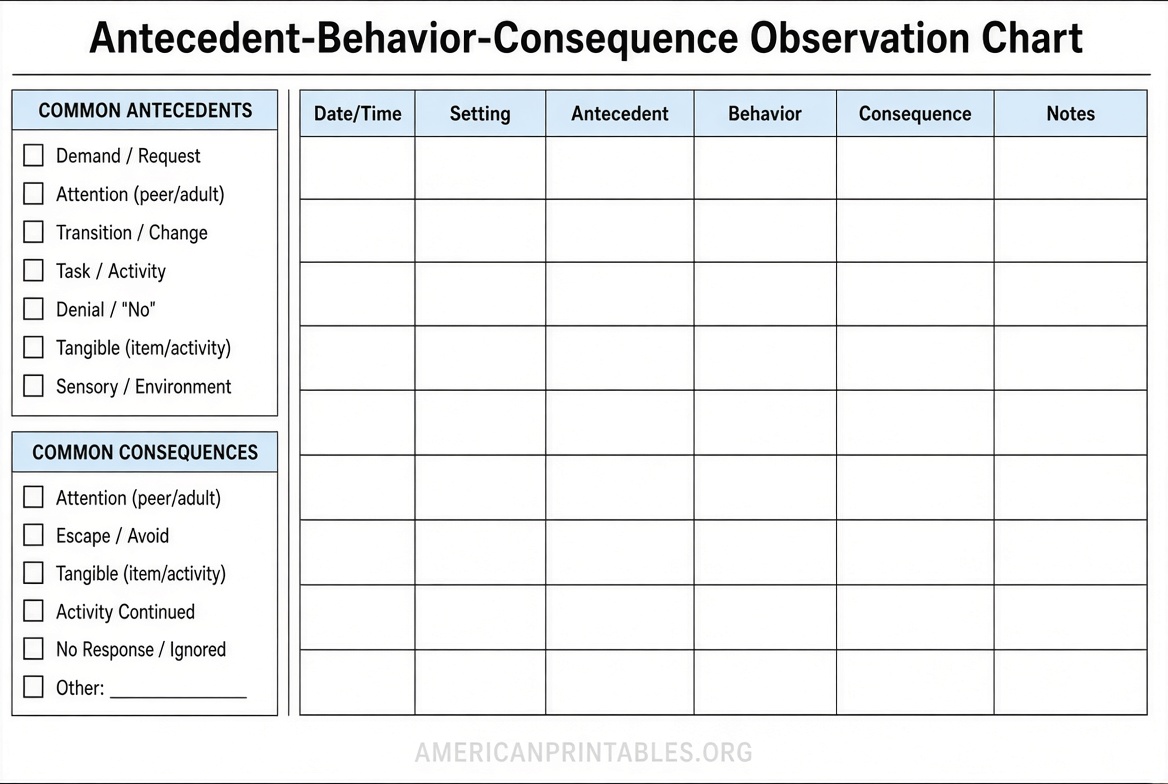
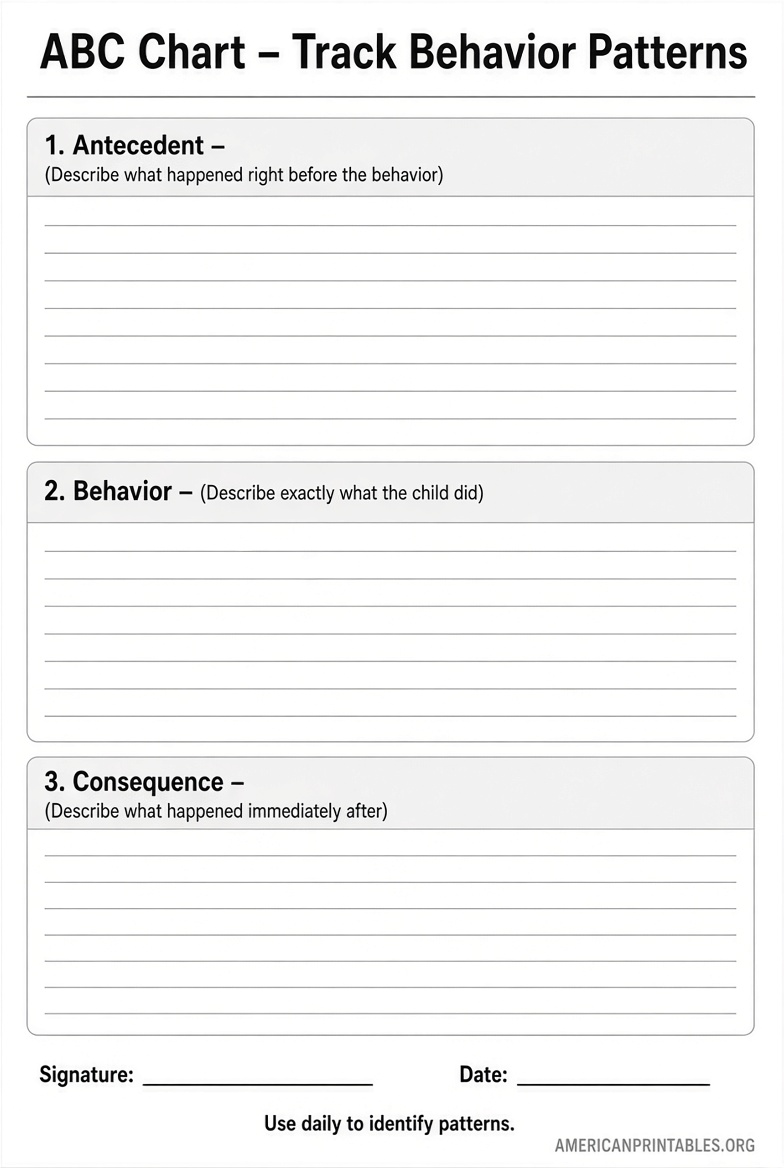
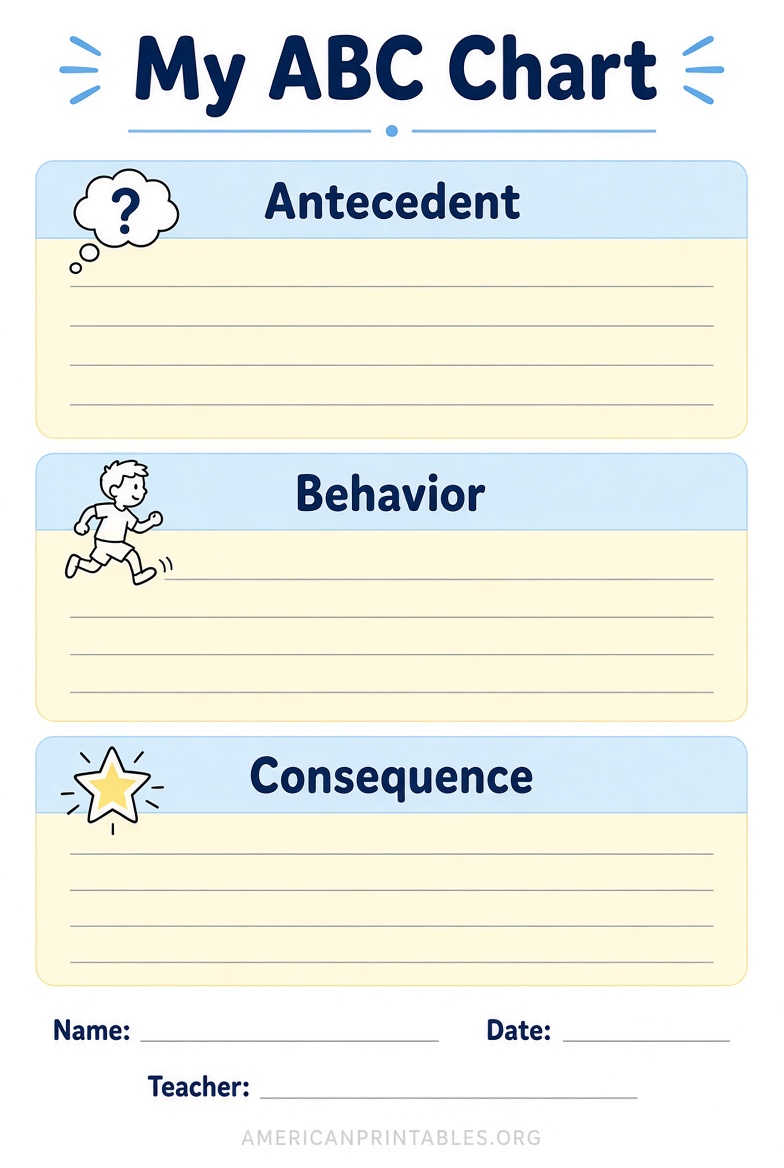
An ABC chart (also called an ABC data sheet or ABC behavior chart) breaks down a behavioral incident into three parts:
- Antecedent — What happened immediately before the behavior (the trigger or context). Examples include a request to start work, a transition, noise, or lack of attention.
- Behavior — The observable action itself. Describe it specifically and objectively (e.g., “threw pencil and yelled ‘No!’” rather than “got angry”).
- Consequence — What happened right after the behavior. This includes adult or peer responses and any outcome the person experienced (attention, escape from a task, access to an item, etc.).
The goal is not to punish but to gather objective data that reveals the possible function of the behavior—attention, escape/avoidance, access to tangibles, or sensory/automatic reinforcement. This information is a core part of Functional Behavior Assessments (FBAs) used in schools and clinical settings across the United States.
Why Use a Printable ABC Chart?
Printable ABC charts make data collection fast and consistent. They work well in classrooms, homes, therapy sessions, and for children with autism, ADHD, emotional/behavioral disorders, or other support needs. Over time, completed charts help teams:
- Identify common triggers and settings
- See which adult responses may be reinforcing the behavior
- Develop proactive strategies and replacement skills
- Document progress for IEPs, BIPs, or parent-teacher meetings
Short, focused observations (a few incidents over several days) often reveal clear patterns.
How to Use an ABC Chart Effectively?
- Choose one target behavior and define it in clear, measurable terms.
- Note the date, time, setting/activity, and people present.
- Record the antecedent, the behavior (including duration or intensity if relevant), and the immediate consequence.
- Stay objective—write only what you see and hear.
- Review several entries to look for patterns.
- Share the data with the educational or clinical team to guide interventions.
Keep copies handy so you can fill one out quickly when an incident occurs.
Where to Get Free Printable Antecedent Behavior Consequence Charts?
Here are reliable, free resources (no payment required for the basic templates). All links open in a new tab:
- Direct printable PDF form (simple columns for date/time, activity, antecedent, behavior, and consequence): Download the ABC Chart PDF. This straightforward template is commonly referenced by educational sites.
- Free downloadable ABC Behavior Chart template with guidance on how to complete it: Carepatron ABC Behavior Chart. Suitable for educators, therapists, and caregivers.
- Fillable/printable ABC chart form designed for teachers, therapists, and ABA practitioners: FormsPal ABC Chart Printable.
TeachersPayTeachers also hosts many free ABC data sheets and charts created by educators and BCBAs. Search for “free ABC data sheet” or “free antecedent behavior consequence” and filter by price = free to find additional classroom-ready options (account may be required for download).
Always verify that a resource is truly free before downloading, and choose versions that match your setting (classroom, home, or clinical).
Free Printable Antecedent Behavior Consequence Chart
Practical Tips for Success
- Collect data across different times of day and settings when possible.
- Focus on one or two priority behaviors at a time.
- Pair ABC data with frequency or duration tracking if the behavior occurs often.
- Use the information to teach replacement skills and adjust antecedents (for example, provide choices, visual supports, or preferential seating) rather than relying only on consequences.
- Involve the student when appropriate—some older students can help report how they felt or what they needed.
Frequently Asked Questions
Is an ABC chart the same as a behavior plan?
No. An ABC chart is a data-collection tool. The patterns it reveals help create or refine a Behavior Intervention Plan (BIP) or positive behavior support strategies.
How many incidents should I record?
Aim for at least several clear examples (often 5–10 or more across days) so patterns become visible. Quality and consistency matter more than volume.
Can parents use these charts at home?
Yes. Many free printables work equally well for home use and can be shared with teachers or therapists.
Do I need special training?
Basic ABC recording is straightforward. For complex cases or formal FBAs, collaborate with a school psychologist, BCBA, or special education team.
A well-used printable antecedent behavior consequence chart turns scattered observations into actionable insight. Download one of the free templates above, start recording, and use the data to support more positive outcomes for the students or children in your care.