Free Printable Anti-Inflammatory Foods List – Looking for a free printable list of anti-inflammatory foods? This resource page explains what these foods are, why they matter for everyday health in the United States, and points you to legitimate free printables and downloads you can use right away.
Chronic low-grade inflammation is linked to many common health concerns. Eating patterns rich in certain whole foods—supported by research from institutions like Harvard Health—can help support the body’s natural balance. A simple printable list makes it easier to shop, plan meals, and stay consistent without overcomplicating things.
What Are Anti-Inflammatory Foods?
Anti-inflammatory foods are mostly whole, minimally processed options high in antioxidants, fiber, polyphenols, and omega-3 fatty acids. These compounds help counteract oxidative stress and support healthy inflammatory responses.
Examples that consistently appear in evidence-based guidance include:
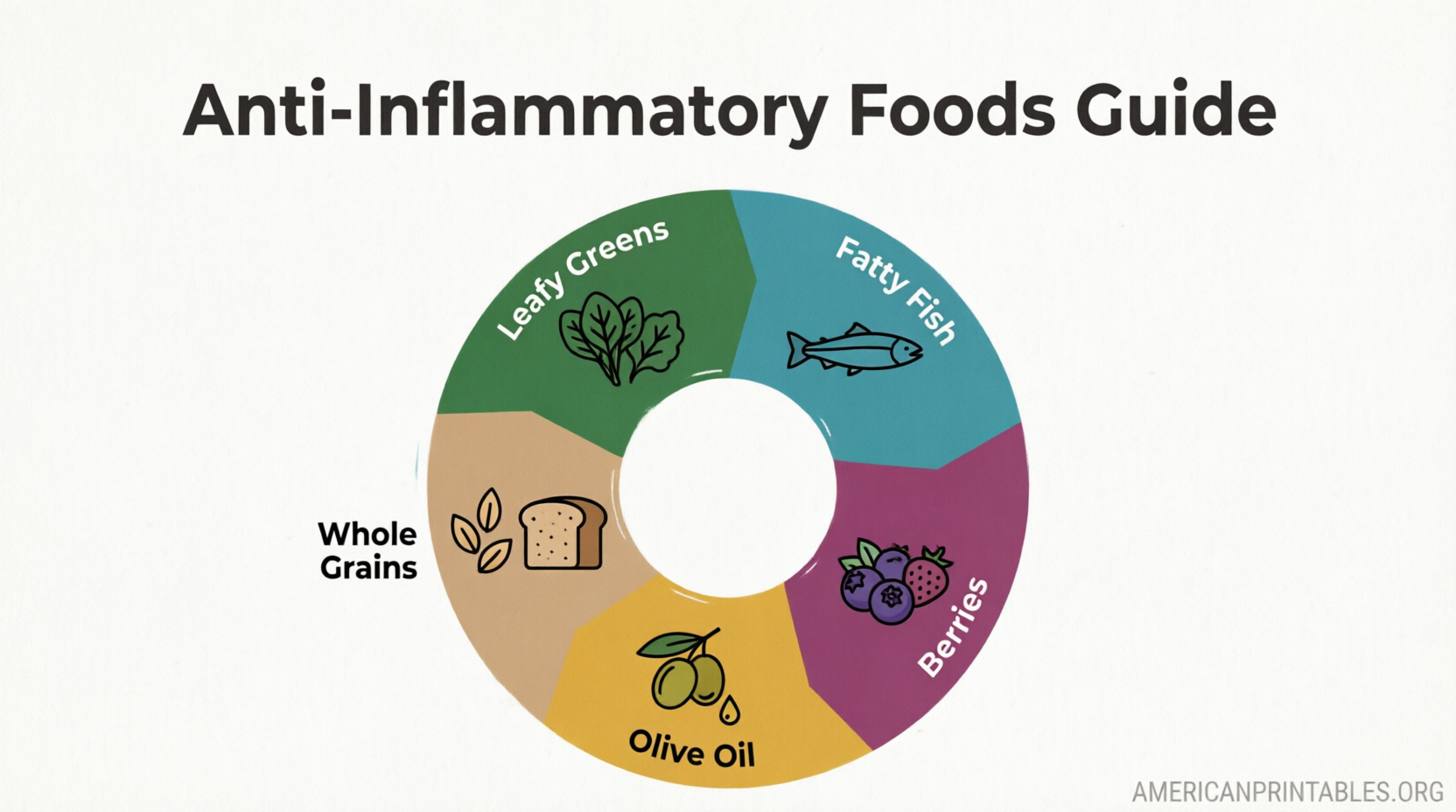
- Colorful fruits and vegetables (especially berries, leafy greens, and cruciferous veggies)
- Fatty fish such as salmon and sardines
- Nuts, seeds, and healthy oils like extra-virgin olive oil
- Herbs and spices such as turmeric, ginger, and garlic
- Fiber-rich whole grains, beans, and legumes
Harvard Health notes that fruits, vegetables, nuts, seeds, olive oil, fatty fish, coffee, cocoa, and green tea are among the foods associated with lower inflammation markers. The overall pattern of eating (similar to Mediterranean-style diets) matters more than any single “superfood.”
Why Use a Free Printable List of Anti-Inflammatory Foods?
A printable list turns general advice into a practical tool. Keep it on the fridge, take a photo for your phone, or bring it to the grocery store. It helps you:
- Quickly identify foods to add more often
- Build balanced meals with protein, fiber, healthy fats, and plants
- Reduce decision fatigue when shopping or meal planning
- Focus on addition rather than strict restriction
Many registered dietitians create free categorized lists and grocery guides for exactly this purpose. These resources are designed for everyday use by people across the U.S. who want realistic, science-aligned support.
Where to Get Legitimate Free Printable Lists?
Here are trusted places to download free, no-cost printables or access authoritative guidance (limit of useful, verified free options):
- UNstuck Nutrition free PDF – A practical anti-inflammatory diet food list and grocery guide created by a registered dietitian. It includes a simple plate method, categorized foods, meal-building ideas, and shopping tips. Direct free download available: Free Printable Anti-Inflammatory Diet Food List & Grocery Guide (PDF).
- Harvard Health overview – Clear, research-backed explanation of foods that help fight inflammation, including fruits, vegetables, nuts, seeds, fatty fish, olive oil, and beverages like green tea. Read the full article for context: Foods You Should Eat to Help Fight Inflammation – Harvard Health.
These sources prioritize evidence-based information and practical tools. Always check the download page yourself; free resources should not require payment.
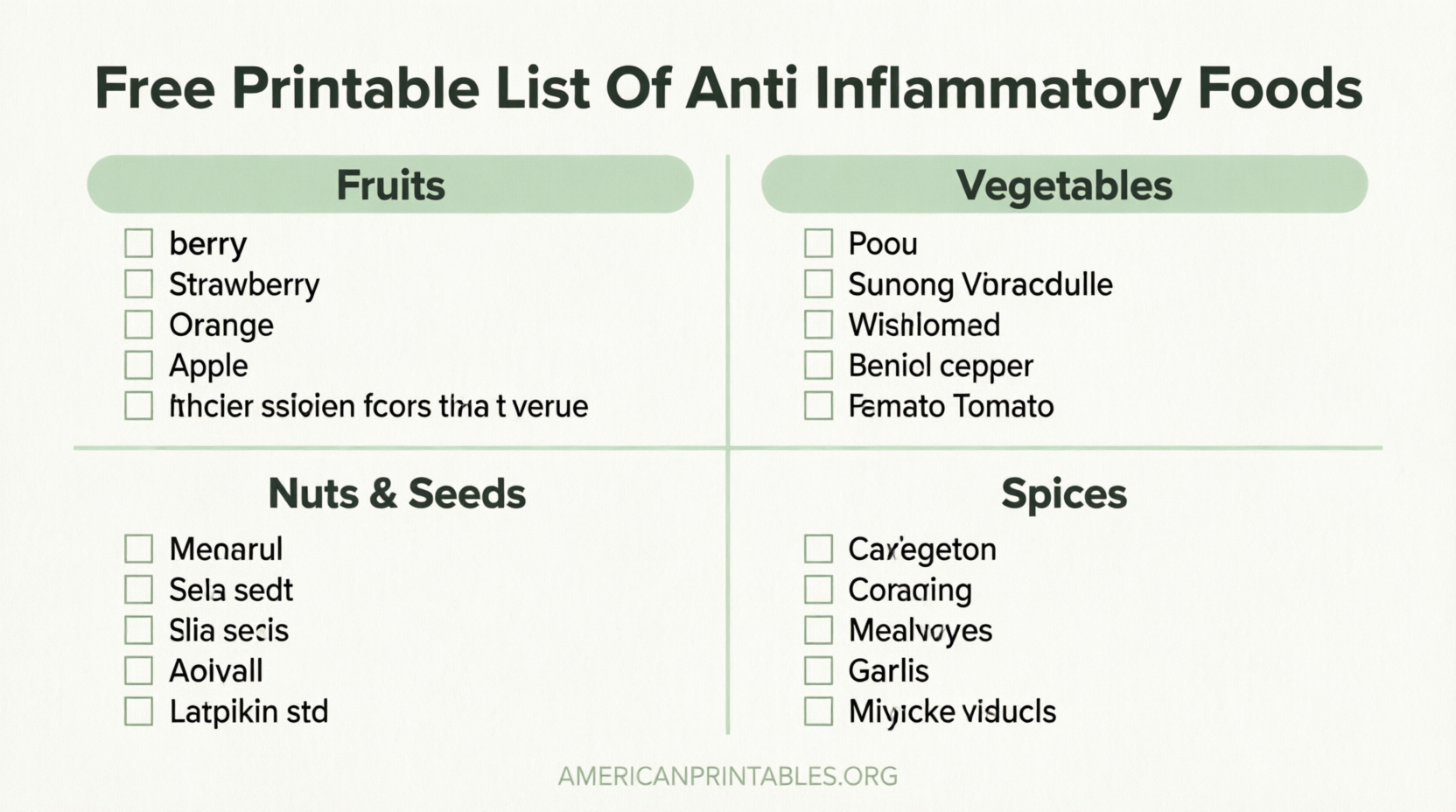
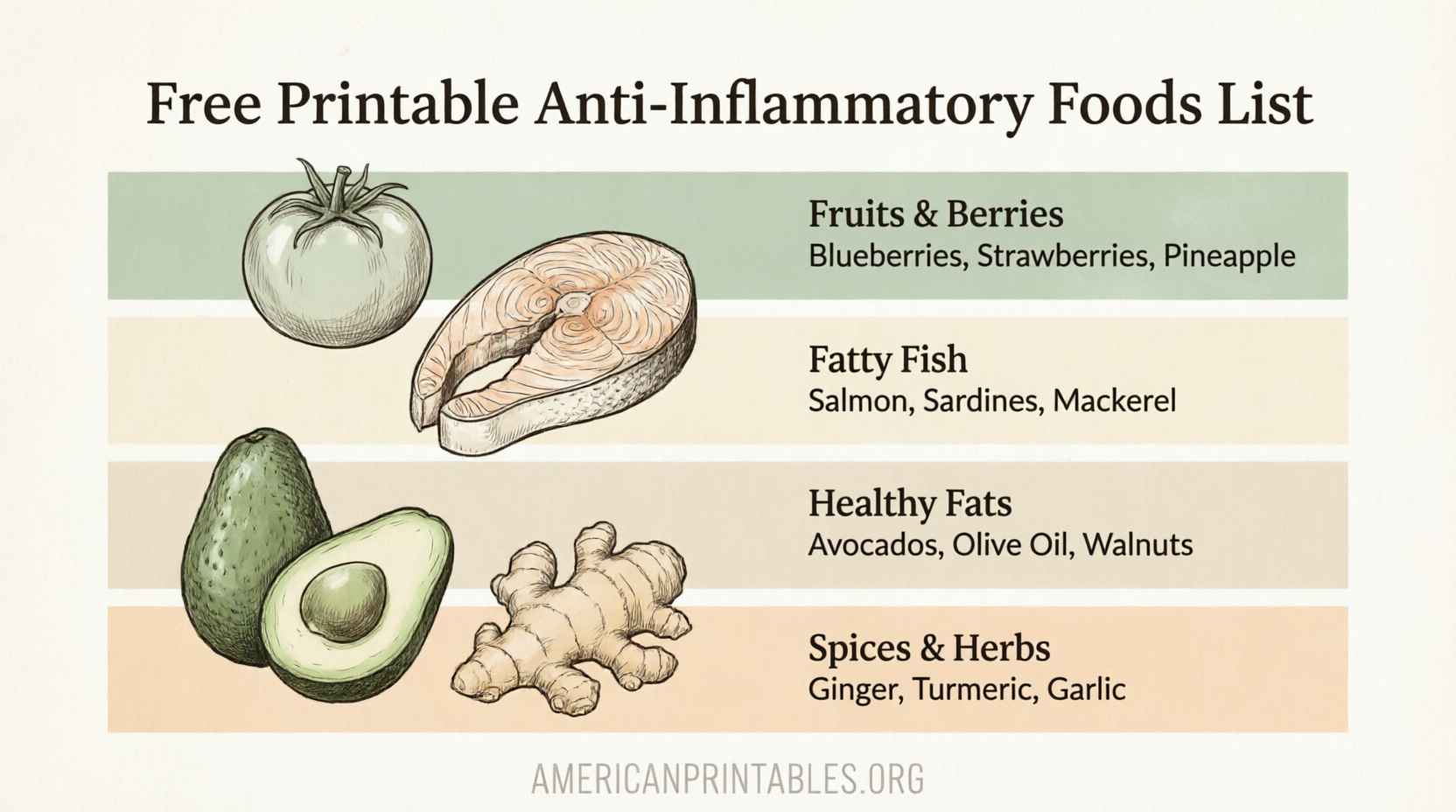
Free Printable Anti-Inflammatory Foods List
Quick Everyday List of Anti-Inflammatory Foods
Use this as a starting point while you download a full printable:
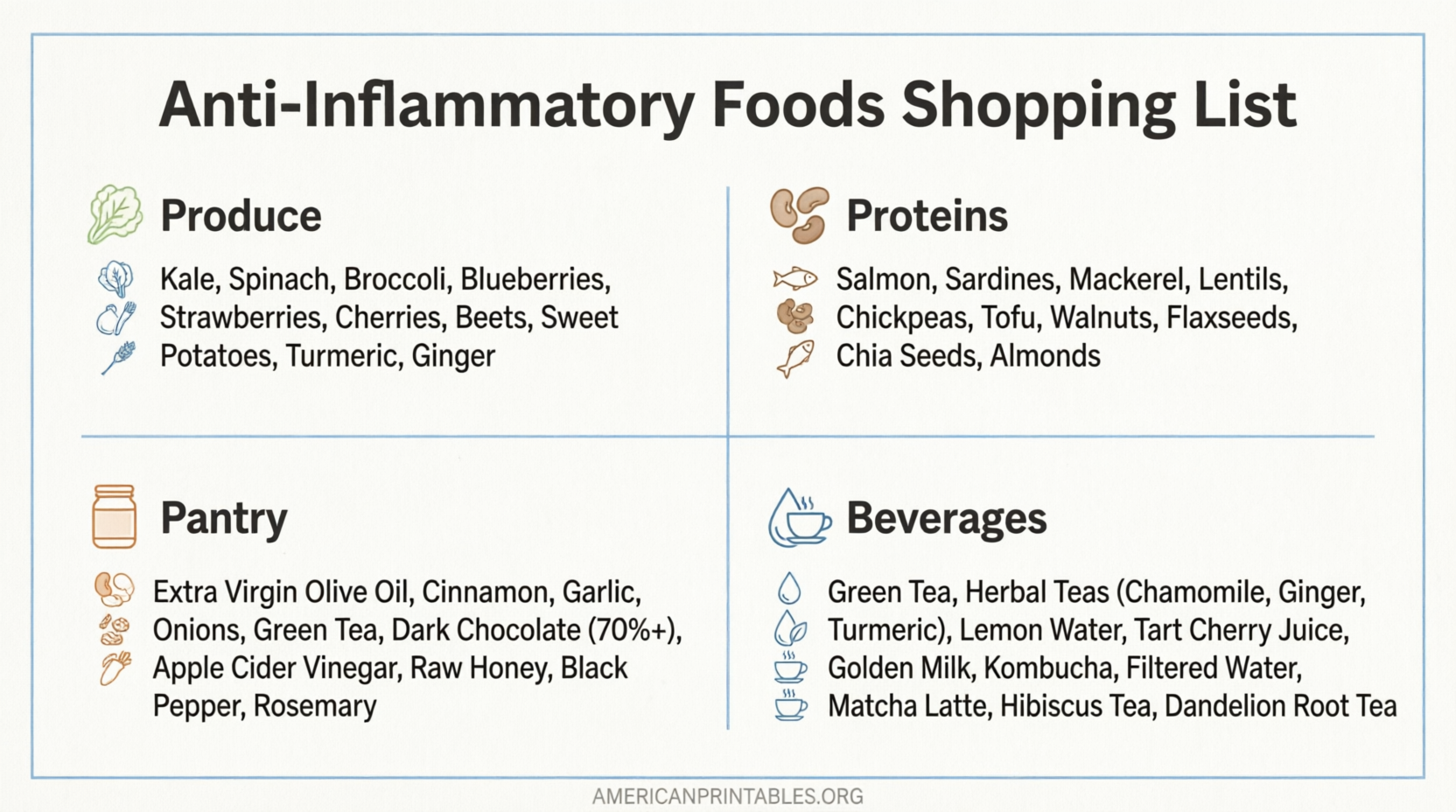
Vegetables & greens: Spinach, kale, broccoli, Brussels sprouts, cabbage, bell peppers, tomatoes, onions, garlic, beets, carrots
Fruits: Blueberries, strawberries, raspberries, cherries, oranges, apples, grapes, avocado
Proteins: Salmon, sardines, mackerel, trout, eggs, Greek yogurt, beans, lentils, tofu
Healthy fats & nuts/seeds: Extra-virgin olive oil, walnuts, almonds, chia seeds, flaxseeds, avocado
Herbs, spices & extras: Turmeric, ginger, cinnamon, oregano, green tea, coffee (unsweetened)
Whole grains & starchy options: Oats, quinoa, brown rice, sweet potatoes
Focus on variety and color. Aim for more plants overall rather than perfection.
Practical Tips for Getting Started
- Add one extra serving of berries or leafy greens daily.
- Swap refined oils for olive oil in cooking and dressings.
- Include fatty fish twice a week if it fits your preferences and budget.
- Season food generously with anti-inflammatory spices instead of relying only on salt or sugar.
- Build meals around the plate idea: protein + fiber-rich carb + healthy fat + colorful produce.
Small, consistent changes work better long-term than dramatic overhauls. Pair better food choices with sleep, movement, and stress management for the best results.
Brief FAQ
Is there really a free printable anti-inflammatory foods list?
Yes. Reputable dietitian sites and health organizations share free PDFs and guides. The direct download linked above from UNstuck Nutrition is one clear example.
Do I need to eliminate all “inflammatory” foods?
No. Emphasize adding nutrient-dense options most of the time. Occasional treats fit into a balanced pattern for most people.
How soon might I notice benefits?
Individual results vary. Some people report better energy or less joint discomfort within weeks of consistent changes, but lasting effects build over months as part of an overall healthy lifestyle.
Should I follow a specific diet?
Mediterranean, DASH, and similar patterns naturally include many of these foods and have strong research support. A registered dietitian can personalize recommendations for your needs, preferences, and any medical conditions.
A free printable list of anti-inflammatory foods is a simple, helpful tool for anyone in the U.S. looking to support long-term health through everyday eating. Download a trusted version, keep it handy, and start adding more of these foods to your plate today. Always consult your healthcare provider or a registered dietitian for personalized advice, especially if you have existing health conditions.