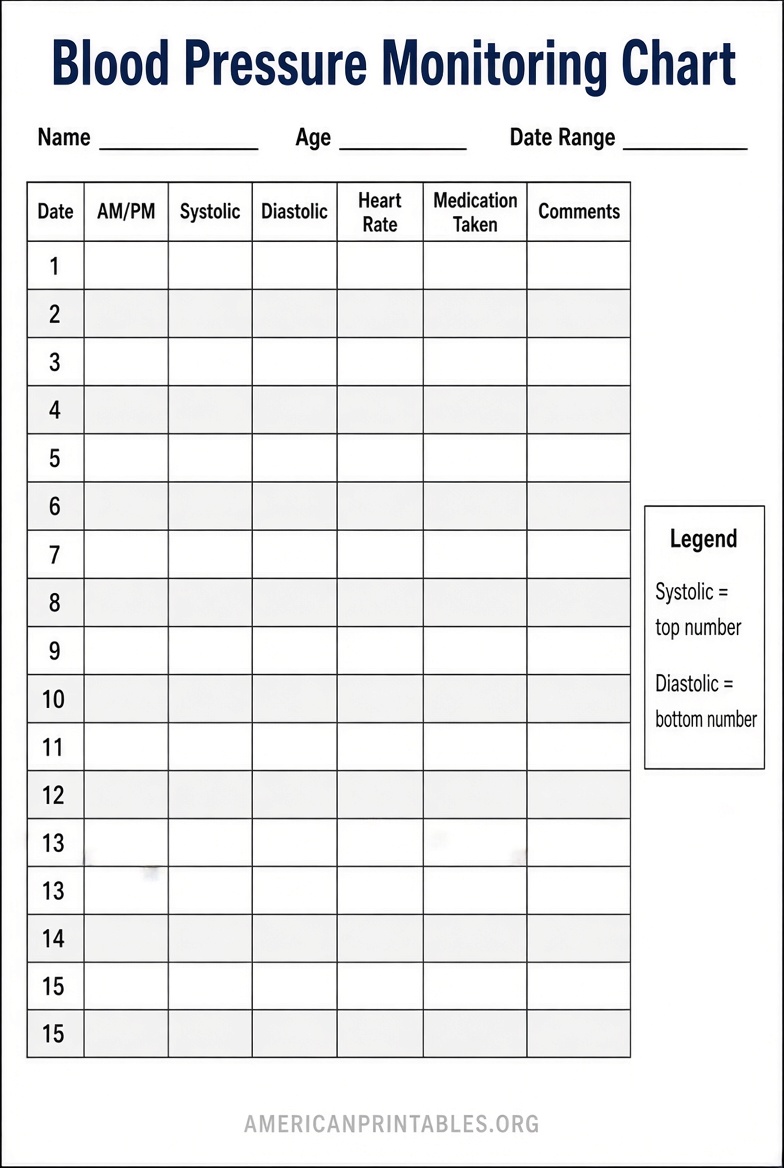
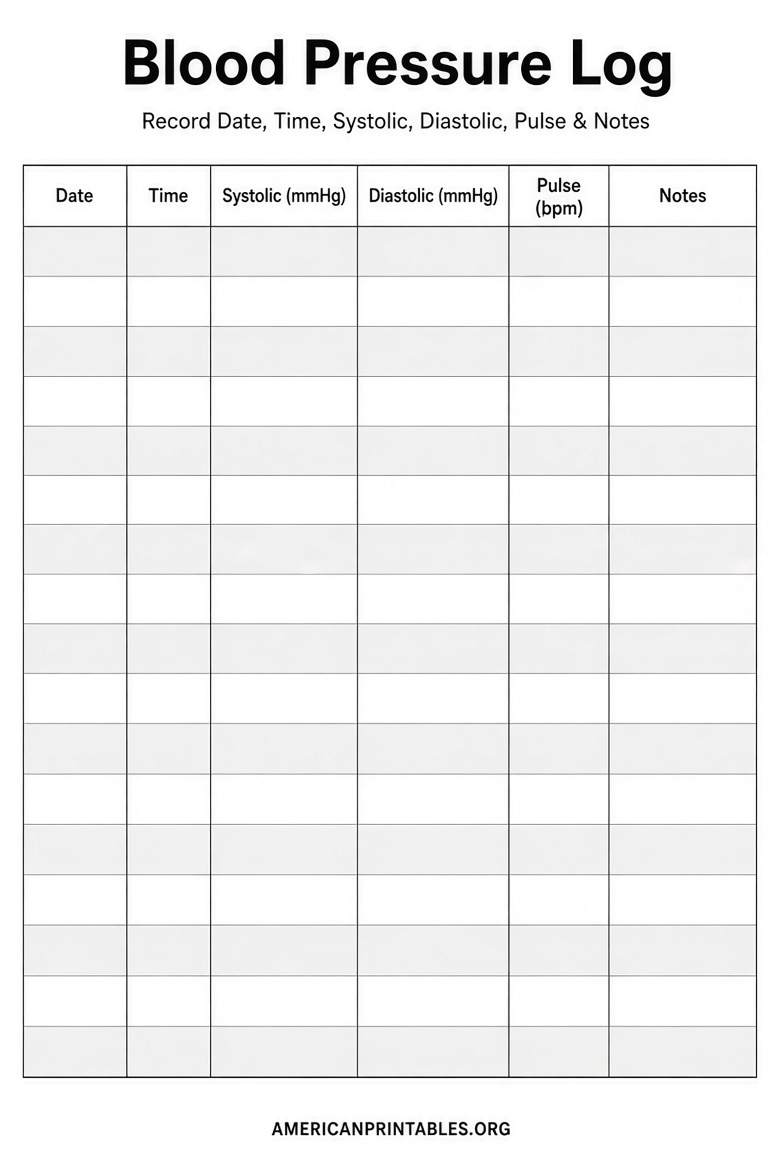
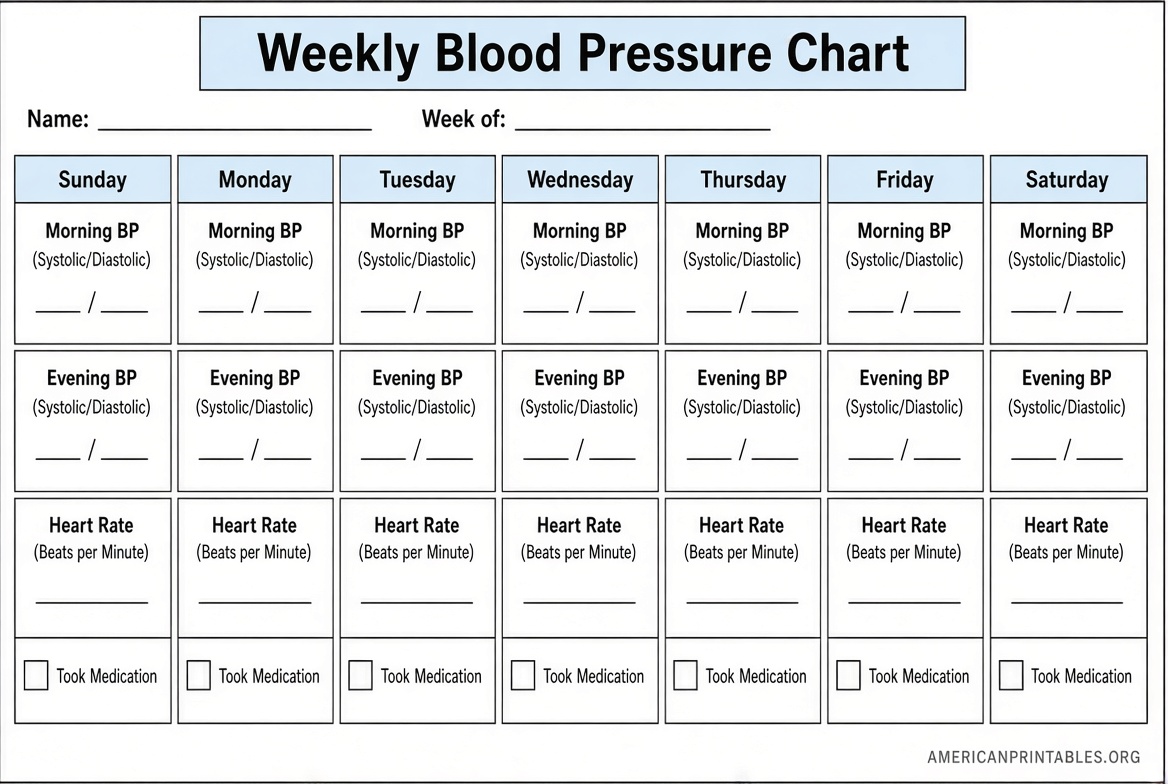
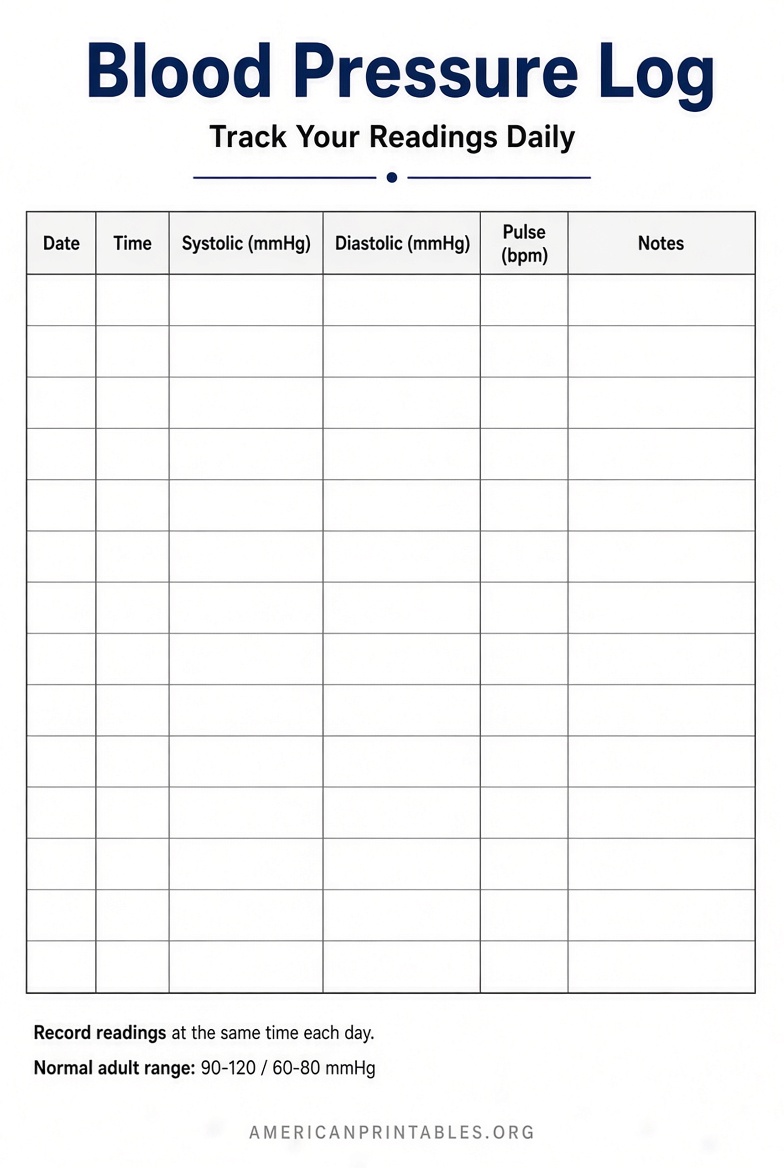
Free Printable Blank Blood Pressure Chart – Tracking your blood pressure at home is one of the simplest ways to stay on top of your heart health. A free printable blank blood pressure chart (also called a blood pressure log or tracker) gives you a clear, paper-based place to record readings so you and your doctor can spot patterns over time.
This resource page explains what these charts are, why they matter for people in the United States, how to use them correctly, and where to download legitimate free printable versions from trusted sources.
What Is a Blank Blood Pressure Chart?
A blank blood pressure chart is a simple printable form with empty rows or columns for recording your daily readings. Typical fields include:
- Date
- Time (morning and evening are most useful)
- Systolic pressure (the top number)
- Diastolic pressure (the bottom number)
- Pulse or heart rate (optional but helpful)
- Notes (medications, stress, caffeine, exercise, etc.)
Some versions also leave space for your name, target goal, and a short reference of normal ranges. These charts are designed for home monitoring with an upper-arm cuff monitor and work well for doctor visits.
Why Keep a Home Blood Pressure Log?
High blood pressure often has no symptoms. Home tracking helps you and your healthcare provider:
- See true day-to-day patterns instead of a single clinic reading (which can be higher due to “white-coat” effect)
- Check whether lifestyle changes or medication are working
- Prepare accurate data for appointments
- Catch concerning trends early
The American Heart Association (AHA) and Centers for Disease Control and Prevention (CDC) both encourage self-measured blood pressure monitoring combined with a written or digital log.
Blood Pressure Categories (AHA Guidelines)
Use these categories (for adults) to understand your numbers. Only a healthcare professional can diagnose high blood pressure.
| Category | Systolic (top) | and/or | Diastolic (bottom) |
|---|---|---|---|
| Normal | Less than 120 | and | Less than 80 |
| Elevated | 120–129 | and | Less than 80 |
| Stage 1 Hypertension | 130–139 | or | 80–89 |
| Stage 2 Hypertension | 140 or higher | or | 90 or higher |
| Severe / Hypertensive Crisis | Higher than 180 | and/or | Higher than 120 |
Full details and guidance are available on the American Heart Association’s Understanding Blood Pressure Readings page:
https://www.heart.org/en/health-topics/high-blood-pressure/understanding-blood-pressure-readings
If a reading is higher than 180/120 and you have symptoms such as chest pain, shortness of breath, back pain, numbness, weakness, vision changes, or difficulty speaking, call 911.
Where to Get Free Printable Blank Blood Pressure Charts?
Here are legitimate, free, no-sign-up (or minimal-friction) options from authoritative or practical sources:
- American Heart Association – My Blood Pressure Log
Official AHA printable log with space for AM and PM readings, instructions for accurate measurement, and room for your goal.
Download the AHA My Blood Pressure Log (PDF) - CDC – My Blood Pressure Log
Simple government form with columns for morning and evening readings (two readings each session). Ideal for tracking over several days.
Download the CDC My Blood Pressure Log (PDF) - Cardilog Free Printable Blood Pressure & Pulse Log
Clean one-page sheet with date, time, systolic, diastolic, heart rate, and notes. Follows AHA home-monitoring recommendations and can be printed or saved as PDF directly from the browser—no account needed.
Print or save the free Cardilog log
These three sources cover official guidance (AHA and CDC) plus a practical, ready-to-print option. Print a few copies so you always have a blank sheet available.
Free Printable Blank Blood Pressure Chart
How to Use Your Blood Pressure Chart Effectively?
Follow these evidence-based steps for reliable readings:
- Use a validated upper-arm monitor with the correct cuff size.
- Avoid smoking, caffeine, alcohol, or exercise for 30 minutes beforehand. Empty your bladder.
- Sit quietly for at least 5 minutes with your back supported, feet flat on the floor, and legs uncrossed. Do not talk.
- Rest your bare arm on a table so the cuff is at heart level.
- Take two readings one minute apart and record both.
- Measure at the same times each day (ideally morning before medication/food and evening).
- Aim for at least 3–7 days of readings before a doctor visit.
Bring the completed chart to every appointment.
Tips for Accurate Home Monitoring
- Place the chart next to your monitor so it becomes part of the routine.
- Note any relevant context (missed dose, poor sleep, high stress, recent meal) in the notes column.
- Average multiple readings only if your doctor asks; otherwise record the individual numbers.
- Replace the batteries in your monitor as needed and have the device checked for accuracy periodically.
- If numbers stay consistently high, contact your healthcare provider—do not adjust medication on your own.
Frequently Asked Questions
What is the difference between a blood pressure chart and a blood pressure log?
A chart usually shows the category ranges (normal, elevated, stage 1, etc.). A blank log or tracker is the form you fill in with your personal readings. Most people benefit from both.
How often should I check my blood pressure at home?
The AHA recommends twice a day (morning and evening) with two readings each time, especially for 3–7 days before appointments. Your doctor may give different instructions.
Can I use a digital spreadsheet instead?
Yes. Many people create a simple spreadsheet with the same columns. Paper remains convenient for sharing at in-person visits and works without devices.
Are these free printables suitable for sharing with my doctor?
Yes. The AHA and CDC versions are widely recognized by U.S. healthcare providers.
A free printable blank blood pressure chart is a low-cost, high-value tool for managing heart health. Download one of the trusted options above, start logging consistently, and bring the results to your next visit. Consistent tracking, paired with professional medical advice, is one of the most effective steps you can take.