Free Printable Bowel Movement Tracking Chart – Tracking your bowel movements with a free printable bowel movement tracking chart (also called a stool diary or bowel log) is a simple, practical way to monitor digestive health. Many U.S. adults use these charts to spot patterns related to constipation, diarrhea, IBS, or changes after diet, medication, or lifestyle shifts. Sharing a completed chart with a doctor often leads to clearer conversations and better care.
This guide explains why tracking matters, what to record, and where to find legitimate free printables you can download and use right away.
Why Use a Bowel Movement Tracking Chart?
A bowel movement tracking chart helps you document frequency, consistency, timing, and related symptoms. Doctors and dietitians frequently recommend them because self-reported details can be more accurate than memory alone.
Benefits include:
- Identifying what is “normal” for you (frequency can range from three times a day to three times a week if stools are soft and easy to pass).
- Spotting triggers such as certain foods, stress, or medications.
- Supporting diagnosis or management of conditions like constipation, diarrhea, or irritable bowel syndrome.
- Providing concrete information for healthcare visits instead of vague descriptions.
The Bristol Stool Form Scale is the most widely used reference for consistency. It ranks stools from Type 1 (hard lumps) to Type 7 (entirely liquid). Types 3 and 4 are generally considered ideal.
What to Record on Your Chart?
Most effective free printable bowel movement tracking charts include space for:
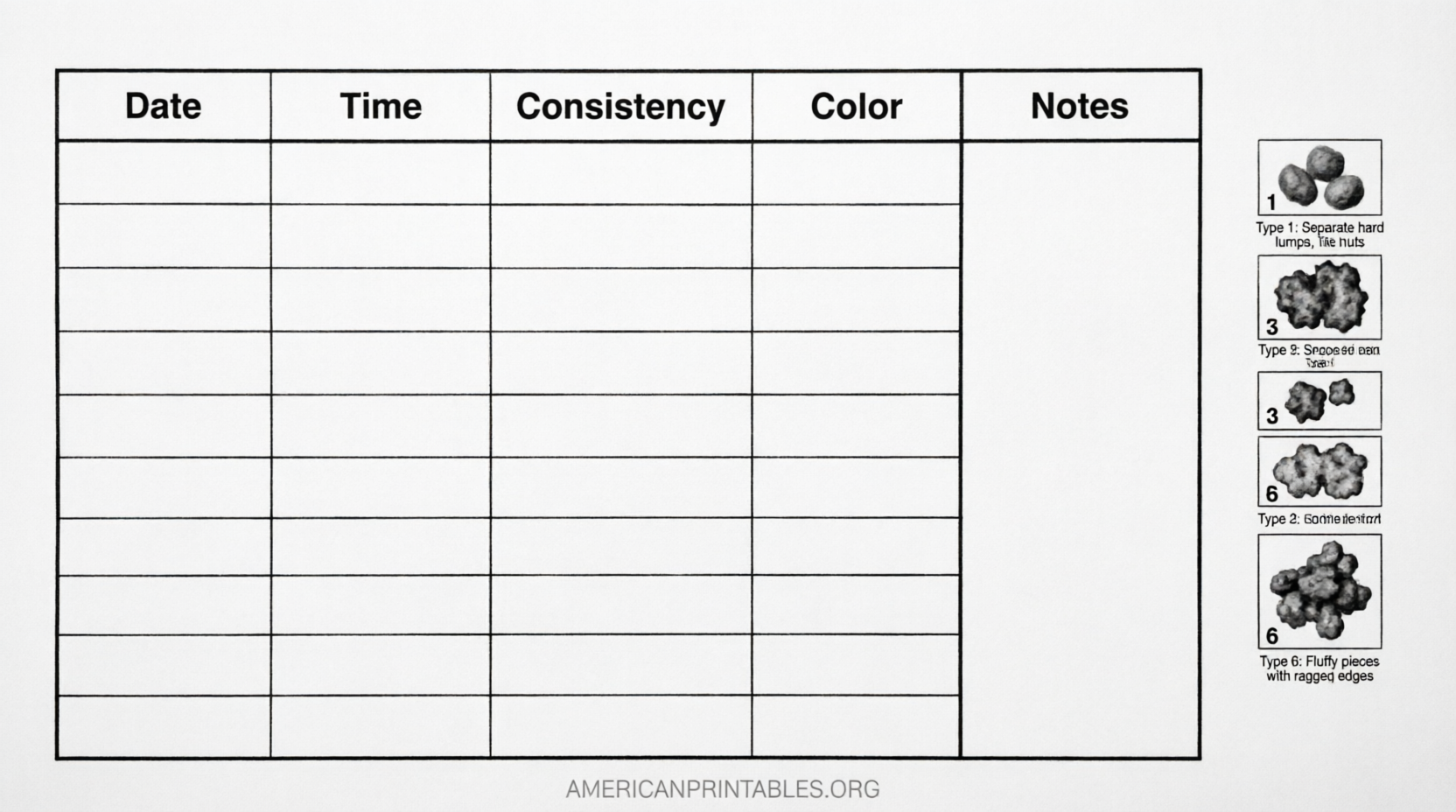
- Date and time of each bowel movement
- Stool consistency (using the Bristol scale: 1–7)
- Size or amount (small, medium, large)
- Color or other observations
- Urgency, straining, or incomplete emptying
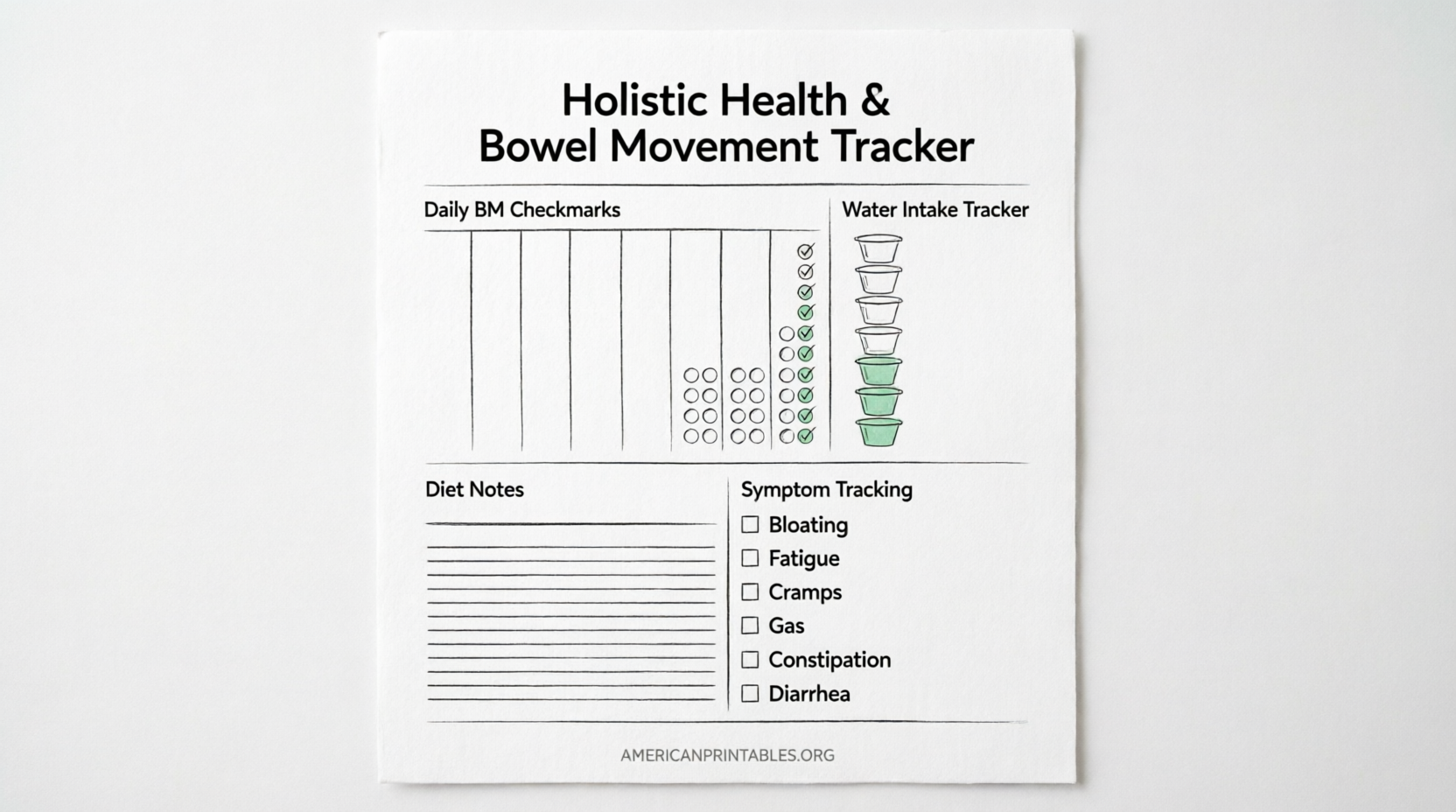
- Related symptoms such as pain, bloating, or incontinence
- Notes on diet, fluids, medications, exercise, or stress
Track for at least one week (ideally two) for useful patterns. Bring the completed sheets to appointments.
Free Printable Bowel Movement Tracking Charts and Resources
Here are legitimate, free resources from authoritative or reputable organizations. All are available as downloadable PDFs or forms you can print.
1. NIDDK Stool Diary (U.S. National Institutes of Health)
This official U.S. government stool diary includes columns for date, time, incontinence, seepage/staining, consistency (Bristol Types 1–7), urgency, pad use, medications, and comments. It is designed for clinical use and personal tracking.
Download the free NIDDK Stool Diary PDF.
2. Rome Foundation Bristol Stool Form Scale
The authoritative visual guide to the seven stool types used worldwide by clinicians. Print it as a quick reference to pair with any diary.
Access the free Rome Foundation Bristol Stool Form Scale.
3. Wellspect Free Bowel Diary
A practical one-week (or longer) bowel diary that incorporates the Bristol Stool Scale plus sections for frequency, straining, completeness of emptying, leakage, and daily notes. It also includes brief tips on fiber, fluids, and activity.
Download the free Wellspect Bowel Diary.
4. Bladder & Bowel Community Bristol Stool Chart
A clear, printable version of the Bristol Stool Chart suitable for everyday reference or doctor visits.
Download the free Bristol Stool Chart PDF.
These sources are free, require no payment, and come from established health organizations or companies focused on continence and digestive care. Avoid random template sites that may contain ads, require sign-ups for low-quality files, or claim “free” resources that are not.
Free Printable Bowel Movement Tracking Chart
How to Get the Most from Your Tracking Chart?
Print several copies so you always have a fresh sheet. Keep the chart in a private but accessible place (bathroom or nightstand). Be consistent and honest—accuracy helps more than perfection.
After a week or two, review for patterns: Does consistency improve with more water or fiber? Do symptoms worsen on high-stress days? Share the results with your primary care doctor, gastroenterologist, or registered dietitian. They may adjust recommendations based on the data.
Lifestyle factors that commonly support regular, comfortable bowel movements include adequate fiber from whole foods, sufficient fluid intake, regular physical activity, and a consistent routine. Always discuss significant or sudden changes with a healthcare professional.
Frequently Asked Questions
Is a free printable bowel movement tracking chart the same as the Bristol Stool Chart?
No. The Bristol Stool Chart (or Form Scale) is the visual classification tool for consistency. A full tracking chart or stool diary is the log where you record daily details, often using the Bristol scale.
How long should I track?
One to two weeks is usually enough to identify patterns. Longer tracking may be useful for ongoing conditions or when evaluating treatment changes.
Can I use these charts for children or caregivers?
Many of the same principles apply, but pediatric versions or caregiver logs may be more appropriate. Ask a pediatrician for guidance.
Are these printables really free?
Yes. The links above lead to no-cost PDFs or downloadable forms from reputable organizations. No credit card or paid membership is required.
A free printable bowel movement tracking chart is an easy, low-cost tool that puts useful information in your hands and your doctor’s. Download one of the resources above, start recording, and take an active role in understanding your digestive health. If you notice persistent changes, blood, severe pain, or unexplained weight loss, contact a healthcare provider promptly.