Free Printable Confirmation Cards | Print at Home – A confirmation card is a small, meaningful way to honor a young person—or an adult convert—who is being confirmed in the Christian faith. In the United States, families often need these cards for Catholic Confirmation Masses, Lutheran and Episcopal confirmations, Methodist youth confirmations, and parish receptions. Store-bought cards work, but a printable card lets you add a name, a saint name, a parish, a Bible verse, and a personal note without a last-minute drugstore run.
This guide explains what confirmation cards are, which free options are actually free, and how to print them on standard U.S. letter paper so they look finished, not homemade.
What Are Confirmation Cards?
Confirmation cards are greeting cards, holy cards, invitations, or keepsake certificates made for the rite of Confirmation.
In the Catholic Church, Confirmation is one of the three Sacraments of Initiation, along with Baptism and the Eucharist. The baptized person is “sealed with the gift of the Holy Spirit” and strengthened for Christian life and service. In many Protestant churches in the U.S., Confirmation is a public affirmation of baptismal faith after a period of study.
A card is not part of the liturgy. It is a family and parish custom: a written blessing you can hand to the confirmand after Mass, tuck into a gift, or keep as a memento.
Common U.S. card types include:
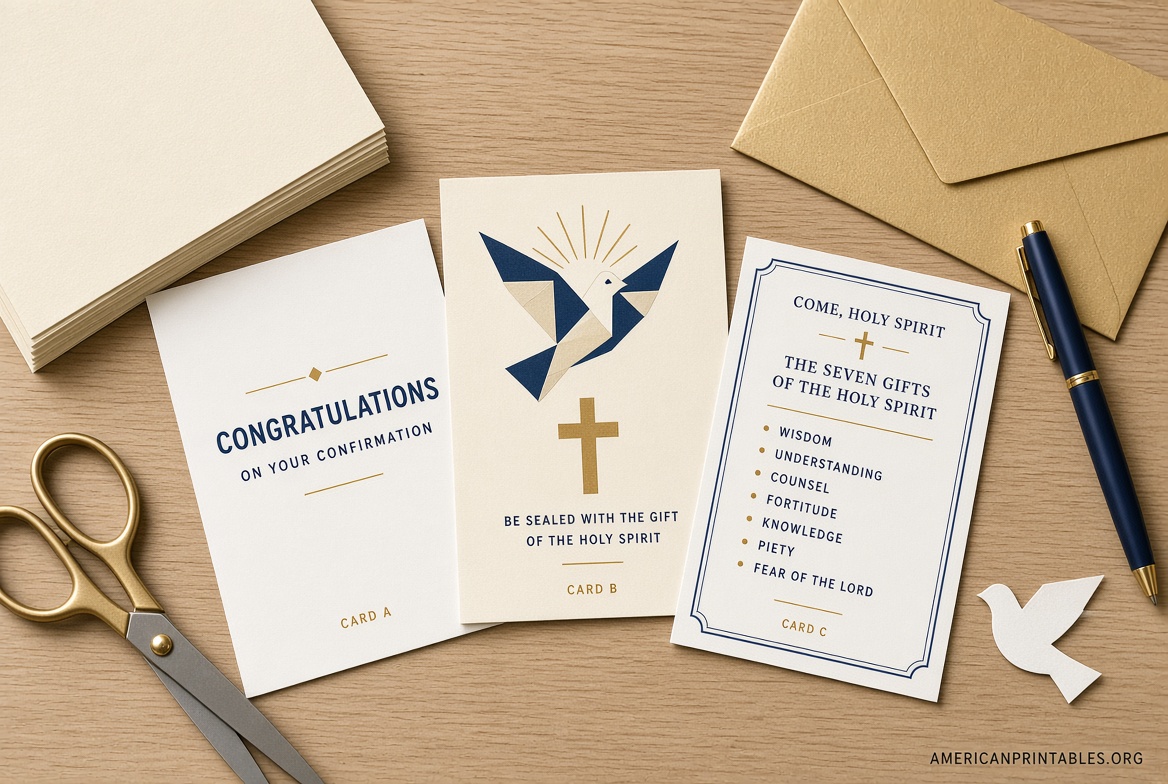
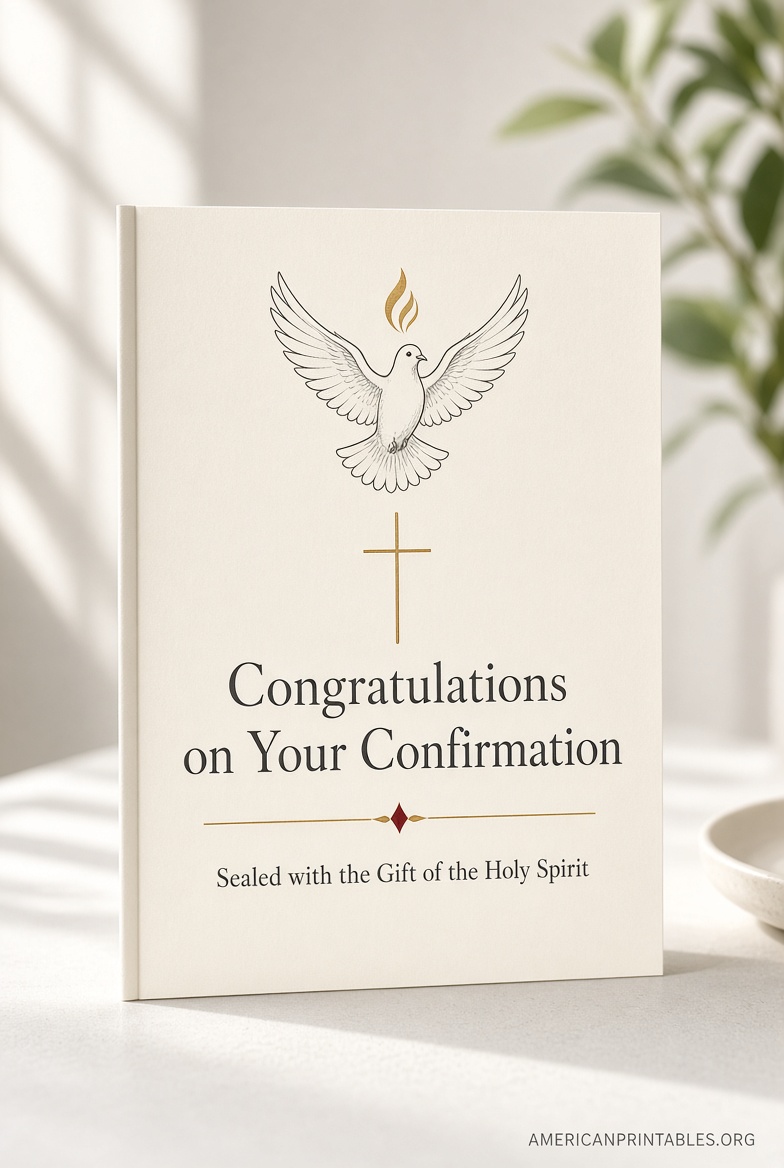
- Congratulations greeting cards for the confirmand
- Holy cards / prayer cards with a dove, cross, flame, or saint image
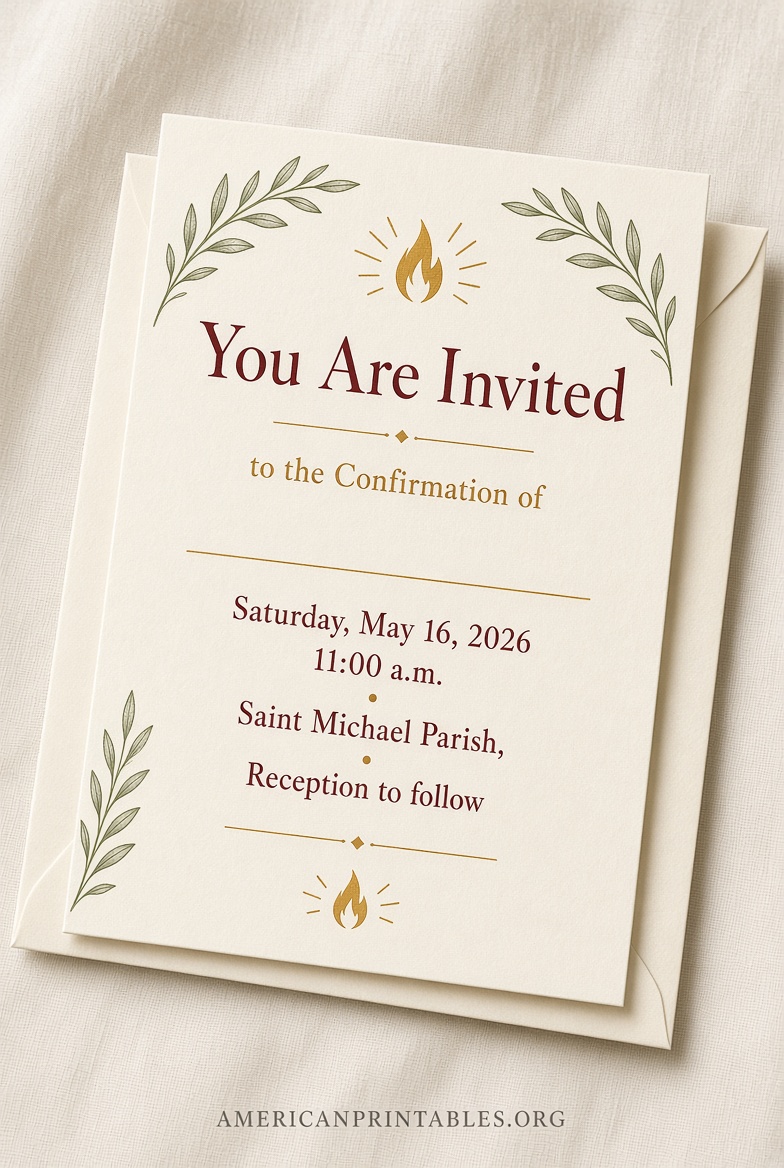
- Confirmation invitations for the Mass and reception
- Thank-you cards for the bishop, pastor, sponsor, or catechist
- Certificates some parishes print for the parish record or family album
What “Free Printable” Should Mean?
A legitimate free printable is a design you can open, download, and print without paying for the file itself. Watch for these limits, which are common and should be stated honestly:
- A free plan may leave a small watermark.
- Some templates are free to edit but paid to download at high resolution.
- “Free” often means personal or parish use only, not resale.
- Paper, ink, envelopes, and copy-shop printing still cost money.
If a site asks for a credit card before you can see the file, it is not a free printable.
Trusted Places to Get Free Printable Confirmation Cards
Use the sources below. Each one is a real download page, editor, or official resource—not a placeholder.
1. Free holy confirmation card (PDF or Word)
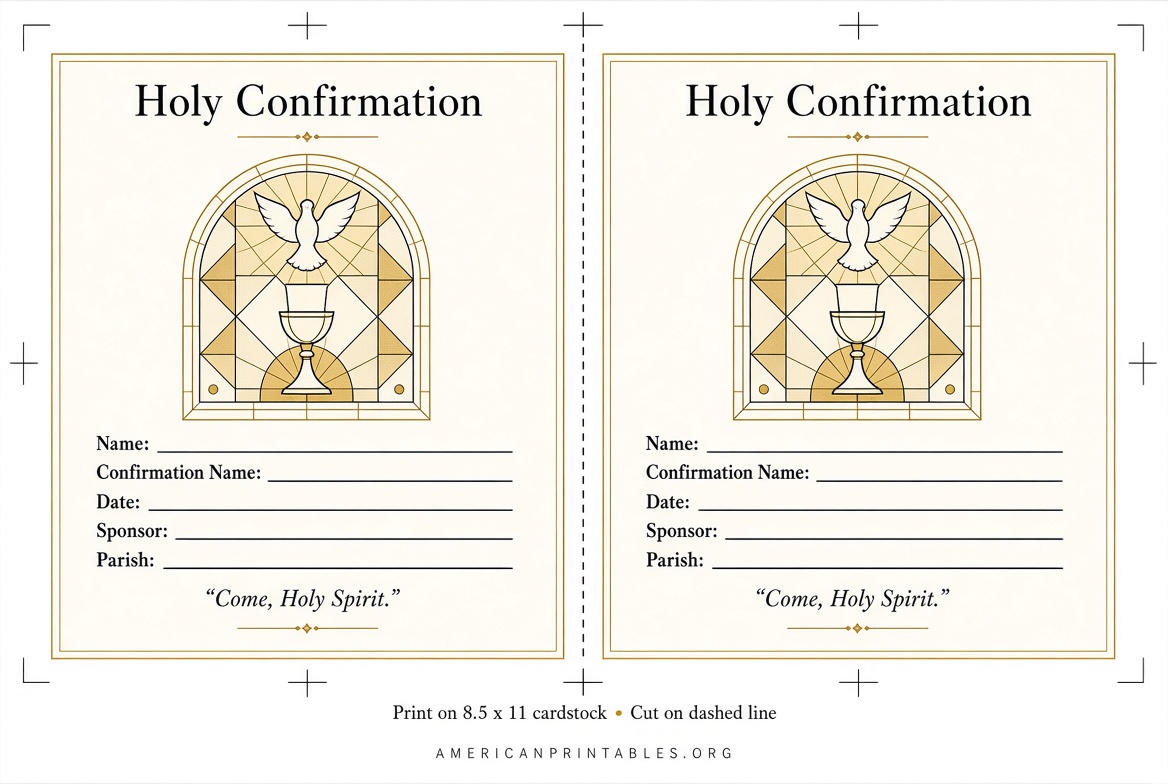
A classic option is the Holy Confirmation Card (2 per page) from Business Form Template, part of a long-running free printable network. The card shows a stained-glass dove over a chalice and includes fields for the confirmand’s name, confirmation name, date, sponsor, bishop, location, and a Holy Spirit prayer. You can download a free PDF or an editable Word file and print two cards on one 8.5″ x 11″ sheet.
Download the free Holy Confirmation Card (PDF or DOC)
This style works well as a keepsake holy card to slip into a Bible or gift.
2. Customizable greeting cards you can print at home
If you want a folded 5″ x 7″ congratulations card, Greetings Island’s free congratulations cards are a practical starting point. Choose a design, change the wording to “Congratulations on your Confirmation,” add a name or verse, then download a PDF or print from the browser.
The free version typically includes a small watermark. Premium removes it. For a parish stack of cards, that trade-off is worth knowing before you print 20 copies.
3. Free Confirmation invitation templates (Canva)
Need invites for the Mass, reception, or both? Canva’s Confirmation invitation templates let you edit names, parish, date, time, and dress code in a browser. A free Canva account is enough for many templates. Filter for free designs if you do not want Pro elements.
Canva is strongest for invitations and matching reception signs. You can also start from a blank 5″ x 7″ folded card and add a dove, cross, or flame graphic yourself.
4. Free Confirmation invitation templates (Adobe Express)
Adobe Express Confirmation invitation templates are another no-credit-card option. The gallery includes hundreds of Confirmation designs you can customize and download. This is useful if your family already uses Adobe or if you want a clean, modern invite that still reads as a faith celebration.
5. Official background on the sacrament (U.S. Church teaching)
A card is more meaningful when the message matches what Confirmation actually is. The U.S. bishops explain the sacrament here: USCCB: Sacrament of Confirmation.
In Latin Rite dioceses in the United States, Confirmation is ordinarily conferred between the age of discretion and about sixteen, within limits set by the diocesan bishop. Ages vary by diocese, so check your parish letter before you print dates on invitations.
How to Print Confirmation Cards at Home?
U.S. home printers and copy shops use 8.5″ x 11″ letter paper. Most greeting-card templates are built for that sheet.
Standard sizes
- Folded card: 5″ x 7″ (fits an A7 envelope)
- Smaller note card: 4.25″ x 5.5″ (A2 envelope)
- Holy card: often two-up on a letter sheet, then trimmed
Paper
Use white or cream cardstock, 65 lb to 110 lb. Regular copy paper feels thin and shows ink on the back. A matte finish is easier to write on than glossy photo paper.
Printer settings
- Open the PDF.
- Choose Actual size or 100%. Do not use “Fit to page” unless the template says to.
- For a folded card, print single-sided first as a test.
- If the file is two-sided, flip on the short edge or long edge exactly as the template instructs.
- Let the ink dry, then cut on the crop marks and fold with a bone folder or the back of a spoon.
Where to print if you do not have a good printer
Office Depot, Staples, FedEx Office, Walmart Photo, and many parish offices can print PDFs on cardstock. Bring the file on a USB drive or email it to yourself.
Envelopes
A 5″ x 7″ card needs an A7 envelope (5.25″ x 7.25″). You can buy these in bulk at office-supply stores. If you mail the card, add extra postage for thicker cardstock.
What to Write Inside a Confirmation Card?
Keep the tone warm, specific, and faith-filled. Generic “Congrats!” is fine. A named blessing is better.
Short messages
- “Congratulations on your Confirmation. May the Holy Spirit guide you.”
- “Sealed with the gift of the Holy Spirit. We are proud of you.”
- “May wisdom, courage, and peace stay with you from this day forward.”
From a parent or grandparent
“Watching you prepare for Confirmation has been a gift. Today you say yes to the faith we have prayed over since your baptism. We love you.”
From a sponsor
“I was honored to stand with you. I will keep praying for you as you live this sacrament—not only today, but in ordinary Tuesdays, hard choices, and quiet prayers.”
A verse that fits the day
Many families use Isaiah 11:2 (the gifts of the Spirit), Acts 2:4 (Pentecost), 2 Timothy 1:7, or Galatians 5:22–23 (the fruits of the Spirit). Match the translation your parish uses if you quote Scripture on a card for a Catholic confirmand.
Write the name the young person will hear at the rite, including a Confirmation saint name if they chose one.
Design Details That Read as “Confirmation,” Not Generic Party
U.S. shoppers recognize a handful of symbols:
- Dove or flame for the Holy Spirit
- Cross
- Chrism vessel or anointing imagery
- Red, gold, white, or deep cream (red is traditional for the Spirit)
- A saint image if the card is a holy-card keepsake
Avoid balloons-and-confetti templates unless the reception is informal and the family wants that tone. A simple layout with generous white space photographs better and feels more like a sacrament card.
Confirmation Cards vs. Invitations vs. Certificates
Use the right piece for the job.
| Need | Best free format | Typical size |
|---|---|---|
| Blessing for the confirmand | Greeting card or holy card | 5″ x 7″ or two-up holy card |
| Guest list for Mass or reception | Invitation template | 5″ x 7″ or 4″ x 6″ |
| Parish or family record | Certificate | 8.5″ x 11″ |
| Thank-you after the day | Folded note card | 4.25″ x 5.5″ |
Do not put reception-only details on a holy card you want someone to keep in a prayer book. Keep that card focused on the sacrament.
A Simple Weekend Workflow
- Confirm the date, church name, and spelling of the confirmand’s name with the parish.
- Pick one greeting-card design and, if needed, one invitation design.
- Add the message and proofread saint names.
- Print one test copy on plain paper.
- Print the final set on cardstock.
- Trim, fold, and address envelopes the night before.
If you are making cards for an entire Confirmation class, print a master and photocopy onto cardstock at a copy shop. That is usually cheaper than running 30 color copies through a home inkjet.
Frequently Asked Questions
Are free printable confirmation cards really free?
The five resources linked above offer free personal use of at least some designs. Greetings Island’s free downloads may include a watermark. Canva and Adobe Express mix free and premium templates—choose the free ones if you do not want to pay.
Can a parish print these for a whole class?
Usually yes for personal and church use, but read each site’s terms. Do not sell the files or upload them to a paid shop.
What paper should I buy in the U.S.?
Look for “letter size cardstock, 8.5 x 11, 65 lb or 80 lb, white or ivory.” That pack works for both 5″ x 7″ cards and two-up holy cards.
Is a printable card appropriate to give at church?
Yes. Give it after Mass or at the reception, not during the rite. Many families place cards in a basket so the confirmand is not juggling gifts in the communion line.
What if our church is Lutheran, Episcopal, or Methodist?
The same printable formats work. Change Catholic-only wording such as “Sacrament of Confirmation” or “bishop” if that does not match your tradition. “Congratulations on your Confirmation” and a Scripture verse travel well across many U.S. churches.
Final Note
A good confirmation card does not have to be expensive or elaborate. It has to be timely, clearly printed, and written to one person. Start with a free holy-card PDF or a customizable 5″ x 7″ template, print a single test page, then make as many copies as your family or parish needs.
If you only have ten minutes, download the two-per-page holy card, write a short blessing, and put it in an envelope. That is enough. The point of the card is the same as the day itself: to mark a grace already given, and to say you are standing with the person who received it.