Free Printable Eye Drop Medication Chart – Managing multiple eye drops can feel overwhelming—especially after cataract surgery, for glaucoma, dry eye, or other conditions that require precise timing and frequency. A printable eye drop medication chart helps you stay organized, improve adherence, and reduce the chance of missed or double doses.
This resource page explains why these charts matter, how to use them effectively, and where to find legitimate free printables and trackers suitable for a USA audience. Always follow your eye doctor’s specific instructions; charts are tools to support—not replace—professional guidance.
Why Use a Printable Eye Drop Medication Chart?
Eye drop regimens often involve different medications (antibiotics, steroids, NSAIDs, glaucoma drops, or artificial tears) with varying schedules—sometimes several times a day, with waiting periods between drops, and tapering over weeks.
Studies and clinical experience show that simple tracking tools improve adherence. Charts let you:
- Check off doses as you take them.
- Note times, which eye, and any side effects or questions for your next visit.
- Share accurate records with your ophthalmologist or optometrist.
- Pair dosing with daily routines (e.g., after brushing teeth or with meals).
Common tips that pair well with a chart include waiting at least 5 minutes between different drops, applying gentle pressure to the inner corner of the eye after instilling a drop (punctal occlusion), and never touching the bottle tip to your eye or skin.
How to Use an Eye Drop Medication Chart Effectively?
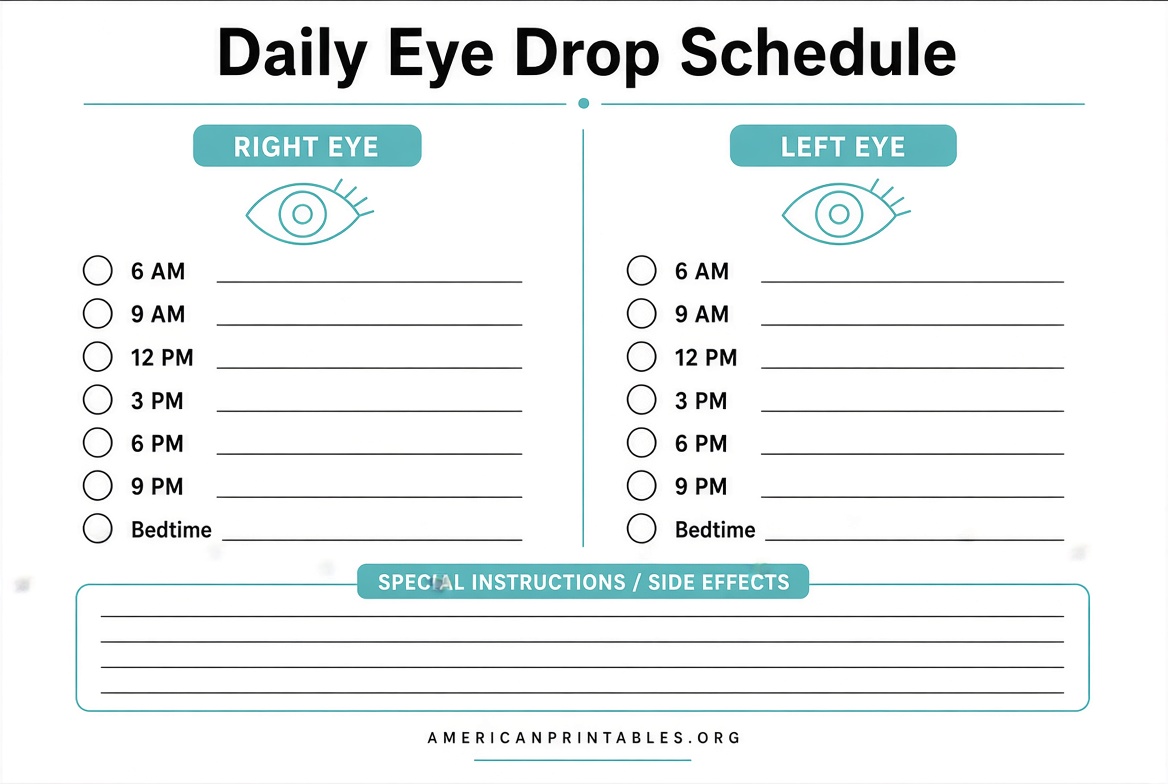
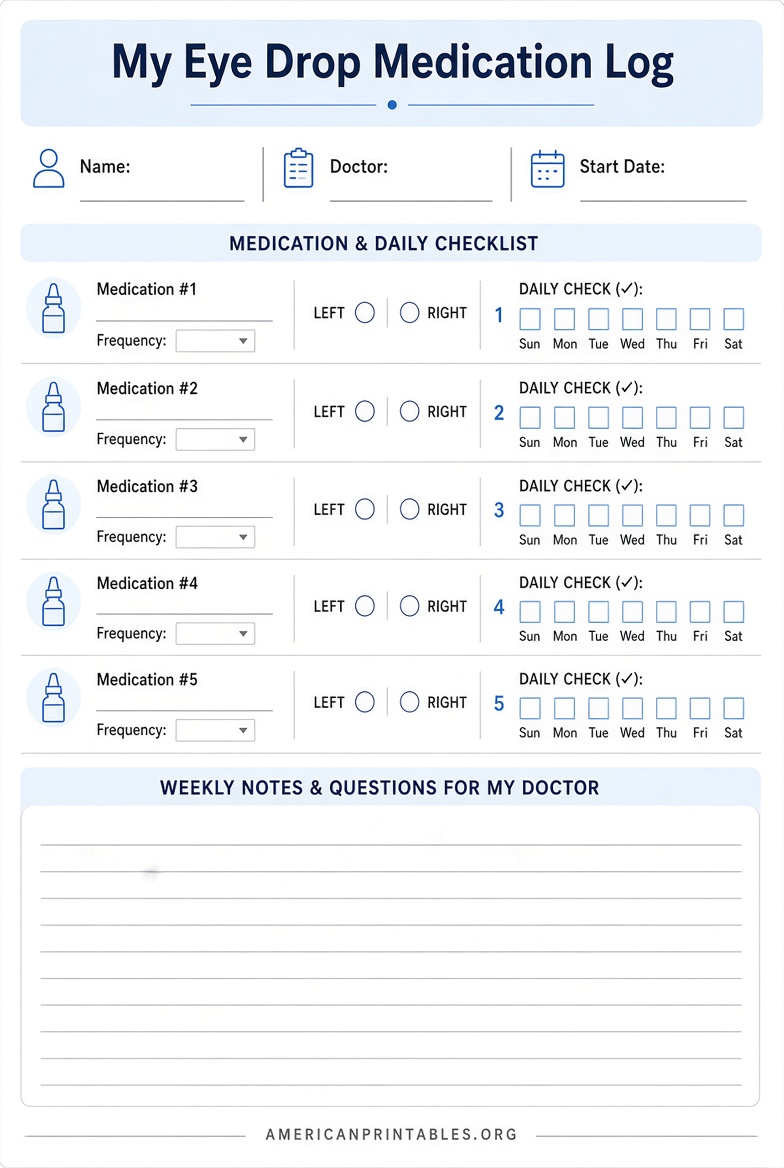
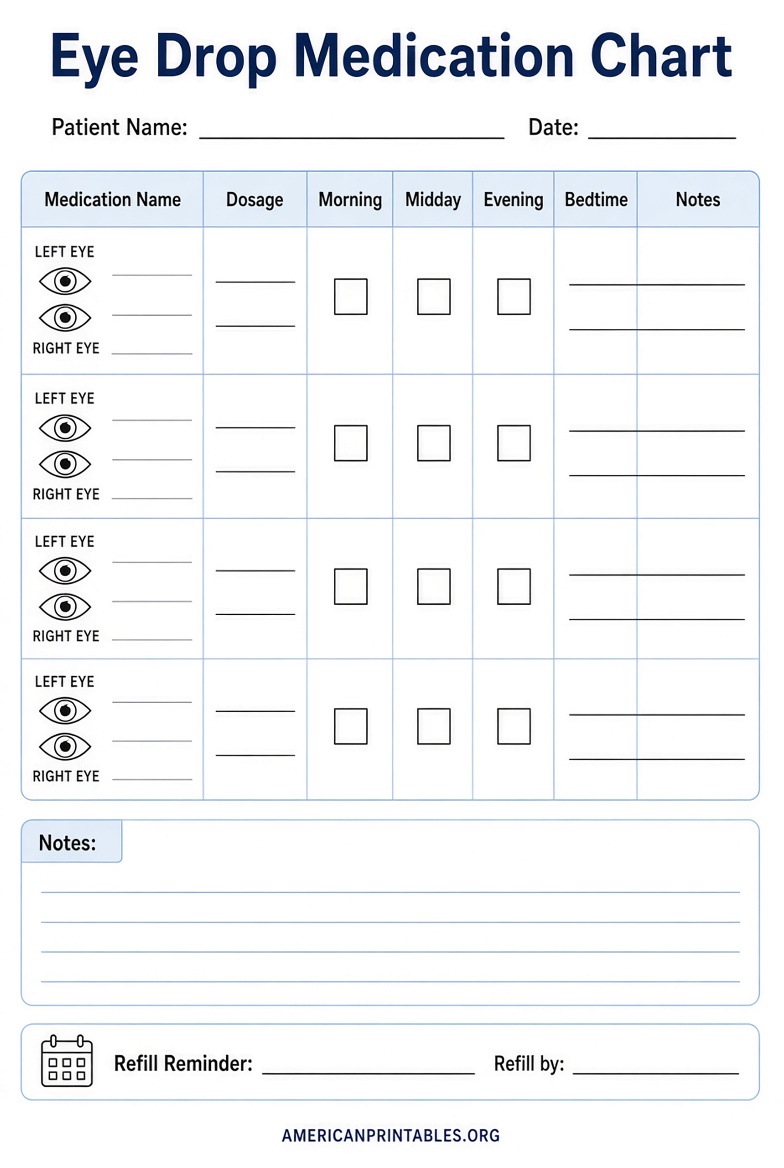
- Fill in patient name, medication names (generic and brand if helpful), prescribed frequency, and start/stop or taper dates.
- Include columns or checkboxes for morning, midday, evening, bedtime, or specific clock times.
- Note which eye (right, left, or both) and any special instructions (shake well, refrigerate, etc.).
- Mark each dose immediately after taking it.
- Add a notes section for symptoms, missed doses, or questions.
Many people also set phone alarms or use color-coded stickers on bottles that match the chart. The American Academy of Ophthalmology promotes standardized cap colors for eye drops to help reduce mix-ups—familiarize yourself with those codes as an extra safety layer.
Where to Get Free Printable Eye Drop Medication Charts?
Here are reliable, free resources. Download and print what works best for your needs, or customize as needed. (All links open in a new tab.)
- NOT A DRY EYE Foundation medication tracking template — A free Excel file you can modify for drops, ointments, oral meds, warm compresses, and notes on side effects or results. Ideal for complex dry-eye or multi-medication regimens. Download the template from the foundation’s page: Med-Tracking.xlsx. Learn more and access the page here: Keeping Track of Drops, Medications, and Symptoms.
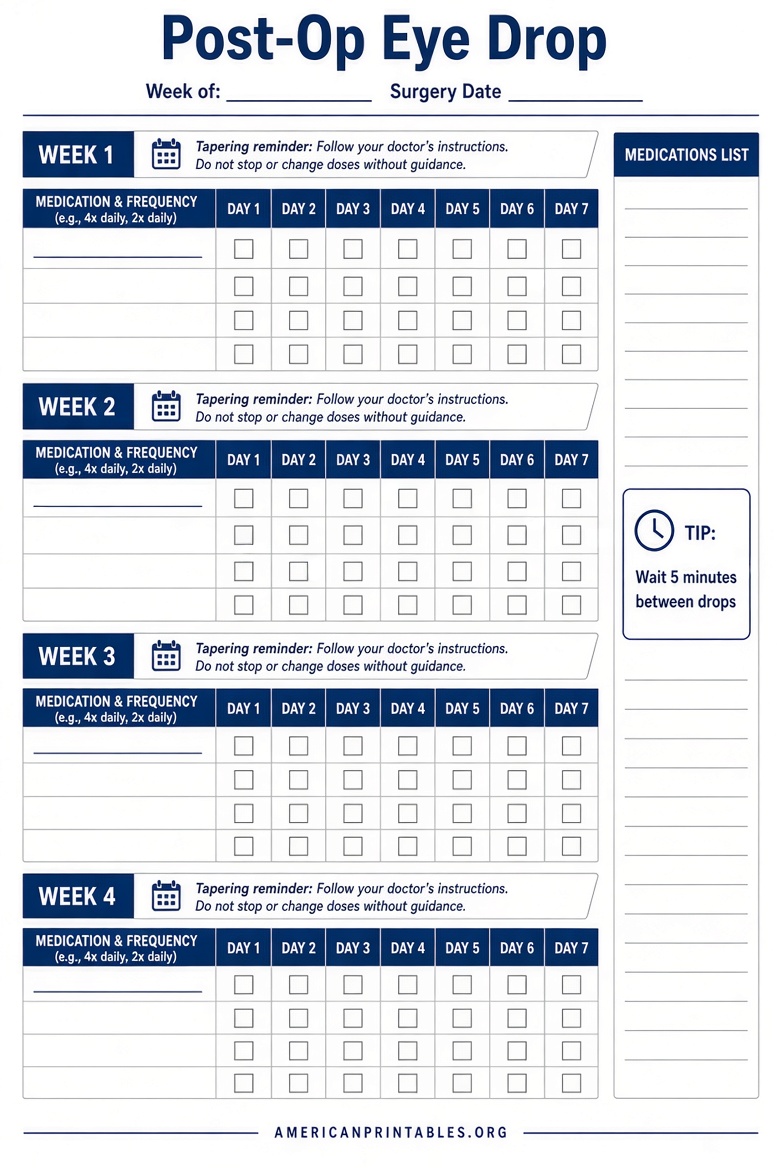
- MamaChallenge post-op eye drop schedule PDF — A simple printable chart designed around a multi-day post-operative schedule with checkboxes for multiple prescriptions and times. Useful as a starting template (adapt to your doctor’s orders): Eye-Drop-Chart.pdf.
- Clinic-style cataract drop schedule examples — Many U.S. eye centers publish free PDFs with bubble or checkbox layouts for pre- and post-cataract regimens (antibiotics, NSAIDs, steroids). One clear example is available from Collins Vision: Cataract Surgery Drop Schedule PDF. Another generic checklist-style version comes from Eye Center of Texas: English Generic Cataract Drop Checklist PDF.
Ask your own ophthalmologist’s office—they frequently provide customized printed schedules tailored to your exact prescriptions.
Free Printable Eye Drop Medication Chart
Additional Practical Tips for USA Patients
- Confirm refill rules with your pharmacy and insurance; some states have laws supporting early eye-drop refills because bottles can run out sooner than expected.
- Store drops as directed (some require refrigeration after opening). Note the open date on the bottle or chart.
- If you struggle with technique, ask about dispensing aids or practice with your doctor’s staff.
- For ongoing conditions like glaucoma or dry eye, bring your completed chart to appointments so your provider can review adherence and adjust treatment.
Brief FAQ
Can I create my own chart?
Yes. A simple weekly grid on paper or a spreadsheet works well. Include medication name, dose, times, and checkboxes.
Are digital trackers better than printables?
Printables require no battery or login and work offline. Many people use both—a paper chart at home plus phone reminders.
What if my schedule changes or tapers?
Update the chart or start a new one. Note the change date and new frequency clearly.
Is there an official free chart from a major eye organization?
Major groups like the American Academy of Ophthalmology provide excellent educational material on technique and color coding, but personalized schedules usually come from your eye-care provider or patient-support organizations such as the one linked above.
A printable eye drop medication chart is a simple, low-cost tool that supports better outcomes. Download one of the free resources above, customize it to your prescription, and use it consistently. Always consult your eye doctor for personalized advice and never change your regimen without guidance.