Free Printable Food Temperature Chart | USDA Guide – A free printable food temperature chart is one of the most useful tools you can keep in your kitchen. It shows the safe minimum internal temperatures recommended by U.S. food safety authorities so you can cook meat, poultry, seafood, eggs, and leftovers without guessing. Color and texture alone are not reliable indicators of safety. A food thermometer plus a clear temperature chart helps prevent foodborne illness.
This guide explains the key temperatures, why they matter, and where to get legitimate free printable (or easily printable) versions from official U.S. sources.
Why You Need a Food Temperature Chart?
Bacteria that cause food poisoning can grow quickly in the “Danger Zone” between 40°F and 140°F. Cooking food to the correct internal temperature kills harmful bacteria. The USDA Food Safety and Inspection Service (FSIS) and FoodSafety.gov publish the official safe minimum internal temperatures that American home cooks should follow.
Rest times matter for some cuts. After you remove steaks, chops, or roasts from the heat, the temperature continues to rise slightly and finishes the cooking process. Always measure the thickest part of the food, away from bone, fat, or gristle.
Official Safe Minimum Internal Temperatures
Here are the current recommended temperatures (as measured with a food thermometer):
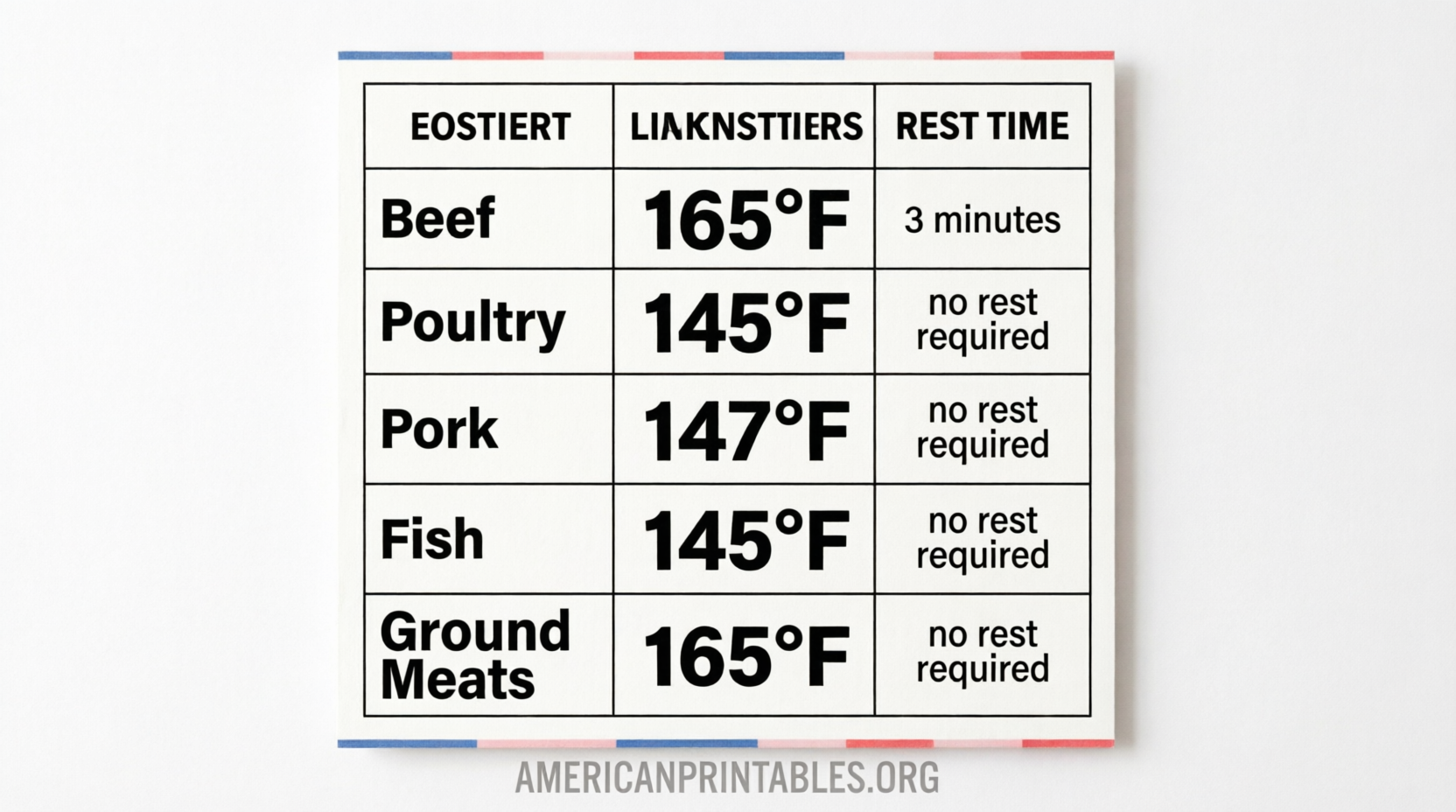
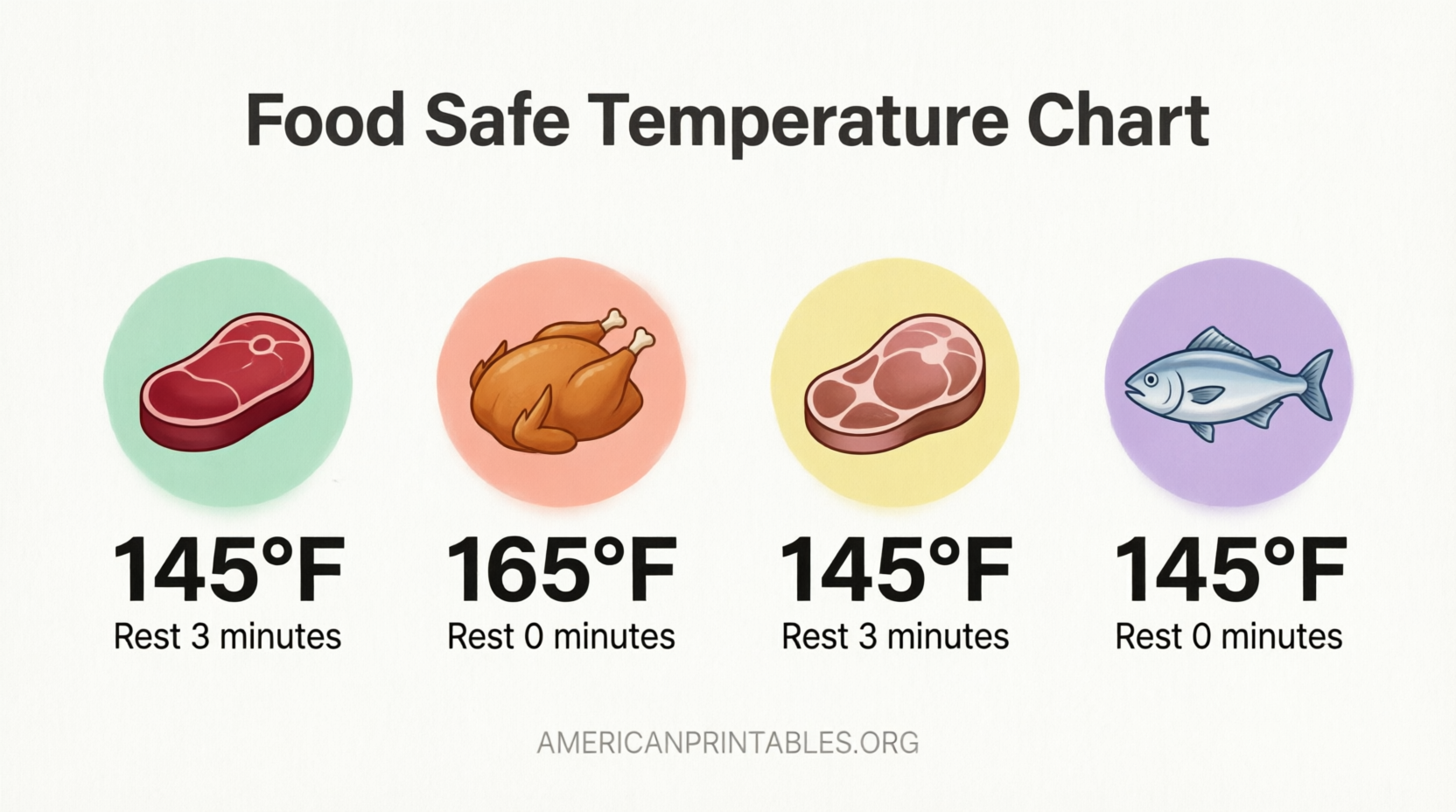
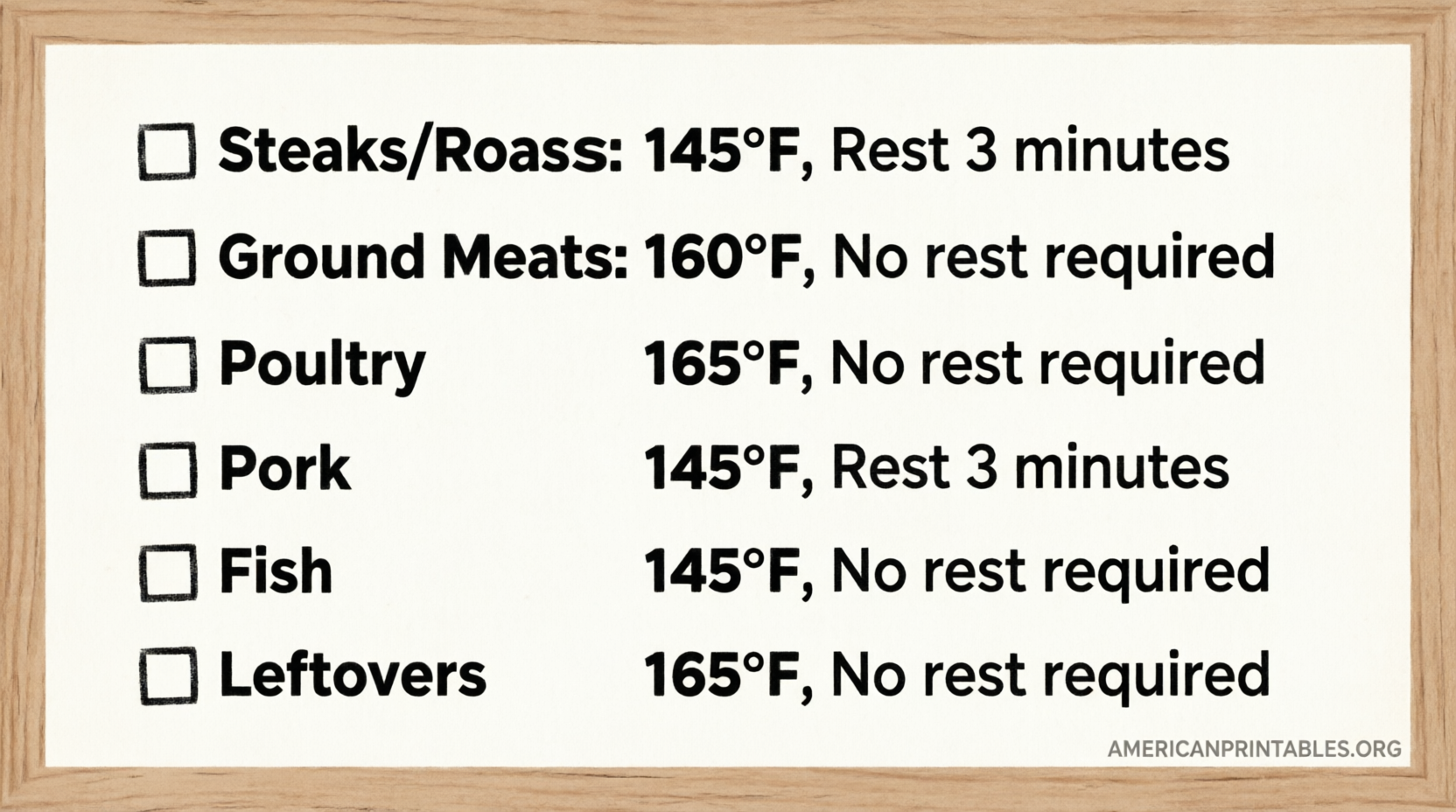
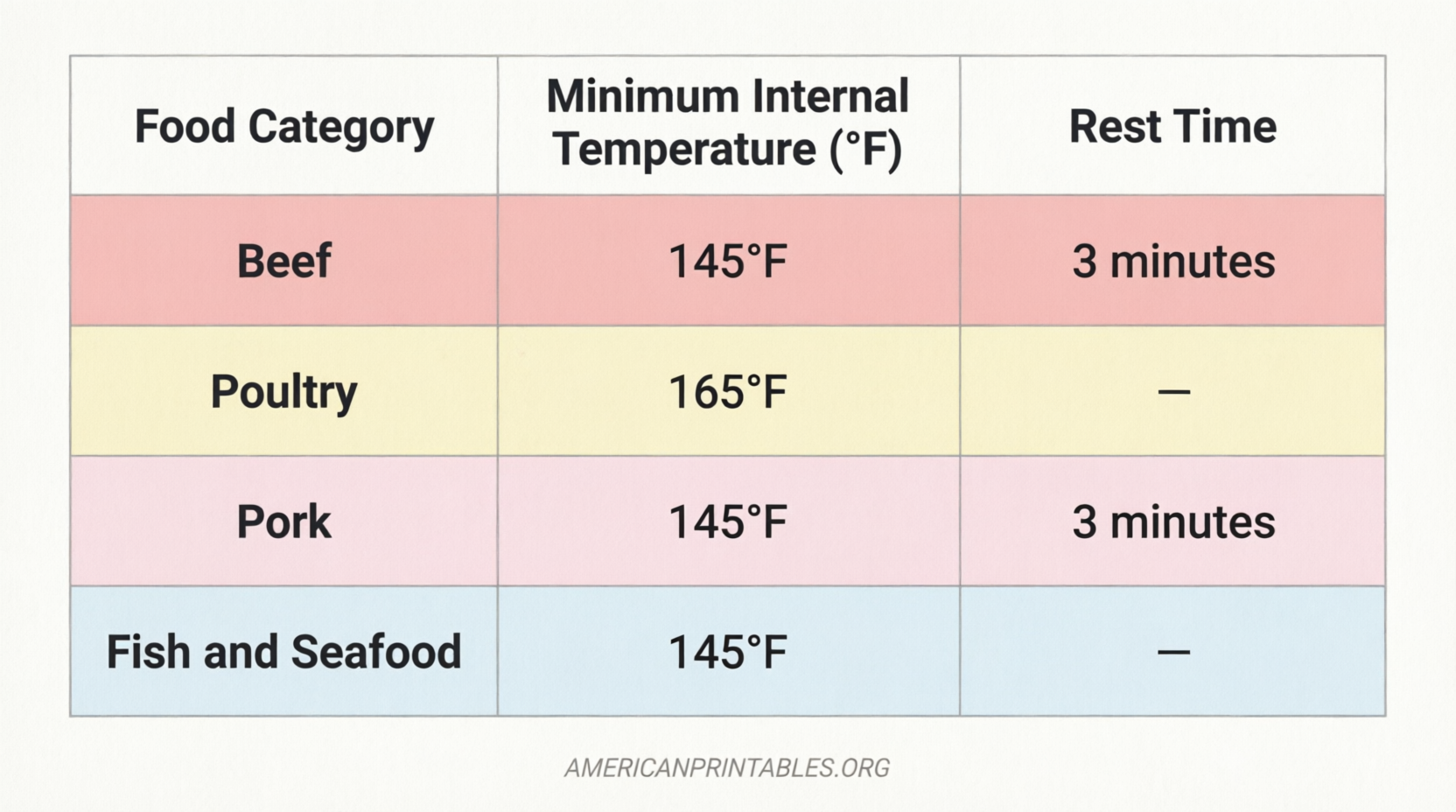
- Beef, pork, veal, and lamb steaks, chops, and roasts: 145°F, then rest at least 3 minutes
- Ground meats (beef, pork, veal, lamb): 160°F
- All poultry (whole birds, parts, ground poultry, stuffing): 165°F
- Fresh or smoked ham (uncooked): 145°F, then rest at least 3 minutes
- Fully cooked ham (to reheat): 140°F if packaged in a USDA-inspected plant; otherwise 165°F
- Fish and shellfish: 145°F (or until flesh is opaque and separates easily)
- Eggs and egg dishes: 160°F (cook eggs until yolks and whites are firm)
- Leftovers and casseroles: 165°F
These figures come directly from official U.S. government guidance. For the most complete and up-to-date chart, visit the primary sources below.
Where to Get Free Printable Food Temperature Charts
The most authoritative free resources are published by U.S. government agencies. These pages are designed to be printed at home and make excellent kitchen references.
Start with the official FoodSafety.gov safe minimum internal temperature chart. The page includes a clear table and a “Print Food Temperature Chart or Download as PDF” option:
https://www.foodsafety.gov/food-safety-charts/safe-minimum-internal-temperatures
The USDA FSIS Safe Minimum Internal Temperature Chart is another excellent printable reference that lists the same core temperatures with rest-time notes:
https://www.fsis.usda.gov/food-safety/safe-food-handling-and-preparation/food-safety-basics/safe-temperature-chart
For a broader collection of food safety charts (including cold storage guidelines that pair well with the cooking chart), visit the FoodSafety.gov Food Safety Charts hub:
https://www.foodsafety.gov/food-safety-charts
These three official pages give you everything you need. Print the temperature chart, laminate it if desired, and keep it near your stove or grill. No third-party site is required.
Free Printable Food Temperature Chart | USDA Guide
Practical Tips for Using Your Chart
- Buy a reliable digital instant-read thermometer and check its accuracy periodically.
- Insert the probe into the thickest part of the food. For whole poultry, check the innermost part of the thigh and wing and the thickest part of the breast.
- Clean the thermometer with hot, soapy water after each use.
- Never rely on cooking time alone—oven temperatures and starting temperatures of the food vary.
- Keep hot food at or above 140°F and cold food at or below 40°F once cooking is finished.
Brief FAQ
Is color a good way to tell if meat is done?
No. Research shows that ground beef and other meats can turn brown before reaching a safe temperature. Always use a thermometer.
Do I need different temperatures for different cooking methods?
The safe minimum internal temperature stays the same whether you grill, roast, pan-sear, or use a slow cooker. The thermometer reading is what counts.
Where can I find more free food safety printables?
The FoodSafety.gov charts page linked above also offers cold-storage and power-outage guidance that many households print and post together with the temperature chart.
Keep an official free printable food temperature chart in your kitchen and use a food thermometer every time you cook meat, poultry, seafood, or leftovers. Following these USDA-backed temperatures is one of the simplest and most effective ways to protect your family from foodborne illness.