Free Printable Fridge & Freezer Temperature Logs – A free printable refrigerator and freezer temperature log sheet is a simple daily record of how cold your units actually are. In the United States, that record is one of the easiest ways to keep food out of the danger zone, catch a failing appliance early, and show a health inspector that you check temperatures on a schedule.
You do not need paid software to start. Several U.S. government agencies and food-assistance programs publish blank logs you can print today. This page explains the safe temperature targets, how to fill out a log correctly, and where to download legitimate free sheets.
Why a Temperature Log Matters?
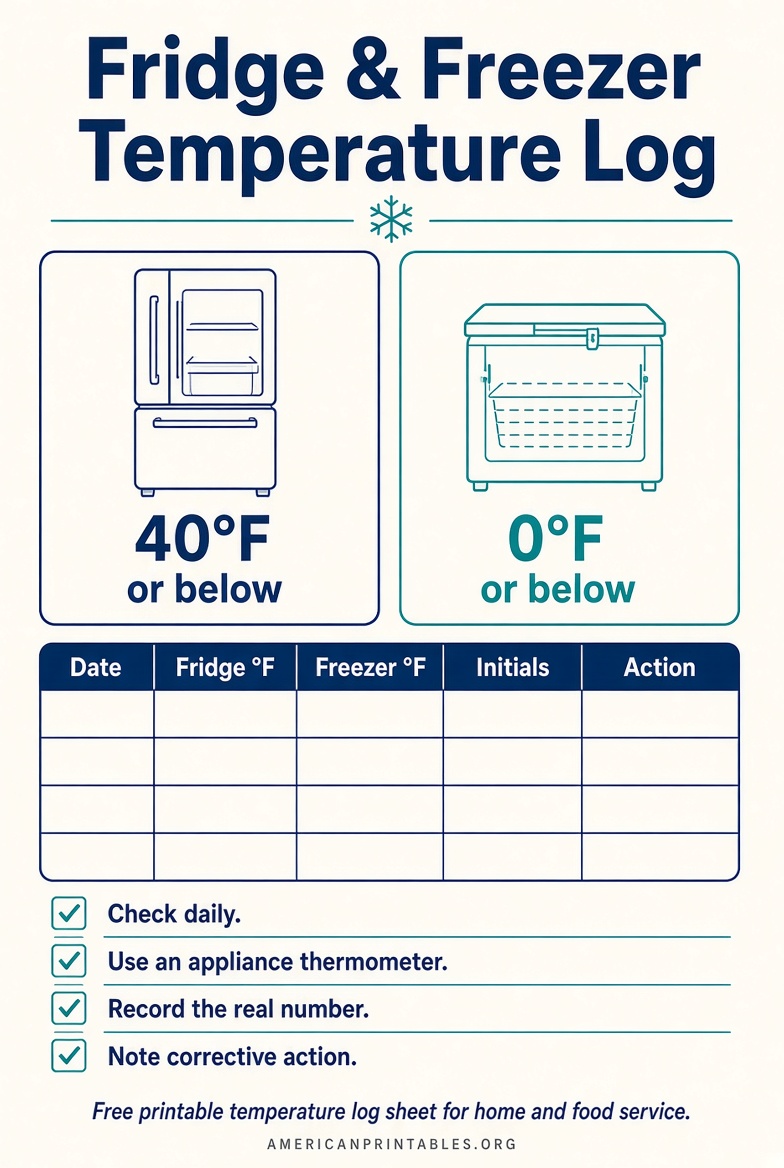
A refrigerator’s display is not always accurate. Door seals wear out, coils get dusty, and a unit can drift warm overnight without anyone noticing. USDA Food Safety and Inspection Service guidance is clear: keep the refrigerator at 40°F or below and the freezer at 0°F or below, and verify those numbers with an appliance thermometer—not the dial on the door.
The FDA gives the same home-storage targets and recommends checking appliance thermometers regularly. Perishable food that sits above 40°F for too long can allow bacteria such as Listeria to grow even when the food still looks and smells fine.
In restaurants, schools, daycares, food pantries, and other regulated kitchens, written logs also serve as proof of due diligence. Most local health departments adopt some version of the FDA Food Code. That code requires time/temperature control for safety (TCS) foods to be cold-held at 41°F or below. Many commercial logs therefore aim for unit air temperatures in the mid-30s so food itself stays at or under 41°F.
Safe Temperatures to Write on the Log
Use these U.S. targets unless your local health department or vaccine program specifies something different.
| Unit | Common U.S. target | Notes |
|---|---|---|
| Home refrigerator | 40°F or below | USDA and FDA consumer guidance |
| Commercial cooler (TCS food) | 41°F or below for food; many logs use 36°F–41°F air temp | FDA Food Code cold holding |
| Home or commercial freezer | 0°F or below | Quality holds best at 0°F; some food-service logs allow −10°F to 0°F |
| Dry storage (if your log includes it) | About 50°F–70°F | Common on school and pantry logs |
Vaccine refrigerators and freezers use different ranges (often 36°F–46°F for refrigerated vaccines). Do not mix a vaccine log with a food log.
What a Good Log Sheet Includes?
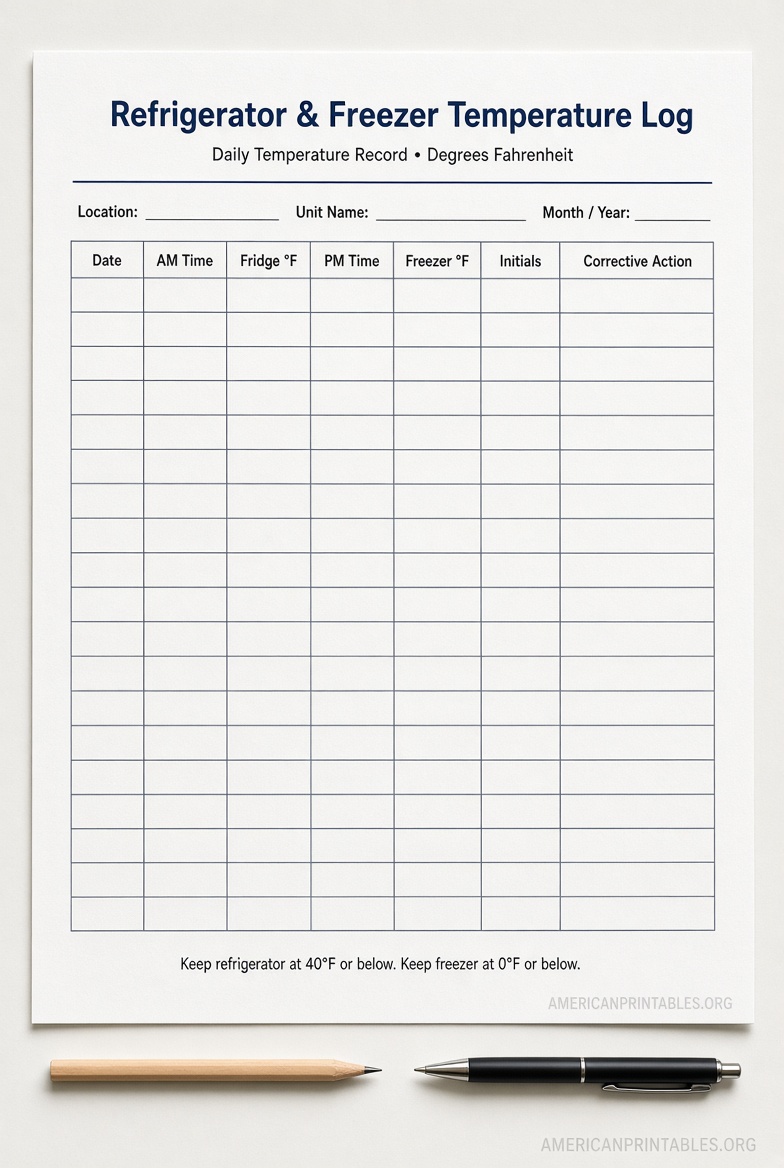
A useful free printable refrigerator and freezer temperature log sheet usually has:
- Facility or home name, unit ID, and month/year
- Date for each day of the month
- Time of the reading
- Temperature in °F
- Initials of the person who checked
- A corrective-action column (adjusted thermostat, called repair, discarded food, wrote “closed”)
- Space for a supervisor to review the sheet
Commercial kitchens often record morning and afternoon readings. Home users can check once a day, plus after a power outage or anytime food seems soft or warm.
Free Printable Logs You Can Download Now
These are public PDFs from a state education agency, a state aging/nutrition program, and a U.S. food bank. Open each link, print on letter-size paper, and keep one sheet on the unit or on a clipboard.
1. Daily refrigerator and freezer log (Missouri Department of Elementary and Secondary Education)
This one-page food-service form covers both walk-in and reach-in units. It asks staff to record morning and afternoon air temperatures, initials, and corrective action. The printed instructions set refrigerators at 36°F–41°F and freezers at −10°F to 0°F, and they tell you to keep completed logs for at least three years in a school setting.
Download the Missouri DESE daily freezer/refrigerator temperature log (PDF)
2. Refrigerator storage daily temperature log (United Food Bank)
This 2025–2026 pantry-style sheet is built for one refrigerator per page. It requires daily readings at 41°F or less, initials, and a simple corrective-action code (A = adjusted, D = discarded). Instructions say to write in ink, never use white-out, mark closed days as “Closed,” and keep records for up to two years.
Download the United Food Bank refrigerator temperature log (PDF)
3. Combined refrigerator, freezer, and dry-storage log (Nevada Aging and Disability Services Division)
Use this if you need one form for several unit types. It records date, time, temperature, and worker initials. Printed targets are refrigerator 40°F or lower, freezer 0°F or lower, and dry storage 50°F–70°F.
Download the Nevada ADSD daily refrigerator/freezer/storage log (PDF)
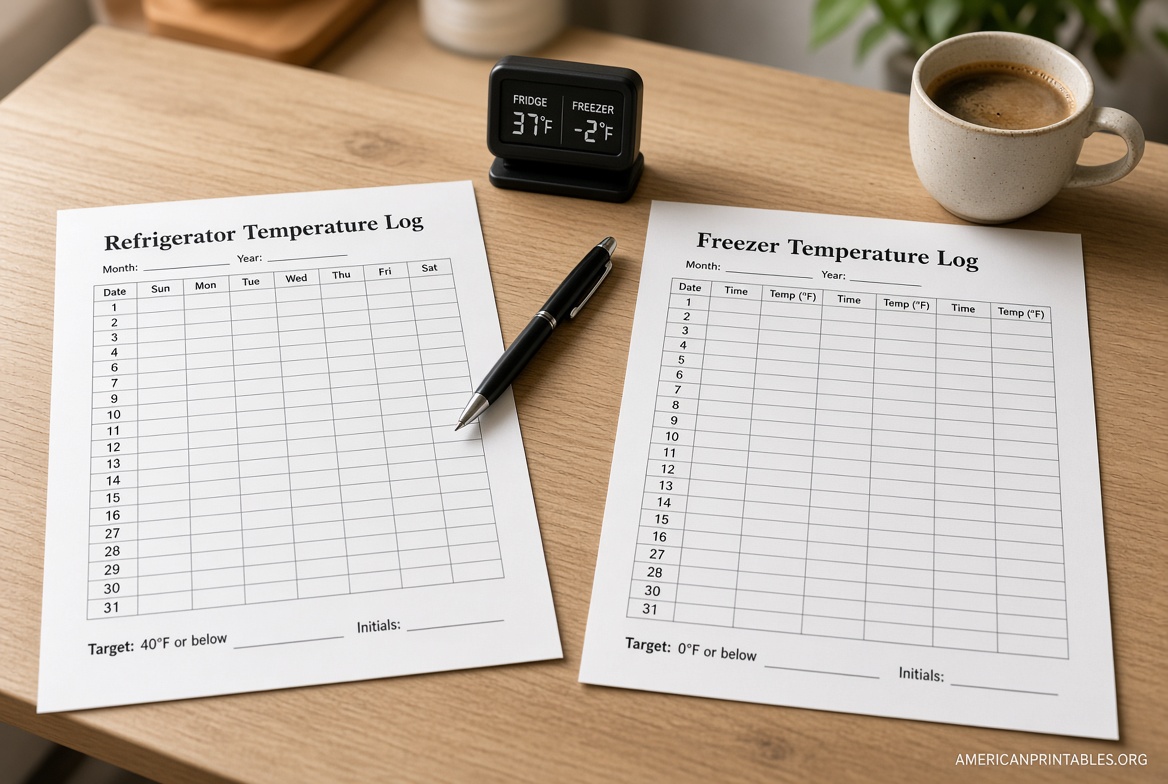
Print a separate sheet for every unit. A walk-in cooler, a reach-in sandwich fridge, and a chest freezer should never share one column of numbers.
Free Printable Fridge & Freezer Temperature Logs
How to Use the Log the Right Way?
Put a real thermometer in the unit.
USDA recommends an appliance thermometer made for cold temperatures. To check a refrigerator, place the thermometer in a glass of water in the middle of the box and wait 5 to 8 hours; you want about 38°F–40°F. For a freezer, place the thermometer between frozen packages and wait the same amount of time; you want about 0°F–2°F before you adjust the control.
Read at a consistent time.
Morning, before heavy door traffic, is the most useful reading. Commercial sites should add a closing reading.
Write what you see, then act.
If the cooler is 45°F, do not leave the box blank. Record 45°F, adjust the control or call for service, move TCS food if needed, and note what you did. A log with only “good” numbers and no corrective actions looks incomplete to an inspector.
Do not take the reading during defrost or while the door is propped open.
Several official logs say the same thing: a spike from an open door is not the unit’s true holding temperature.
Keep the paper.
Homes can keep a month or two. Food establishments should follow the local health department. School nutrition logs often must be kept for years. Never backfill missing days from memory.
Home vs. Business: What Inspectors Expect
At home
A weekly check is better than nothing. A daily check during hot weather, after grocery day, or after a storm is smarter. FDA consumer guidance also covers the two-hour rule (one hour if the air is above 90°F) and what to throw out after a power outage. A closed refrigerator typically holds food safely about four hours; a full freezer can hold temperature about 48 hours if you leave the door shut.
In a restaurant, cafeteria, daycare, or pantry
Expect the inspector to look at product temperatures first and your written log second. Local rules vary by state and county, so confirm the required frequency and retention period with your health department. The FDA Food Code is the model most jurisdictions start from.
Read the FDA’s food storage and appliance-thermometer guidance
Read USDA FSIS instructions for refrigerator and freezer thermometers
Those two official pages are not log templates. They are the standards the templates above are meant to document.
Common Mistakes That Make a Log Useless
- Trusting the manufacturer’s display instead of an independent thermometer
- Logging only “OK” instead of the actual number
- Using one sheet for several units
- Checking while the door is open or the unit is in defrost
- Leaving blanks for weekends in a business that was closed (write “Closed”)
- Using white-out; official food-bank instructions say to strike through errors so both numbers stay readable
- Mixing Celsius and Fahrenheit on the same sheet
Brief FAQ
How often should I fill out a refrigerator and freezer temperature log sheet?
Daily is the standard for food service. Twice daily is common in restaurants and schools. At home, check at least weekly and after any outage.
Is 41°F or 40°F the correct refrigerator temperature?
For household food safety, USDA and FDA say 40°F or below. For commercial cold holding of TCS food, the FDA Food Code uses 41°F or below. Use the target your regulator or printed log specifies, and stay on the cold side of that number.
Can I keep the log on my phone instead of paper?
Some health departments accept digital logs if they are complete, time-stamped, and available during an inspection. If you are not sure, print the PDF and keep a paper backup.
What if the freezer is 10°F?
Record it, turn the control colder, and recheck after several hours. Food that stayed frozen solid is usually still safe; quality drops when the freezer runs warm for a long time. After a long outage, follow USDA and FDA discard rules rather than guessing.
Where should I put the thermometer?
Not against the wall and not in the door. Mid-box in a glass of water for the fridge, and between packages for the freezer, gives a more honest reading.
Start With One Sheet This Week
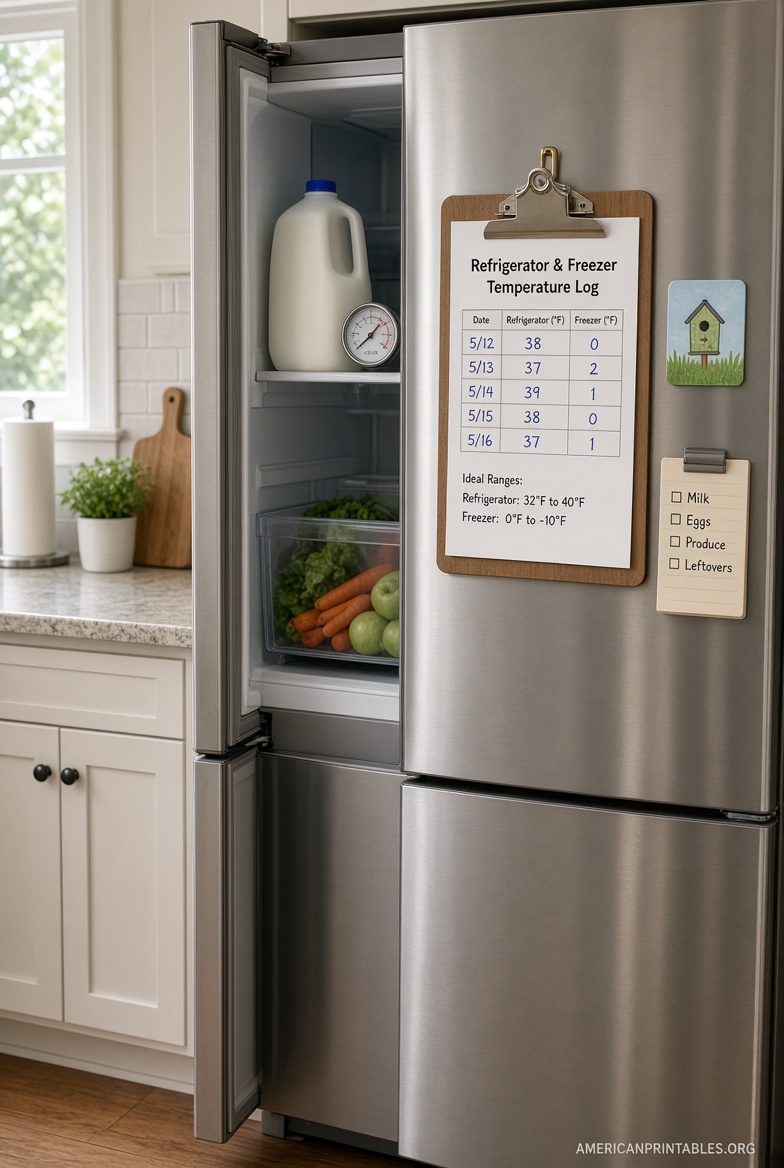
Print one of the free logs above, label the unit, and clip the sheet where people will actually write on it. Add an inexpensive appliance thermometer if you do not already have one. After 30 days you will know whether the refrigerator holds 40°F overnight, whether the freezer stays at 0°F, and whether a door that does not latch is costing you food.
That is the entire point of a free printable refrigerator and freezer temperature log sheet: a short daily habit that protects food, money, and, in a commercial kitchen, your next inspection.