Free Printable Meat Temperature Chart | USDA Safe Guide – A free printable meat temperature chart is one of the most practical tools you can keep in a U.S. kitchen. It takes the guesswork out of cooking beef, pork, poultry, fish, and ground meats so you hit safe internal temperatures every time. Color alone is not a reliable indicator of doneness—only a food thermometer and the correct target temperatures protect against foodborne illness.
This guide explains the official USDA/FoodSafety.gov safe minimum internal temperatures, why rest times matter, and where to get legitimate free printable charts you can download and post on the fridge.
Why You Need a Meat Temperature Chart?
Undercooked meat can harbor harmful bacteria such as Salmonella, E. coli, and Listeria. The U.S. Department of Agriculture (USDA) and FoodSafety.gov set clear minimum internal temperatures that destroy these pathogens when measured with a food thermometer in the thickest part of the food (avoiding bone and fat).
For many whole cuts of beef, pork, veal, and lamb, a short rest after cooking is also required. During the rest, the temperature holds or rises slightly, finishing the kill step while juices redistribute for better texture.
Keep a free printable meat temperature chart nearby so you never have to search online mid-cook.
Official USDA Safe Minimum Internal Temperatures
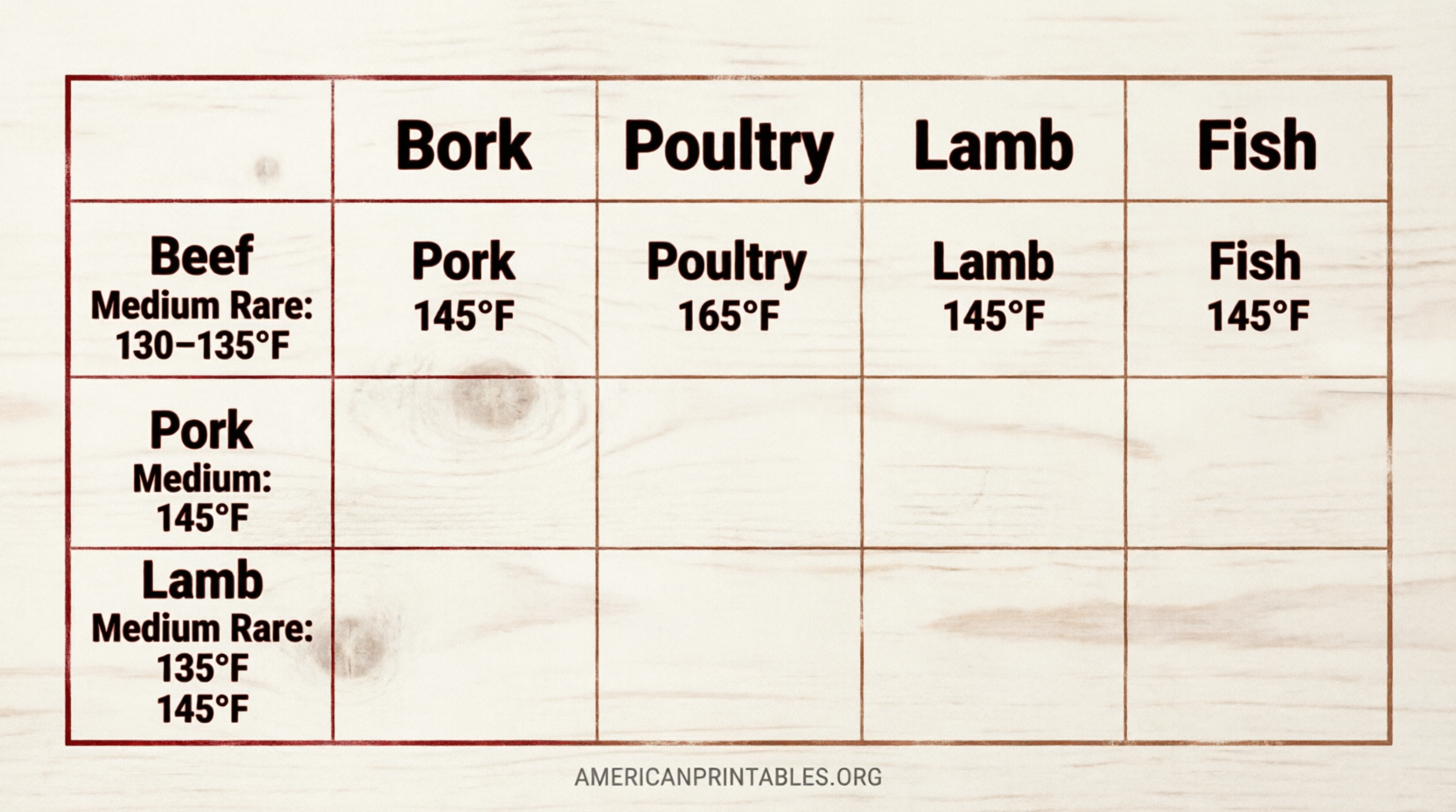
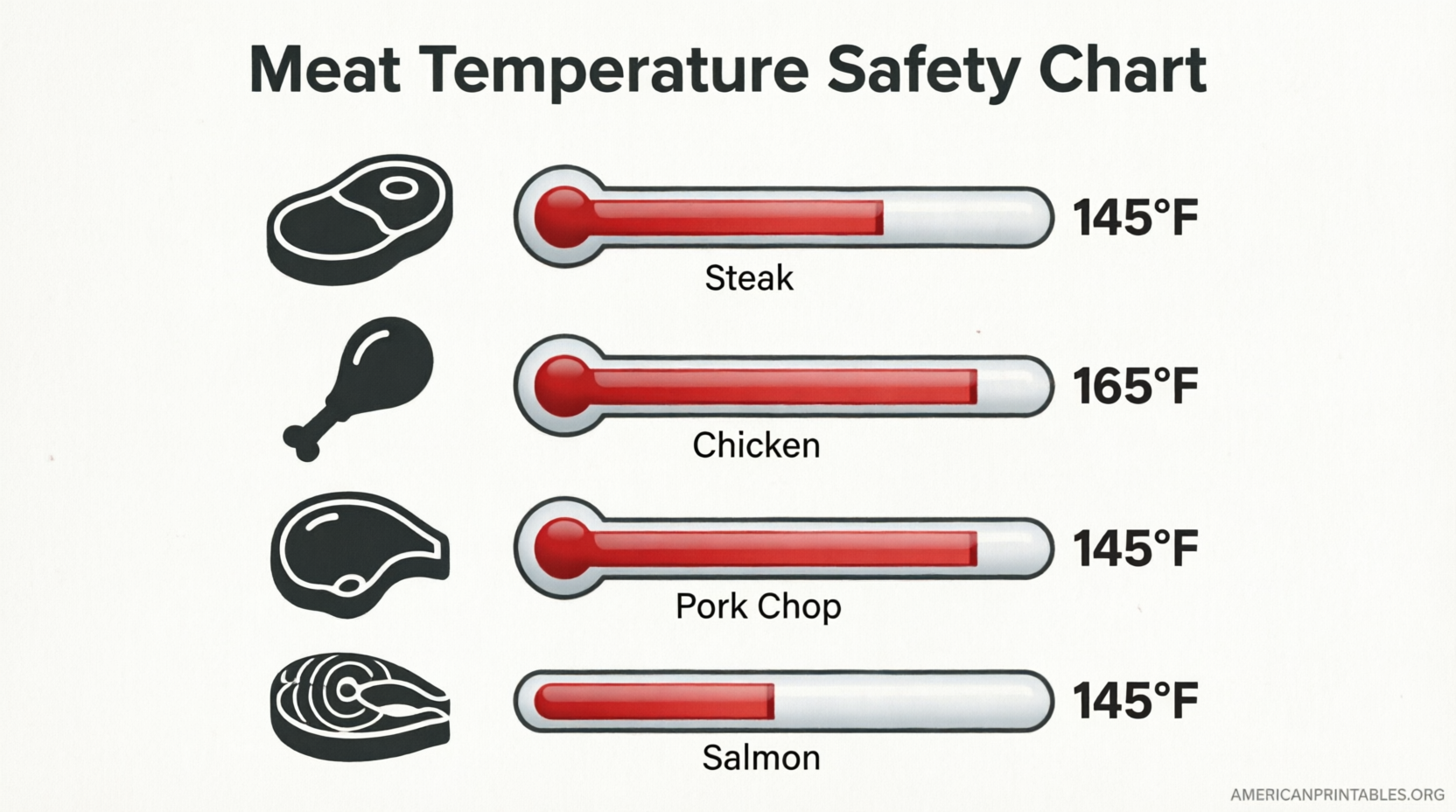
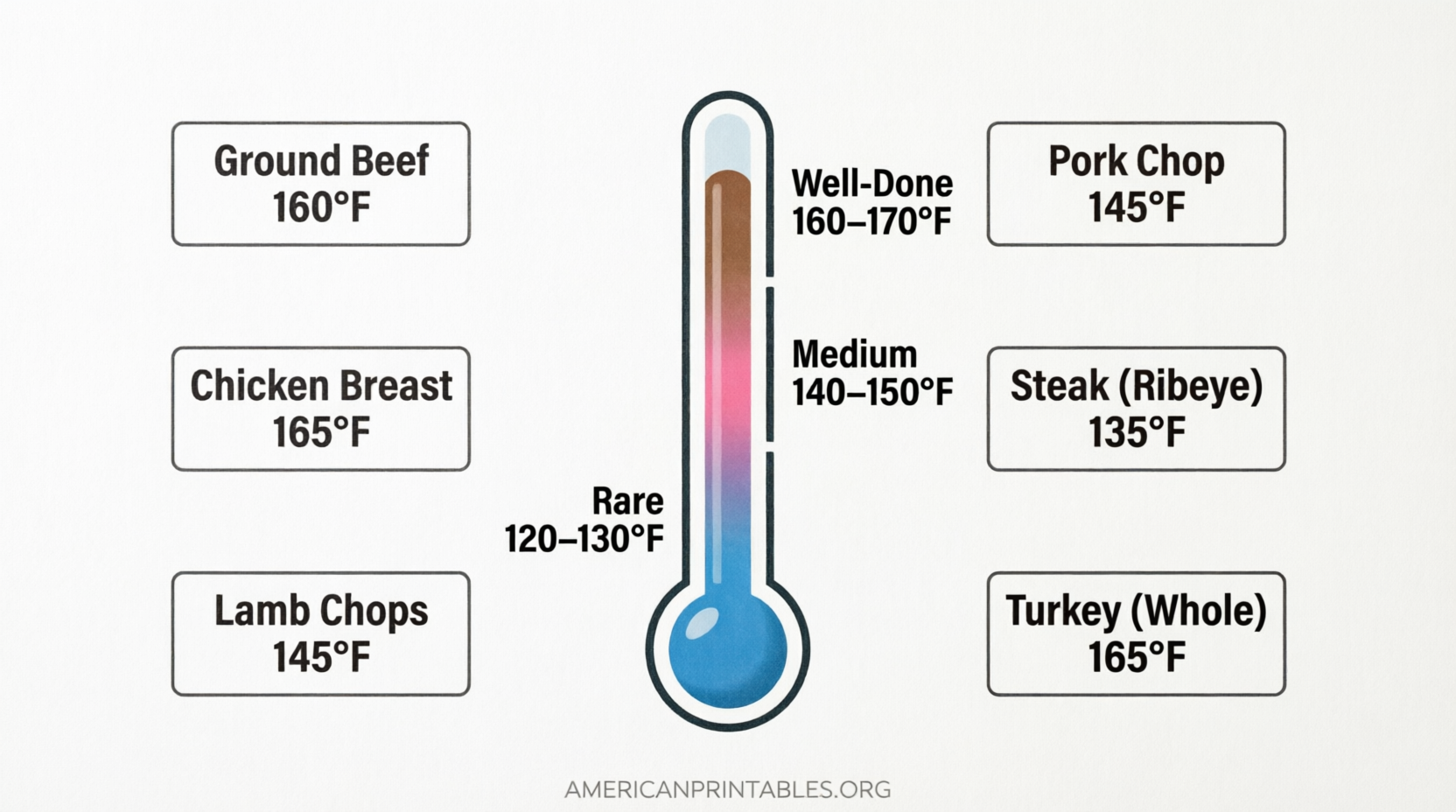
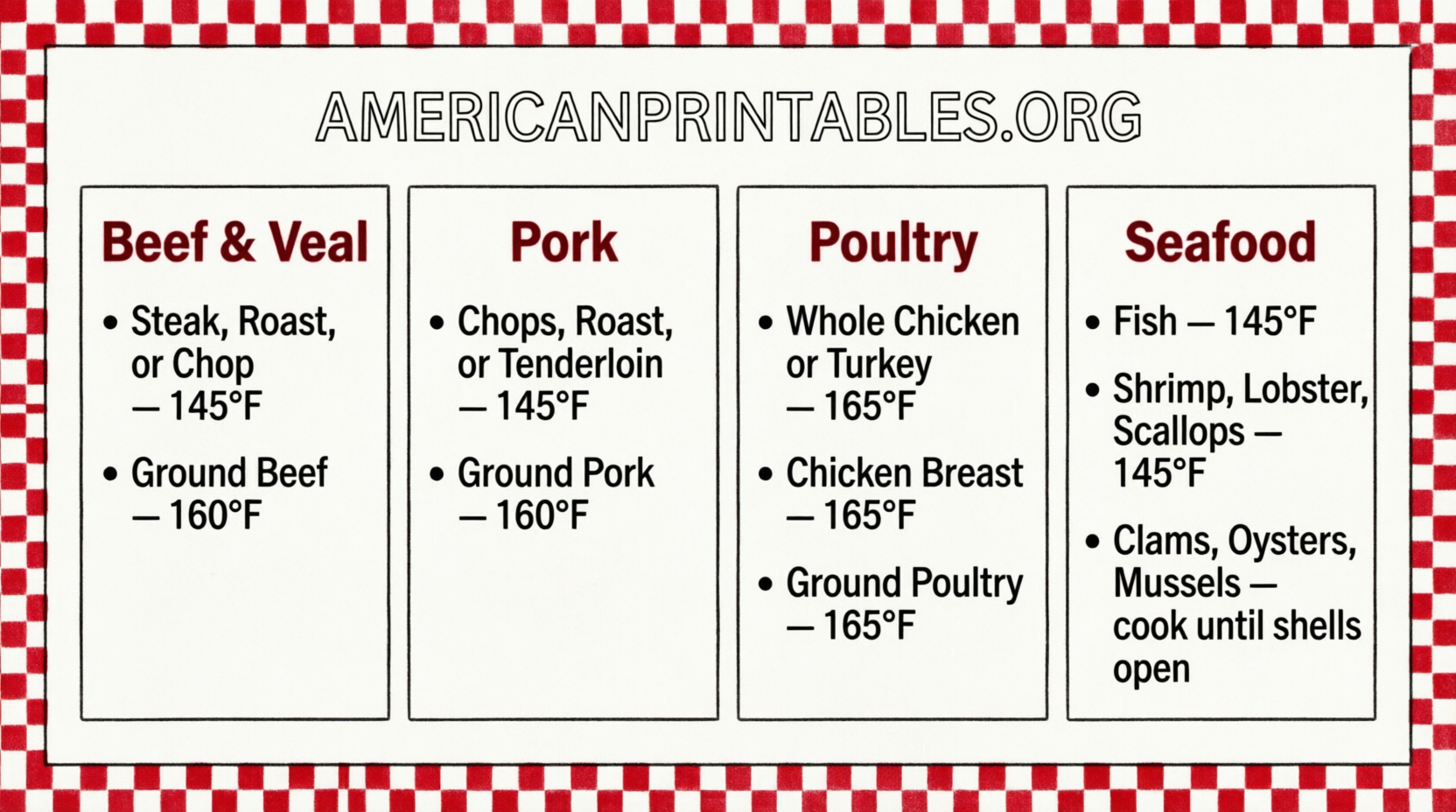
These are the current safe minimum internal temperatures recommended by USDA and FoodSafety.gov (temperatures in °F). Always verify with a calibrated food thermometer.
- Beef, pork, veal, lamb (steaks, chops, roasts): 145°F, then rest at least 3 minutes
- Ground meats (beef, pork, veal, lamb): 160°F
- All poultry (chicken, turkey—whole, parts, ground, stuffing): 165°F
- Fresh or smoked ham (uncooked): 145°F, then rest at least 3 minutes
- Fully cooked ham (to reheat): 140°F if packaged in a USDA-inspected plant; otherwise 165°F
- Fish and shellfish: 145°F (or until flesh is opaque and separates easily with a fork for fin fish; pearly/opaque for shrimp, lobster, crab, scallops)
- Egg dishes: 160°F (cook whole eggs until yolk and white are firm)
- Leftovers and casseroles: 165°F
Personal preference may lead some cooks to higher temperatures for doneness (for example, medium or well-done steak), but never go below these safety floors for the listed items.
How to Use a Meat Thermometer Correctly
Insert the probe into the thickest part of the meat, away from bone, fat, or gristle. For thin items such as burgers or chicken breasts, insert from the side. Check whole poultry in both the thickest part of the breast and the innermost part of the thigh.
Digital instant-read thermometers give the fastest, most accurate results for home cooks. Clean the probe with hot, soapy water after each use.
Free Printable Meat Temperature Charts from Trusted Sources
Here are legitimate places to get a free printable meat temperature chart or the official reference you can print directly. All links open in a new tab.
The most authoritative source is the official FoodSafety.gov safe minimum internal temperature chart page, which includes a print and PDF option:
FoodSafety.gov Safe Minimum Internal Temperature Chart
USDA’s Food Safety and Inspection Service maintains the companion official chart:
USDA FSIS Safe Minimum Internal Temperature Chart
For a clean, kitchen-ready free printable PDF that follows the same USDA guidelines and includes common doneness notes, visit One Good Thing by Jillee’s free download page:
Free Printable Guide to Internal Meat Temperatures (Jillee)
These three resources cover official data plus practical printable formats. Avoid random image downloads from unknown sites; stick to government pages or established food blogs that clearly base their charts on USDA recommendations.
Free Printable Meat Temperature Chart | USDA Safe Guide
Quick Tips for Everyday Use
Print the chart on regular paper or cardstock and laminate it or slip it into a plastic sleeve so it survives kitchen splashes. Store it near the stove or grill. Pair it with a reliable instant-read thermometer and you will cook safer, juicier meat with far less stress.
Rest times are not optional for the cuts that list them—set a timer after you remove the meat from heat.
FAQ
Is 145°F safe for pork?
Yes. Since 2011 the USDA has recommended 145°F with a 3-minute rest for whole-muscle pork cuts (chops, roasts, tenderloin). Ground pork still requires 160°F.
Do I need different charts for grilling vs. oven cooking?
No. The safe internal temperature is the same regardless of cooking method. Only the time to reach that temperature changes.
Can I print the official chart for free?
Yes. Both FoodSafety.gov and the USDA FSIS pages allow printing or downloading the chart at no cost.
What about steak doneness preferences below 145°F?
USDA sets 145°F + rest as the safety minimum for whole cuts of beef. Many people prefer rare or medium-rare (lower temperatures). That is a personal risk decision; the official safety floor remains 145°F.
Keep a free printable meat temperature chart in your kitchen and a good thermometer in your drawer. You will cook with more confidence and serve safer meals every time.