Free Printable Meat Temperature Chart – A free printable meat temperature chart is one of the simplest tools for safer, more consistent cooking at home. Whether you are grilling steaks, roasting a chicken, or making burgers, knowing the correct internal temperature helps prevent foodborne illness and avoids overcooking.
This guide explains the USDA-recommended safe minimum internal temperatures for common meats, why a thermometer matters more than color or cook time, and where to find legitimate free printable charts you can download and keep in your kitchen.
Why You Need a Meat Temperature Chart?
Color is not a reliable indicator of doneness. Pork and beef can stay pink even after they reach a safe temperature. Ground meat and poultry need higher temperatures because bacteria can be mixed throughout.
The U.S. Department of Agriculture (USDA) and FoodSafety.gov publish clear minimum internal temperatures measured with a food thermometer. These guidelines apply across the United States and form the basis of most reliable free printable meat temperature charts.
Always insert the thermometer into the thickest part of the meat, away from bone, fat, or gristle. For thin items such as burgers or chops, insert from the side.
Official Safe Minimum Internal Temperatures
According to the USDA Food Safety and Inspection Service and FoodSafety.gov:
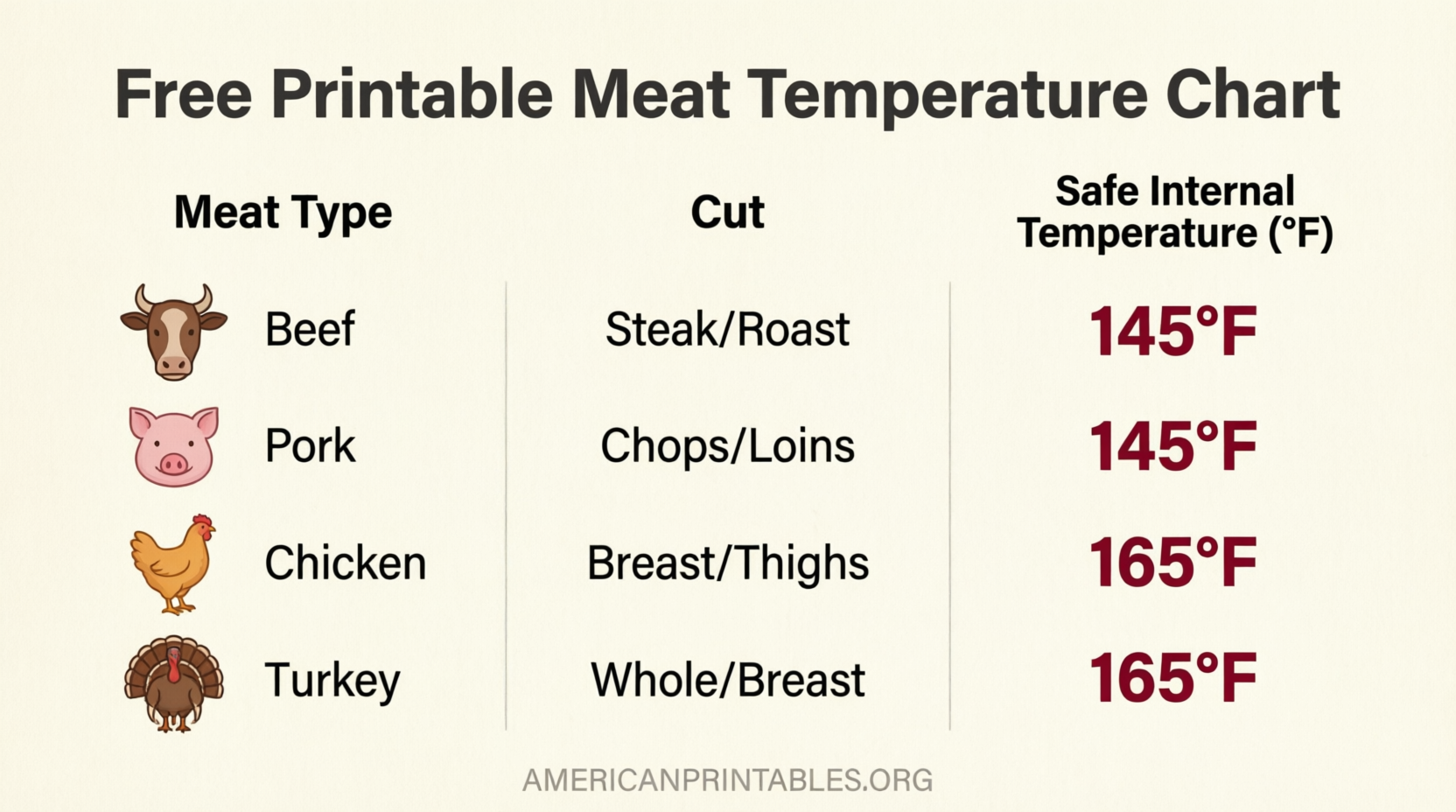
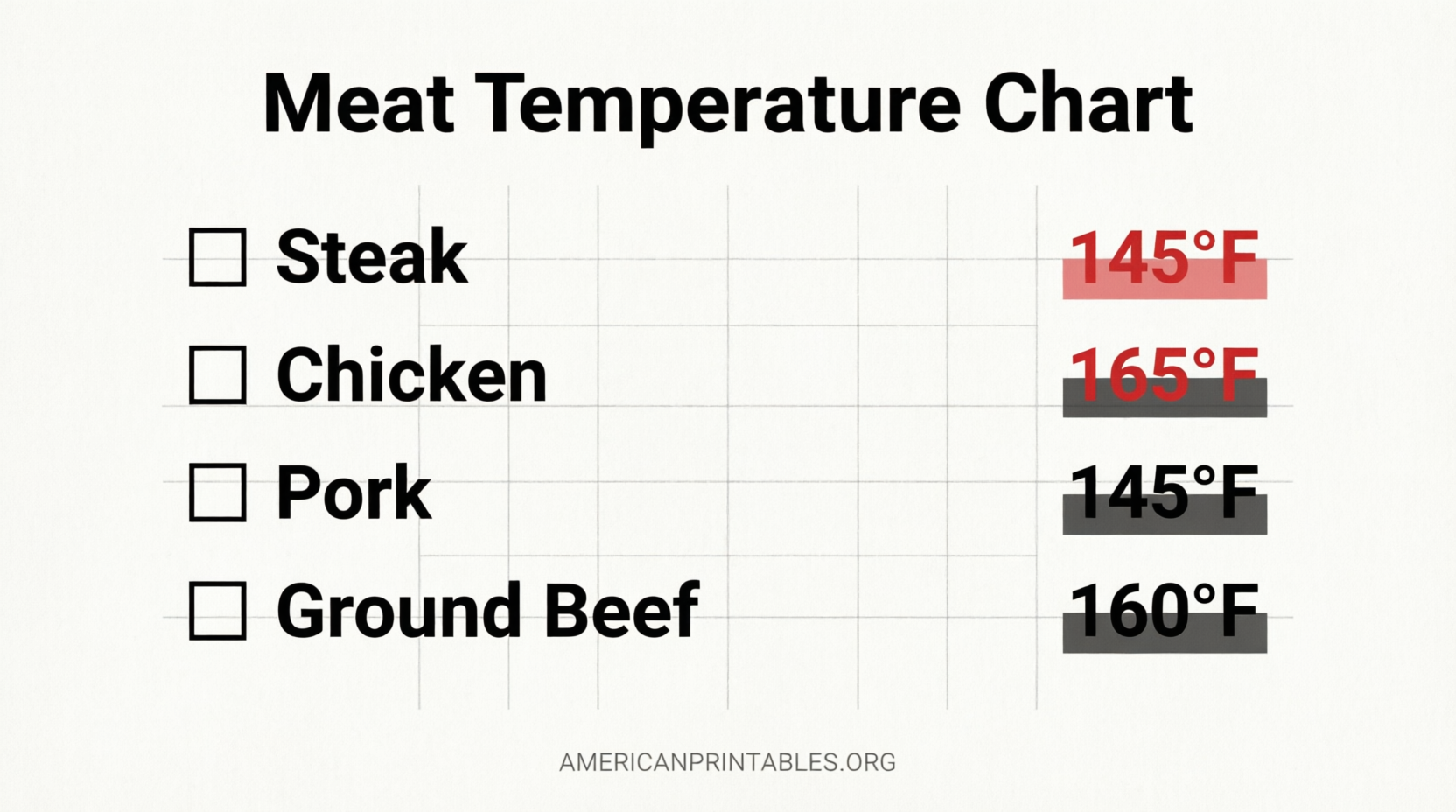
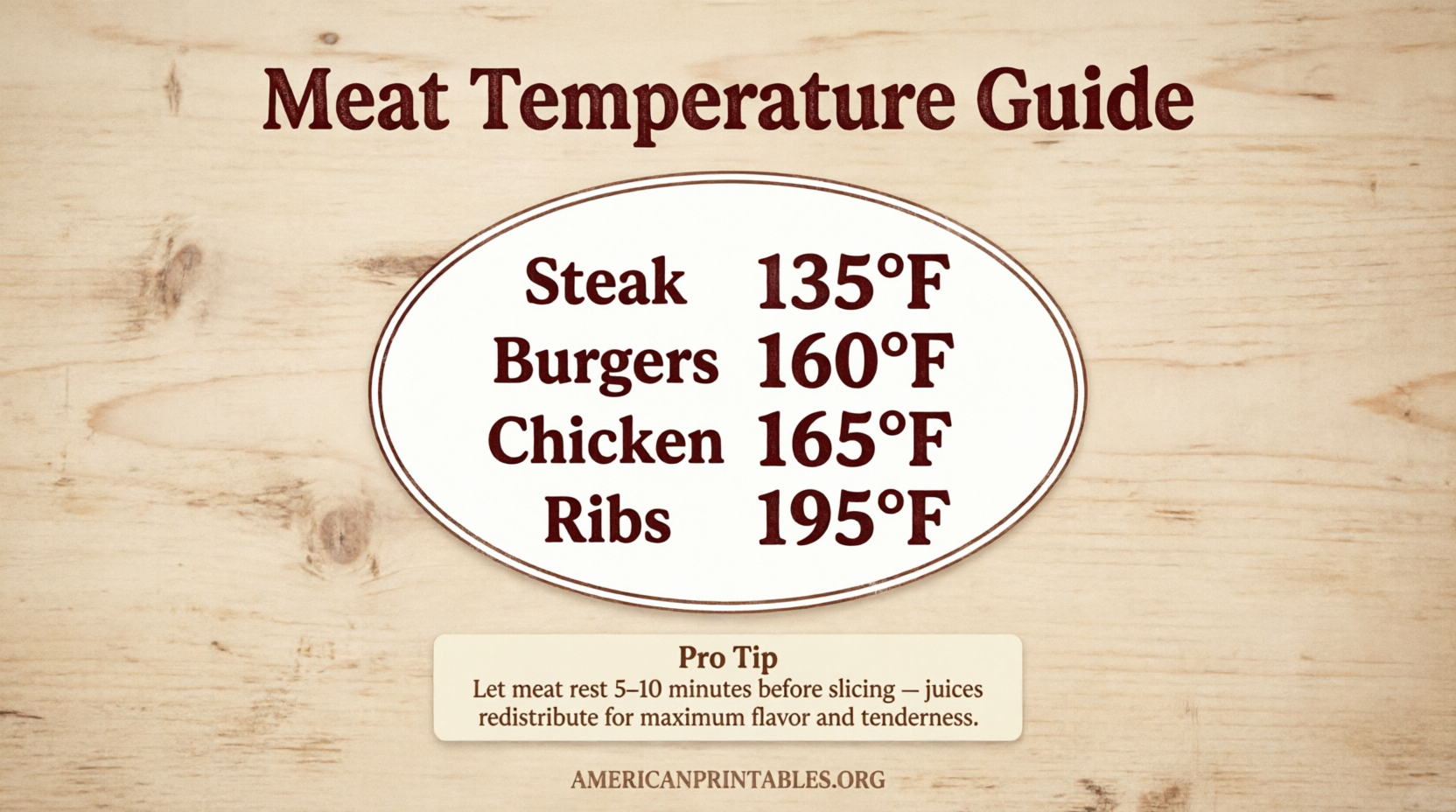
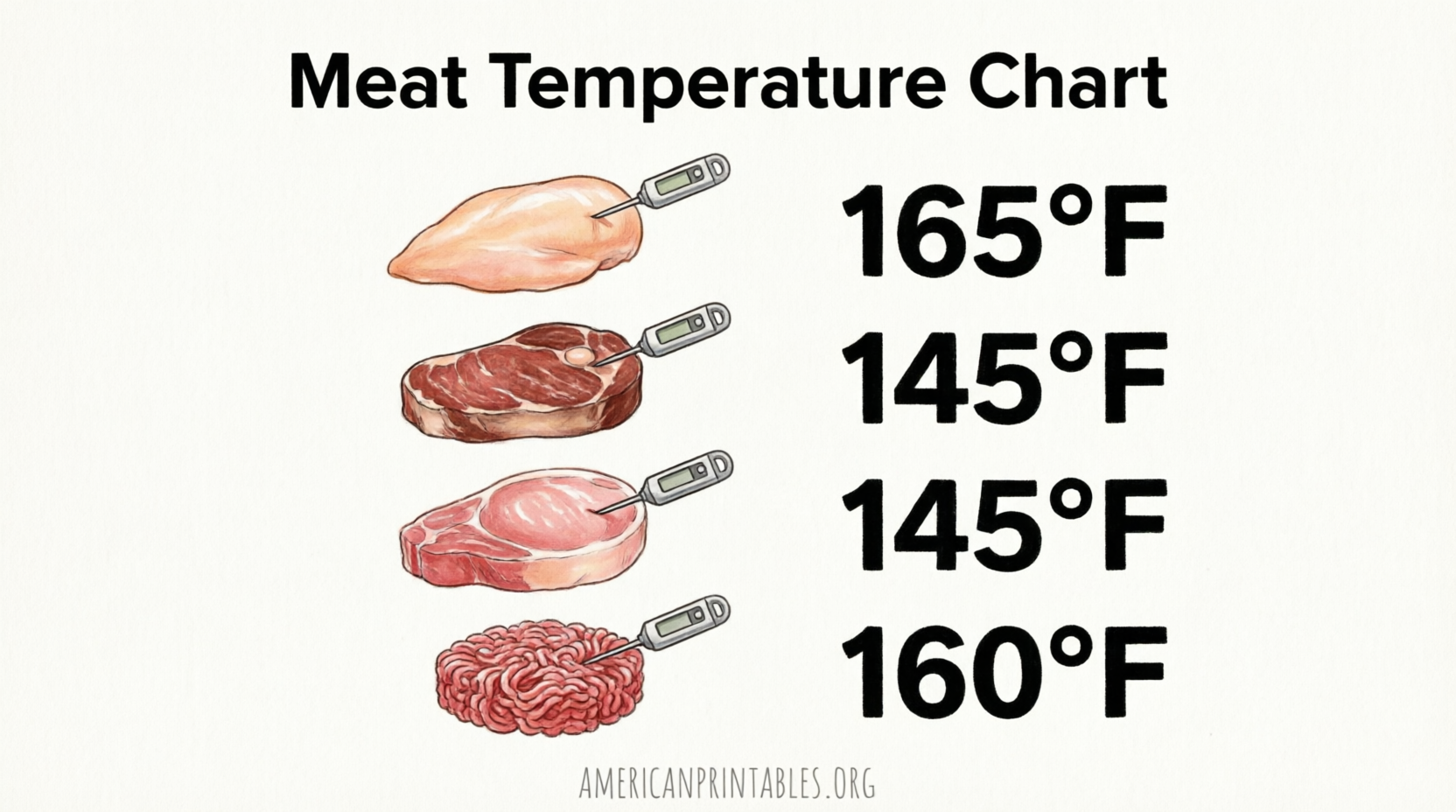
- Beef, pork, veal, and lamb steaks, chops, and roasts: 145°F (63°C), then rest at least 3 minutes
- Ground beef, pork, veal, and lamb: 160°F (71°C)
- All poultry (chicken, turkey, whole bird, parts, ground, and stuffing): 165°F (74°C)
- Fresh or smoked uncooked ham: 145°F (63°C) with a 3-minute rest
- Fully cooked ham (reheat): 140°F if packaged in a USDA-inspected plant; otherwise 165°F
- Fish and shellfish: 145°F (or until flesh is opaque and flakes easily)
- Leftovers and casseroles: 165°F
Rest time is important for whole cuts of beef, pork, veal, and lamb. The temperature can continue to rise slightly after the meat is removed from heat, helping destroy remaining bacteria while the juices redistribute.
These temperatures are minimums for safety. Many people prefer higher temperatures for personal taste (for example, well-done steak or darker poultry meat).
Where to Get Free Printable Meat Temperature Charts?
Start with official government sources for the most authoritative information. FoodSafety.gov offers a safe minimum internal temperature chart that you can print or download as a PDF directly from the page. Visit the official chart here: FoodSafety.gov Safe Minimum Internal Temperature Chart.
The USDA Food Safety and Inspection Service maintains a matching safe temperature chart page with the same guidelines: USDA Safe Minimum Internal Temperature Chart.
For ready-to-print kitchen-friendly versions, several reputable food sites offer free downloads based on the same USDA data. Julie Blanner provides a clear free printable meat temperature chart covering beef, pork, poultry, ground meat, and seafood: Julie Blanner Free Printable Meat Temperature Chart.
One Good Thing by Jillee offers another free PDF guide to internal meat temperatures that you can print and post near your stove or grill: Free Printable Guide to Internal Meat Temperatures.
Meatman hosts a free library of high-resolution printable charts, including steak temperatures and doneness, that you can download as PDFs: Meatman Free Printable Meat Charts.
These resources are free, require no purchase, and link back to current USDA guidelines. Print on regular letter-size paper and laminate or place in a sheet protector for longer kitchen use.
Free Printable Meat Temperature Chart
Practical Tips for Using Your Chart
Keep the chart where you cook—on the fridge, inside a cabinet door, or near the grill. Pair it with a reliable instant-read digital thermometer. Calibrate the thermometer periodically according to the manufacturer’s instructions.
For large roasts or whole birds, check temperature in more than one spot. Carryover cooking means the internal temperature often rises a few degrees while resting, so many cooks remove meat a couple of degrees early when aiming for a specific doneness.
Ground meat and poultry should never be served under the listed safe temperatures. Whole cuts of beef and pork can safely be cooked to preferred doneness above the minimum once the rest period is complete.
Brief FAQ
Is a free printable meat temperature chart accurate?
Charts based on current USDA Food Safety and Inspection Service data are accurate. Always cross-check with the official FoodSafety.gov or FSIS pages linked above.
Do I still need a thermometer if I have the chart?
Yes. The chart tells you the target number; only a thermometer confirms the actual internal temperature.
Can I cook steak or pork below 145°F?
The USDA minimum for whole cuts is 145°F plus rest. Lower temperatures increase risk and are a personal choice, not a safety recommendation.
Where should I store the printable?
Near the cooking area works best so it is available every time you cook meat.
A free printable meat temperature chart takes the guesswork out of everyday meals and holiday roasts. Download one of the official or well-sourced free versions listed here, keep a food thermometer handy, and cook with greater confidence and safety.