Free Printable Pictures of Rosa Parks | U.S. Guide – Parents, teachers, and students across the United States search for printable pictures of Rosa Parks every year—especially during Black History Month, Women’s History Month, and on December 1, the anniversary of her 1955 arrest in Montgomery, Alabama.
This page is a practical guide. It explains what those printables usually are, how to use them in a classroom or at home, and where to find legitimate free downloads from trusted sources. You will not find random image dumps here. Every linked resource below is a real page you can open and use.
What People Mean by “Printable Pictures of Rosa Parks”?
The phrase covers a few different things:
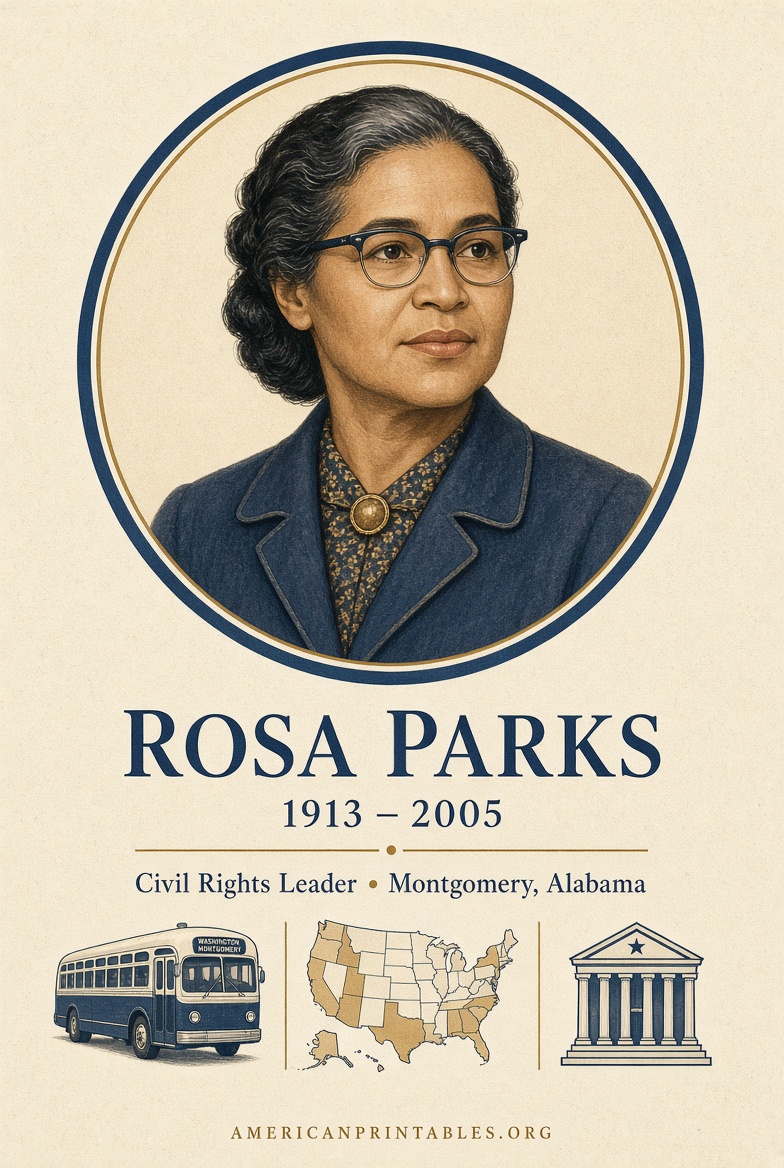
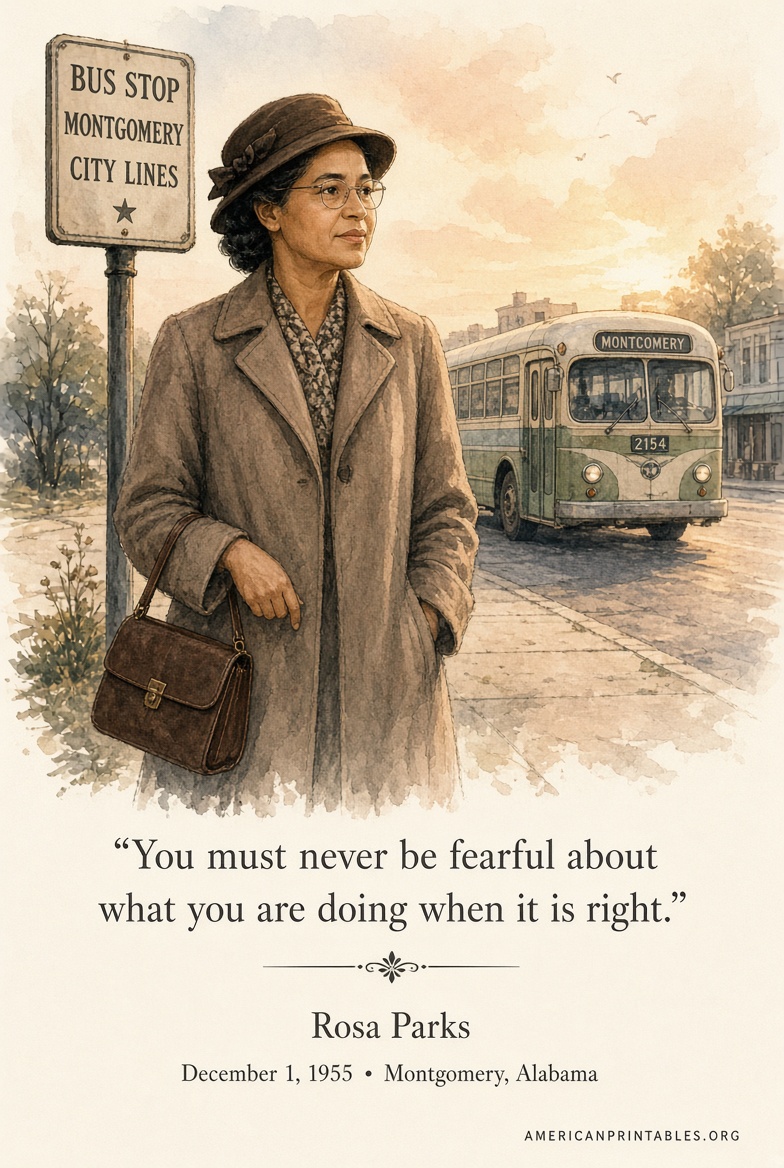
- Historic photographs you can print for a report, bulletin board, or timeline
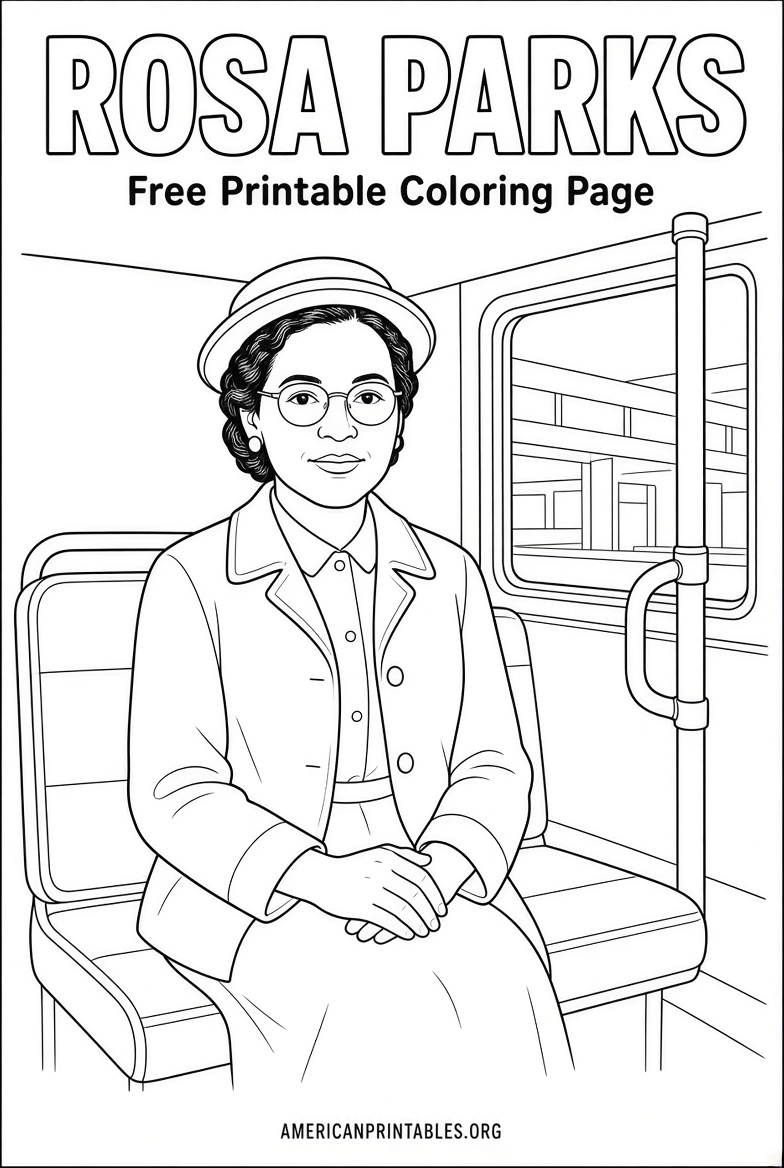
- Line-art coloring pages for younger students
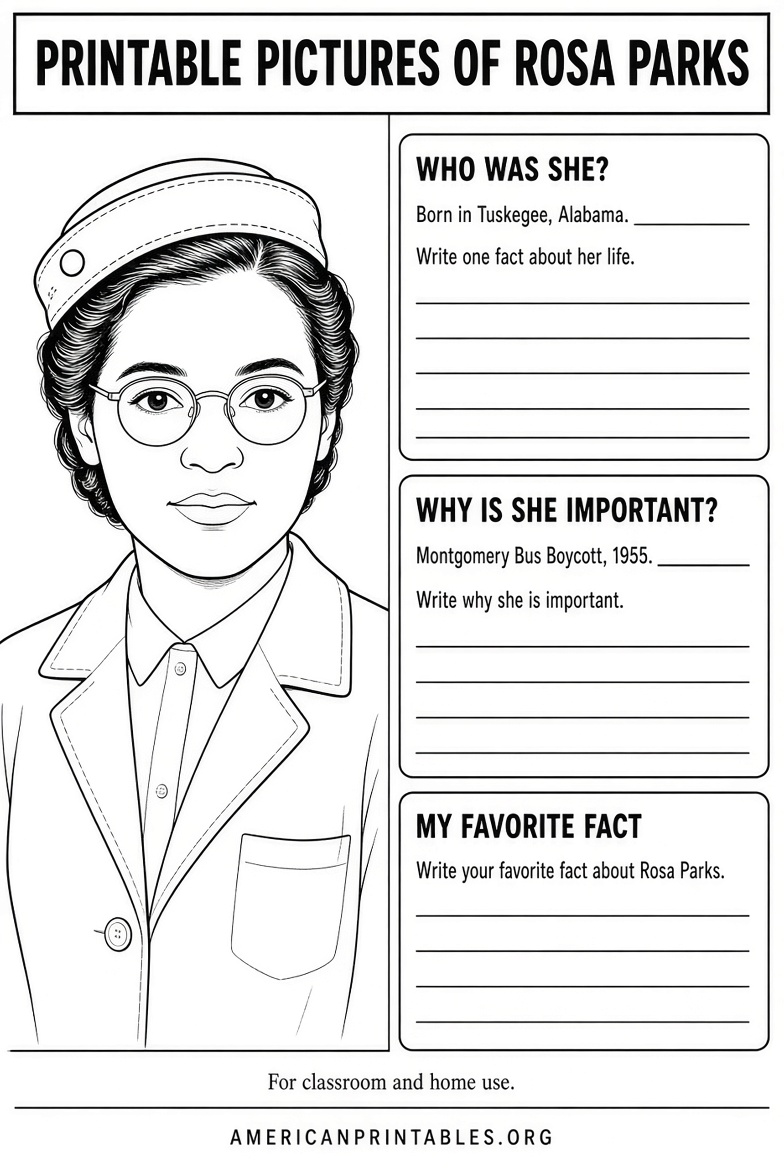
- Classroom activity sheets that include a portrait plus a short biography or puzzle
- Official documents tied to her arrest, such as a fingerprint card or bus-seat diagram
Those are not the same legally. A public-domain government record is usually safe to print for school use. A modern stock photo or a copyrighted illustration is not free just because it appears in a search result.
Start with official collections first. Then add a coloring page if you need an activity for kids.
Best Places to Get Free, Legitimate Printables
Use these five sources. They are the most useful mix of historic pictures and ready-to-print classroom pages.
1. Library of Congress Rosa Parks Papers
The Library of Congress holds the Rosa Parks Papers, including about 2,500 photographs plus letters, notes, and family pictures. Most of the collection is digitized and can be viewed online at no cost.
Open the official collection here: Rosa Parks Papers at the Library of Congress.
This is the best starting point if you want real photographs rather than clip art. Click an item, read the rights note on that page, then download the largest available image. Many family snapshots and later event photos have restrictions. Check the rights advisory before you reprint anything beyond personal or classroom study.
2. The Classic 1956 Portrait
If you need one clear historic portrait for a poster or report cover, use the November 1956 photograph from the Parks papers. Wikimedia Commons hosts a cropped public-domain version sourced from the Library of Congress. The file is available in several sizes, including a high-resolution JPEG.
Download it here: Rosa Parks, November 1956 (public-domain portrait).
This image is widely used in U.S. classrooms because it is a recognizable likeness and, based on the Commons review of U.S. renewal records, it is treated as public domain.
3. National Archives Arrest Records and Diagrams
For a U.S. history lesson, original records often teach more than a posed photo. The National Archives lesson “An Act of Courage, The Arrest Records of Rosa Parks” includes printable scans of:
- The December 1, 1955 police report
- Rosa Parks’s fingerprint card
- A diagram showing where she sat on the Cleveland Avenue bus
Access the free lesson and images here: National Archives: Arrest Records of Rosa Parks.
These are federal court records. They work well for middle and high school discussions of the Montgomery Bus Boycott and Browder v. Gayle. They are less suitable as a “cute” coloring sheet for very young children.
4. Free Rosa Parks Coloring Page (No Account Needed)
If you searched for printable pictures of Rosa Parks because you need a coloring activity, use a dedicated free coloring page rather than tracing a copyrighted photo.
Easy Drawing Guides offers a free illustrated Rosa Parks coloring page. You can print the PDF or color it on screen. No account is required.
Get the page here: Free Rosa Parks coloring page from Easy Drawing Guides.
Print it on standard U.S. letter paper (8.5 x 11 inches). Crayons, colored pencils, or markers all work. Pair the sheet with a short read-aloud so the activity is more than busywork.
5. Library of Congress Classroom Gallery
Teachers who want primary sources already grouped for instruction can use the Library of Congress classroom gallery. It collects selected items from the Parks papers—photographs, handwritten reflections, and related documents—with download options.
Open the gallery here: LOC classroom gallery: Rosa Parks primary sources.
This is useful when you need several pictures and documents for one lesson instead of a single portrait.
Free Printable Pictures of Rosa Parks | U.S. Guide
How to Print the Pictures So They Look Good?
A few practical steps save paper and keep the image sharp:
- Choose letter-size paper unless a source offers a poster file.
- In your browser or PDF viewer, set the scale to “fit” or 100%. Avoid stretching a small thumbnail.
- Use portrait orientation for head-and-shoulders photos; landscape for bus diagrams.
- Print a test page in draft mode first if you are making a class set.
- For bulletin boards, print on card stock or laminate after coloring.
- Add a caption: name, date, and source. Example: “Rosa Parks, November 1956. Library of Congress.”
If a site only shows a preview, look for “JPEG,” “TIFF,” or “Download PDF.” Do not screenshot a tiny thumbnail and blow it up. It will pixelate on the wall.
Classroom and Home Uses That Fit a U.S. Calendar
These pictures get the most use at a few points in the school year:
- February 4: Rosa Parks’s birthday. California and several other states observe Rosa Parks Day on or near this date.
- February: Black History Month units in elementary and middle school.
- March: Women’s History Month biographies.
- December 1: Anniversary of her refusal to give up her seat and her arrest.
Simple ways to use the printables:
- Kindergarten–grade 2: coloring page plus one sentence about courage.
- Grades 3–5: portrait, caption, and a short timeline of the bus boycott.
- Grades 6–12: National Archives fingerprint card and bus diagram next to a primary-source analysis sheet.
- Homeschool: print the 1956 portrait for a notebook cover, then add the Archives documents for a one-week mini-unit.
Keep the tone accurate. Parks was already a trained NAACP investigator and activist before December 1, 1955. A coloring page can introduce her. It should not be the only source.
Copyright, Respect, and What to Avoid
“Free printable” is not the same as “any picture Google shows you.”
Safe bets for most U.S. school and home use:
- Public-domain photographs with a clear rights statement
- Federal records from the National Archives
- Coloring pages a site explicitly offers as free to print
Avoid or get permission for:
- News-agency photos still under copyright
- Random Pinterest collage pages with no source
- Sites that call a picture free, then lock the download behind a paid pack
- AI images that invent scenes Parks never appeared in
Also use the pictures respectfully. Do not add joke captions, meme text, or costume filters to historic arrest records. If you display a photo in a hallway, include her full name and a one-line context note so students who walk by learn who she was.
Quick Comparison
| Need | Best source | Cost |
|---|---|---|
| Historic portrait | 1956 public-domain photo | Free |
| Many original photos | Library of Congress collection | Free to view; check rights per item |
| Arrest records and bus diagram | National Archives lesson | Free |
| Coloring activity for kids | Easy Drawing Guides page | Free, no login |
| Ready lesson set | LOC classroom gallery | Free |
FAQ
Are printable pictures of Rosa Parks free?
Some are. Official Library of Congress and National Archives items can often be viewed and printed at no charge. Coloring pages are free only when the publisher says so. Stock photos usually are not free.
Can I use these pictures in a school project?
Yes, if you use a public-domain file or a free classroom printable and you credit the source. For a science-fair-style display or a published yearbook, re-check the rights note on the exact file.
What paper size should I use?
Use 8.5 x 11-inch letter paper for almost every U.S. classroom and home printer. Enlarge only if you have a high-resolution original.
Is a coloring page historically accurate?
It is a teaching tool, not a photograph. Use a real portrait or an Archives document alongside it so students see Parks as a person, not only as a cartoon.
Where should I go first if I have five minutes?
Open the National Archives lesson for documents, or the Easy Drawing Guides page for a coloring sheet. Use the Library of Congress collection when you have more time to choose a photograph.
A Short Note on Quality Sources
The most reliable printable pictures of Rosa Parks still come from public institutions that hold her papers and court records. Classroom art sites can fill the gap when you need a simple coloring page. Mix the two: one real photograph, one activity sheet, and a caption students can read aloud.
That combination keeps the search term useful—and keeps the history honest.