Free Printable Refrigerator Temperature Log PDF – A refrigerator temperature log sheet helps you track daily readings so food stays safe. Whether you run a commercial kitchen, manage a food pantry, operate a school cafeteria, or simply want better home food safety, a printable PDF log makes the process simple and inspection-ready.
In the United States, the FDA recommends keeping refrigerators at 40°F or below and freezers at 0°F. The FDA Food Code sets cold holding for time/temperature control for safety (TCS) foods at 41°F or less. Consistent logging shows due diligence, catches equipment problems early, and supports compliance during health inspections.
Why Keep a Refrigerator Temperature Log?
Bacteria that cause foodborne illness multiply rapidly in the danger zone (roughly 40°F–140°F). A written or printed log proves temperatures stayed in the safe range, documents corrective actions when readings drift, and creates a record you can keep for months or years as required by local rules.
Most commercial operations check temperatures at least twice daily—once at the start of the shift and once near closing. Home users benefit from checking a few times a week with an appliance thermometer placed in the middle of the fridge.
Recommended Safe Temperatures
- Refrigerator: 40°F or below (FDA consumer guidance); 41°F or less for cold holding under the Food Code.
- Freezer: 0°F or below.
Place a freestanding appliance thermometer inside the unit rather than relying only on the built-in dial. Check it regularly, especially after restocking, power outages, or when the door has been opened frequently.
Where to Get Free Printable Refrigerator Temperature Log Sheets?
Here are legitimate, free PDF resources you can download and print right away. All are suitable for U.S. food-safety practices.
- Official New Jersey Department of Agriculture form – Daily Freezer/Refrigerator Temperature Log (Form #363). This one-page sheet includes space for morning and afternoon readings, worker initials, and notes that refrigerators should stay between 36°F and 41°F and freezers between –10°F and 0°F.
Download the free NJ.gov PDF log - United Food Bank Refrigerator Storage Daily Temperature Log – Simple monthly layout with columns for date, temperature (must be 41°F or less), corrective action, and initials. Clear instructions for food-bank and agency use.
Download the free United Food Bank PDF - PrintBlame free printable collection – Multiple ready-to-print refrigerator temperature log styles (daily, weekly, AM/PM, corrective-action focused). Click any template image to open the full-size PDF, then save or print.
Browse and download free PrintBlame logs - FDA guidance on refrigerator thermometers and safe storage temperatures – Essential background reading so you know exactly what numbers to aim for and how to respond if temperatures rise.
Read the FDA Cold Facts page
These four sources stay within the recommended limit and point directly to usable free files or authoritative advice. Print on standard letter-size paper and keep the log on a clipboard near the unit for easy daily entries.
Free Printable Refrigerator Temperature Log PDF
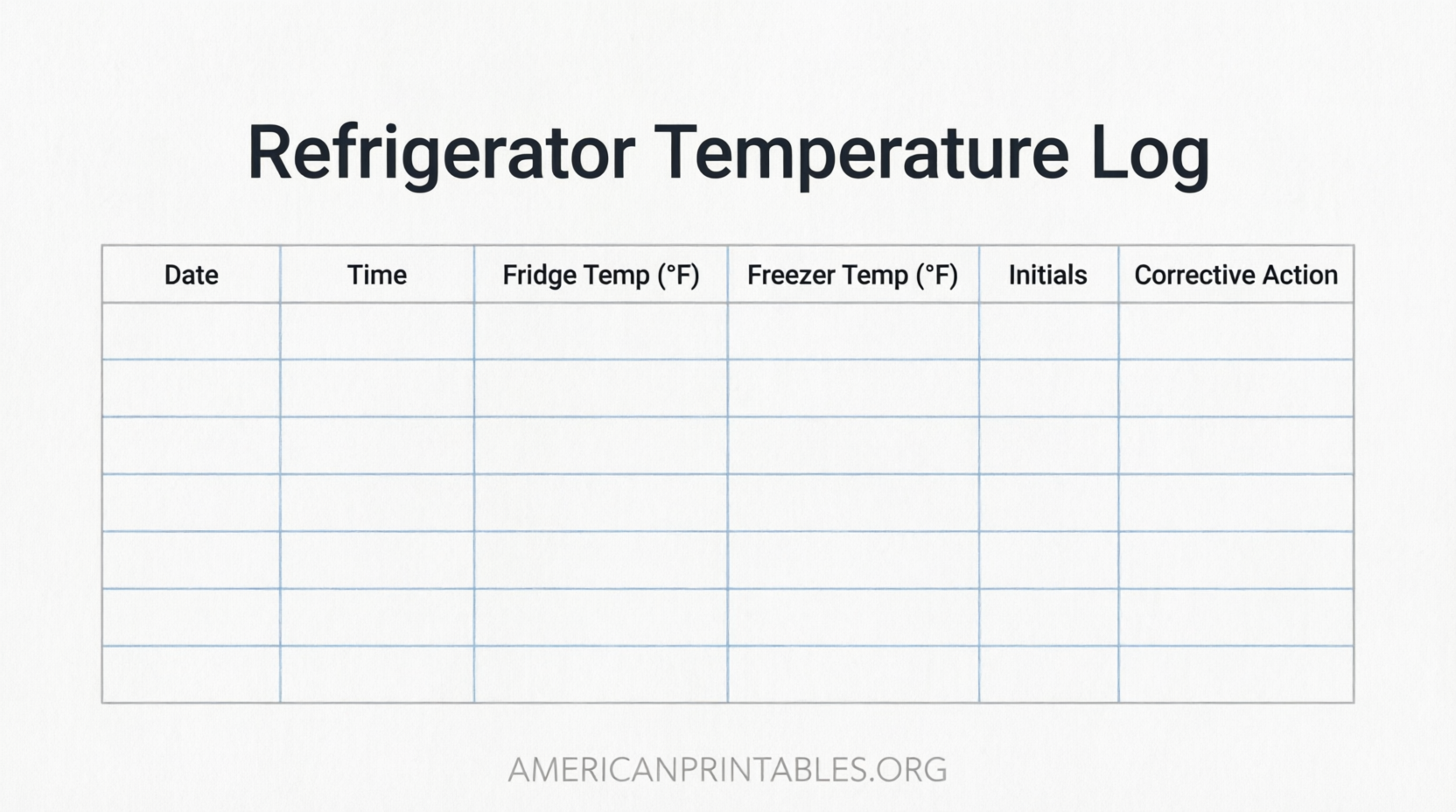
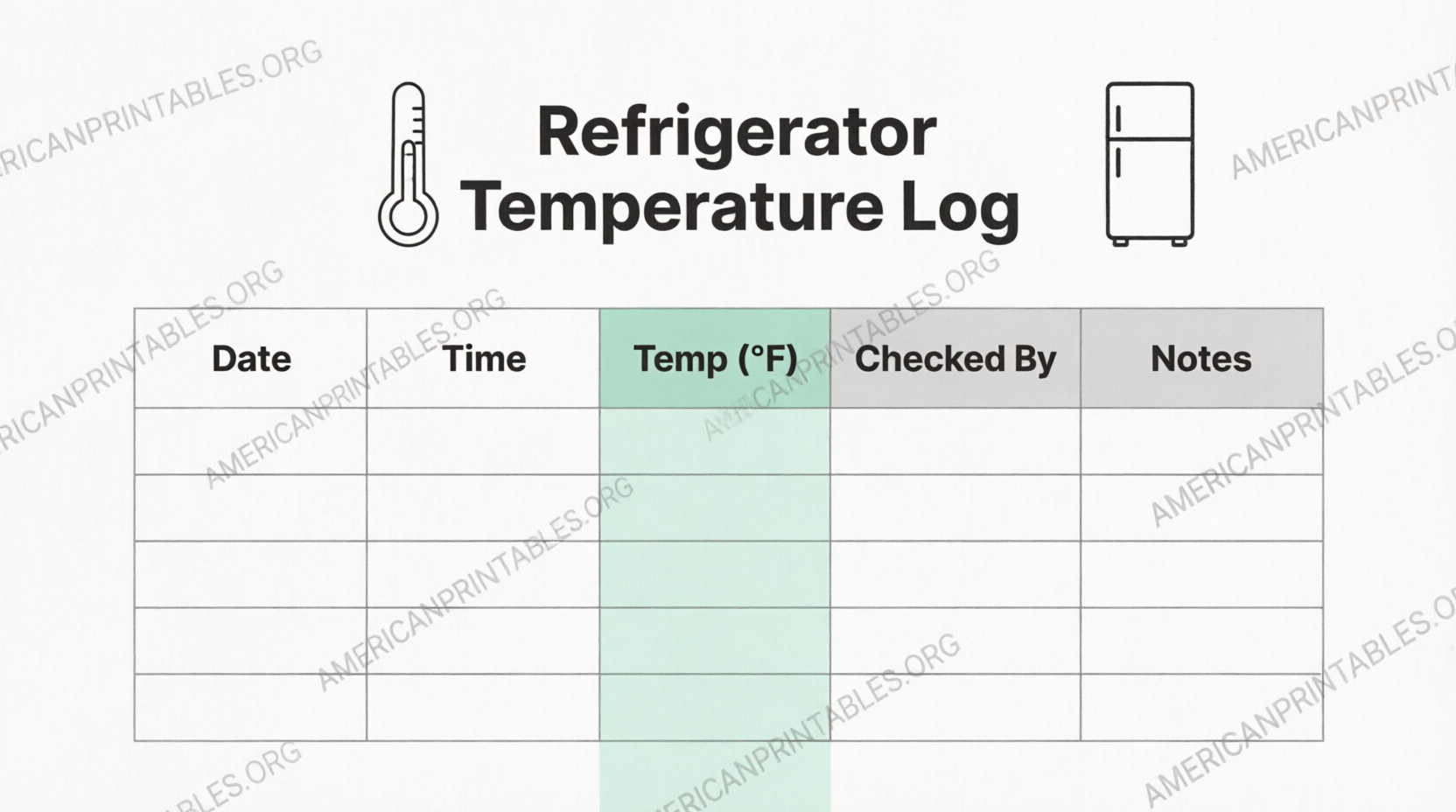
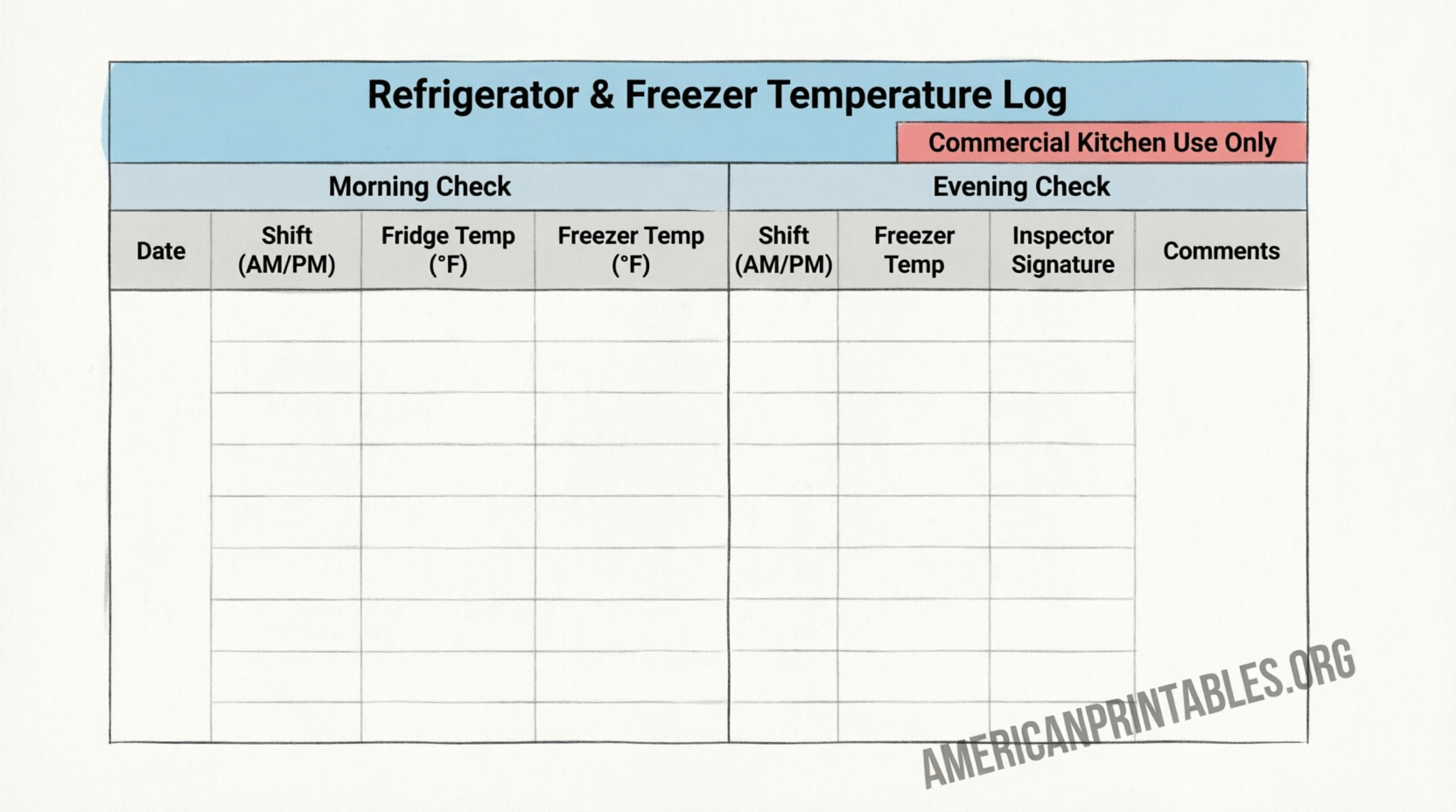
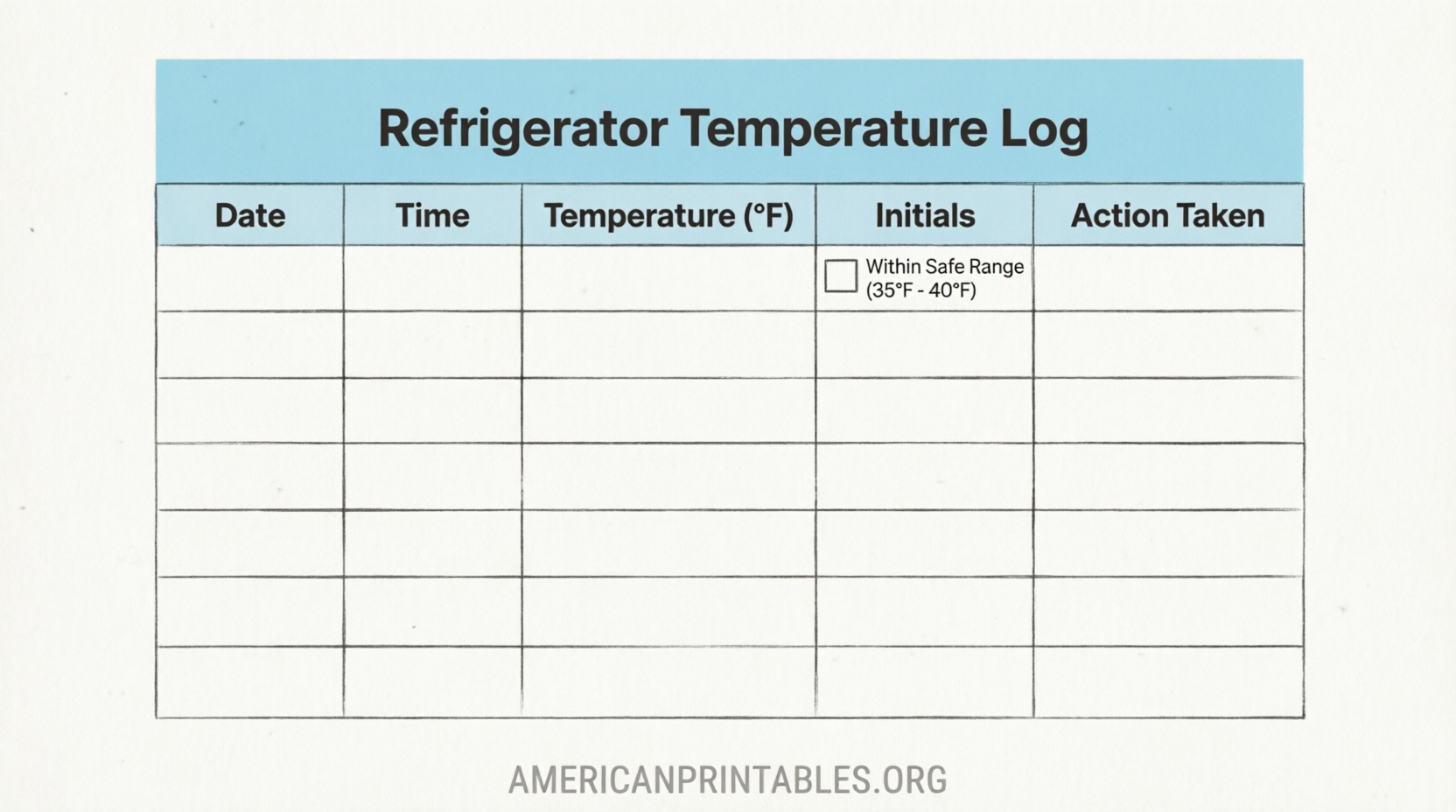
How to Use Your Free Printable Log Sheet?
- Write the month, year, unit ID or location, and any required identification at the top.
- Record the actual air temperature (or simulated product temperature) at the same times each day.
- Initial every entry.
- If a reading is outside the safe range, note the corrective action (adjust thermostat, call for service, discard product, etc.) and the time of the recheck.
- Have a supervisor review and sign the completed sheet periodically.
- Store finished logs according to your local health-department or organizational retention rules (often one to three years).
Use a calibrated thermometer and avoid taking readings during active defrost cycles or right after heavy door traffic.
Practical Tips for Accurate Logging
- Post the log and a thermometer in the same visible spot so staff never have to search.
- Train everyone who uses the fridge on the target range and what to do when readings go high.
- Archive paper logs in a binder or scan them for digital backup.
- Combine the temperature log with a simple cleaning or inventory sheet for a complete cold-storage system.
Brief FAQ
How often should I log refrigerator temperature?
Most food-service operations record at least twice per operating day. Home users can check several times a week. Follow any stricter local requirements.
What if the temperature is above 40°F or 41°F?
Close the door, wait 15–20 minutes, and recheck. If it remains high, adjust the setting or call for service. Discard TCS foods that have been above 40°F for more than two hours (or one hour if ambient temperature is above 90°F), per FDA guidance.
Do I need a special form for commercial vs. home use?
The same basic log works for both. Commercial kitchens usually need more formal columns for initials, corrective actions, and supervisor review to satisfy inspectors.
Can I use the same sheet for freezers?
Yes. Many free printable logs include both refrigerator and freezer columns or can be adapted by noting the different target range.
Keeping a simple free printable refrigerator temperature log sheet is one of the easiest ways to protect food quality and demonstrate food-safety diligence. Download one of the PDFs above, print a few copies, and start recording today.