Free Printable Refrigerator Temperature Log Sheets – Keeping a refrigerator temperature log is one of the simplest ways to protect food safety at home or in a commercial kitchen. The U.S. Food and Drug Administration (FDA) and USDA recommend holding refrigerators at or below 40°F and freezers at 0°F. A free printable refrigerator temperature log sheet makes it easy to track readings, spot problems early, and keep records for health inspections or personal peace of mind.
This guide explains why temperature logging matters, what a good log includes, and where to download legitimate free printable sheets right away.
Why You Need a Refrigerator Temperature Log?
Bacteria that cause foodborne illness multiply quickly in the “danger zone” between 40°F and 140°F. An appliance thermometer and a simple daily log help confirm your refrigerator stays safely cold.
Regular logging is especially useful for:
- Home kitchens that store leftovers, dairy, meat, or medications
- Restaurants, schools, daycares, and food pantries that must show due diligence during inspections
- Facilities following HACCP or local health department rules
Documenting temperatures (and any corrective actions) creates a clear record that food was held properly.
What Temperature Should Your Refrigerator Be?
According to the FDA and USDA Food Safety and Inspection Service:
- Refrigerator: 40°F (4°C) or below
- Freezer: 0°F (-18°C) or below
Place an appliance thermometer in the middle of the refrigerator (or in a glass of water for a more stable reading) and check it regularly. Avoid relying only on the dial setting, as actual air temperature can vary.
What to Include on a Free Printable Refrigerator Temperature Log Sheet?
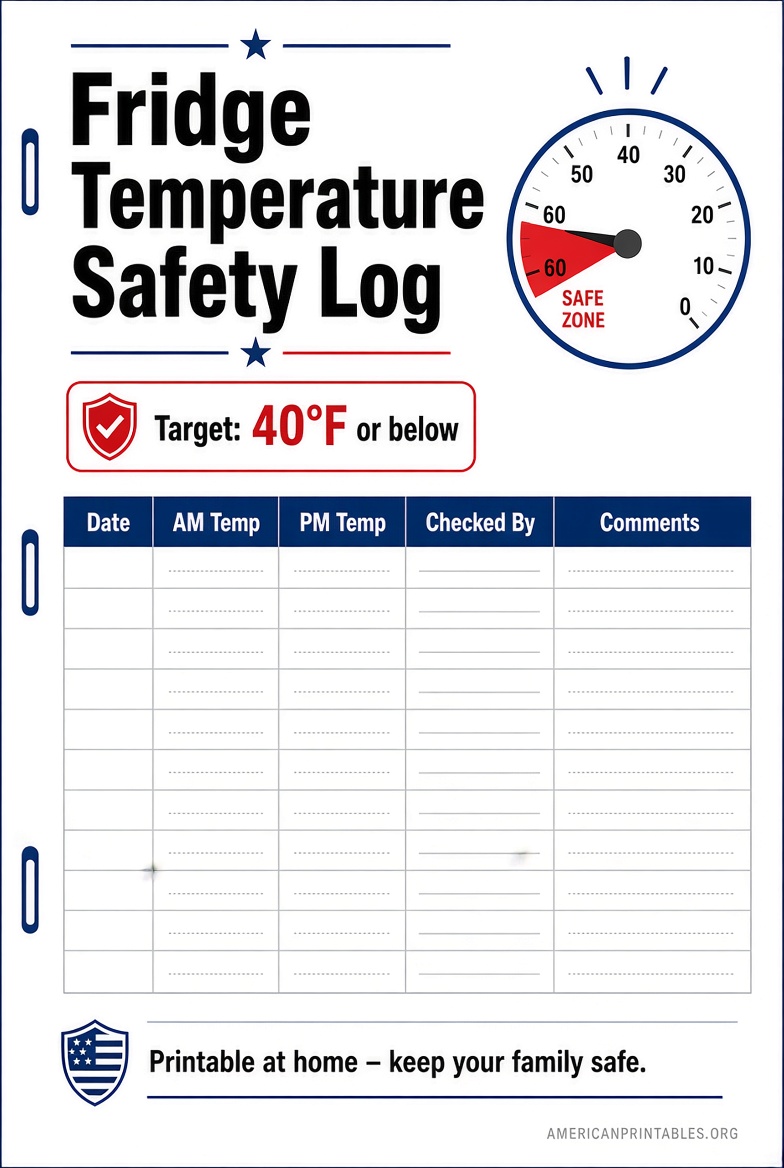
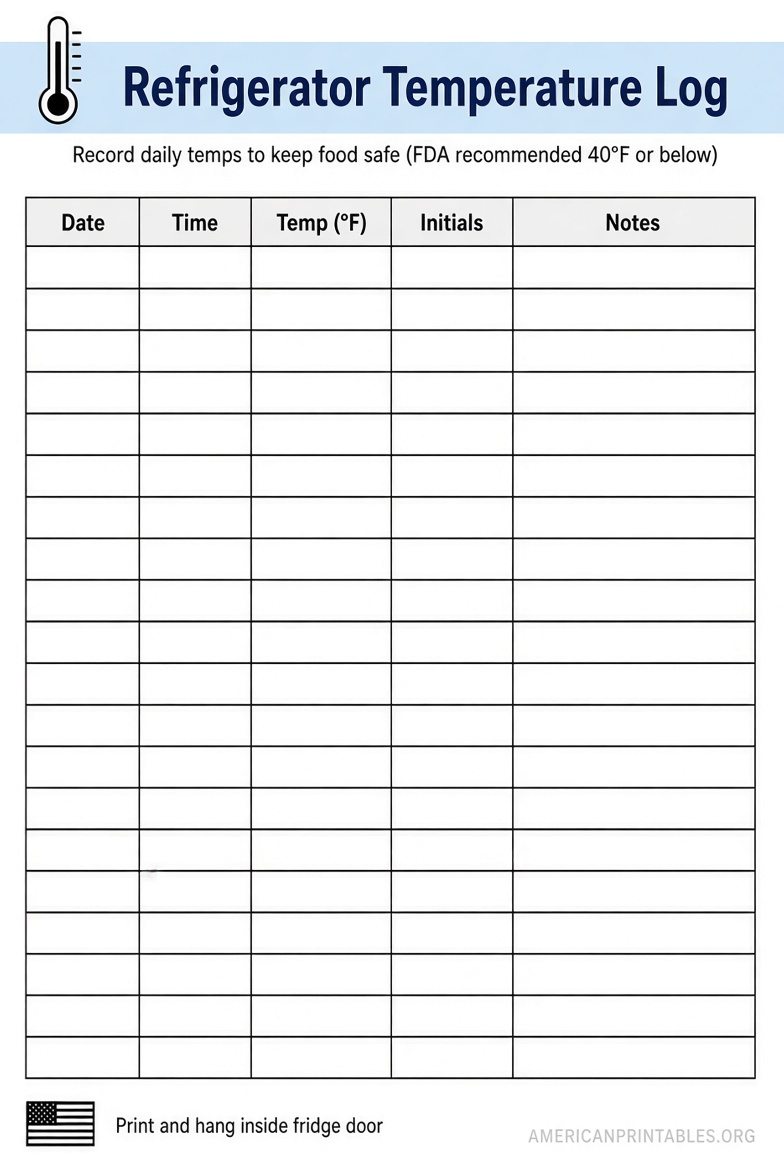
A practical log usually has columns for:
- Date
- Time of reading (many commercial operations record morning and evening)
- Temperature reading in °F
- Initials or signature of the person who checked
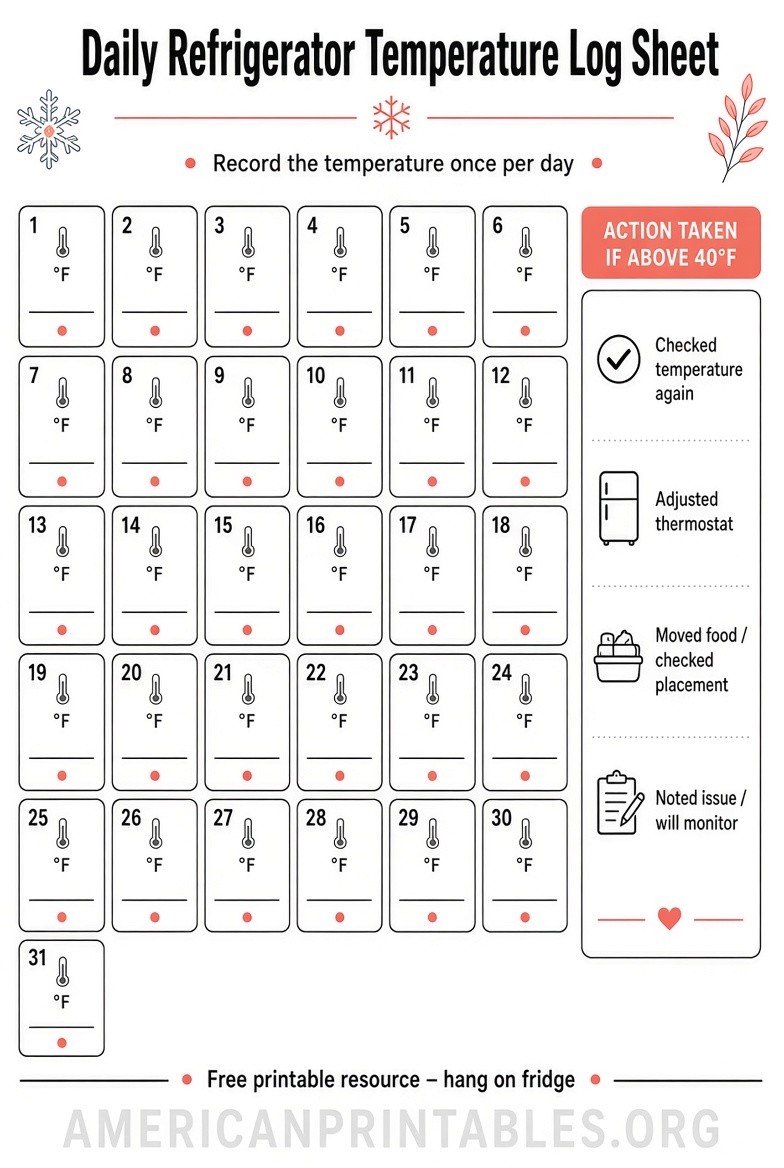
- Corrective action taken if the temperature is out of range (for example, “adjusted thermostat” or “discarded food”)
- Unit identification if you monitor more than one refrigerator or freezer
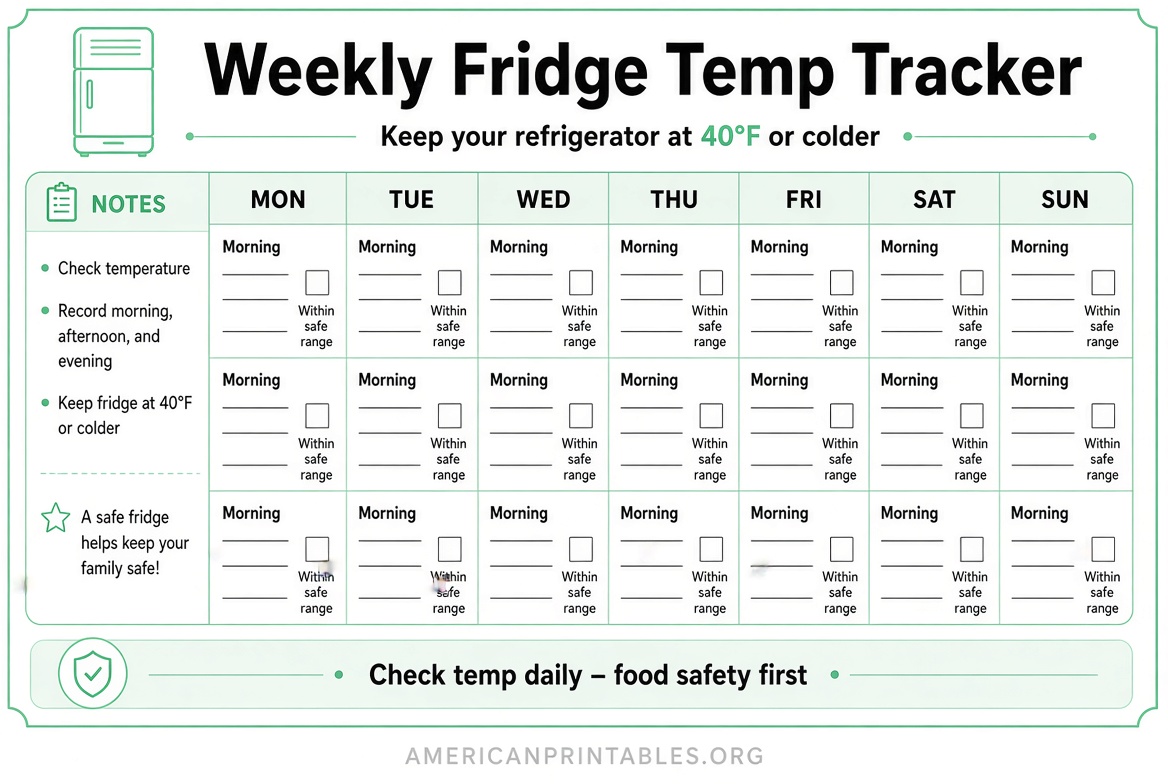
Some templates cover a full month on one page; others offer weekly or daily formats. Choose the layout that fits how often you need to record.
Where to Get Free Printable Refrigerator Temperature Log Sheets?
Here are reliable, currently available free options. All links open in a new tab.
- Multiple ready-to-print PDF templates (daily, weekly, and corrective-action styles) are available at PrintBlame’s refrigerator temperature log page:
https://printblame.com/business/refrigerator-temperature-logs/ - A U.S.-focused twice-daily refrigeration equipment temperature log in °F (with corrective-action fields) can be downloaded as a free PDF from Miratag:
https://miratag.com/en/checklist-templates/refrigeration-equipment-temperature-log-us - A straightforward monthly refrigerator storage daily temperature log (with space for corrective actions and initials) is offered as a direct PDF by United Food Bank:
https://unitedfoodbank.org/wp-content/uploads/2025/07/Refrigerator-Storage-Daily-Temperature-Log.pdf
For official guidance on recommended temperatures and appliance thermometers, consult the FDA’s page on refrigerator thermometers:
https://www.fda.gov/food/buy-store-serve-safe-food/refrigerator-thermometers-cold-facts-about-food-safety
and the USDA FSIS appliance thermometer information:
https://www.fsis.usda.gov/food-safety/safe-food-handling-and-preparation/food-safety-basics/appliance-thermometers
Free Printable Refrigerator Temperature Log Sheets
How to Use Your Temperature Log Effectively?
- Keep an appliance thermometer in the refrigerator at all times.
- Record temperatures at consistent times (for example, first thing in the morning and before closing).
- Note any out-of-range readings immediately and take action—adjust the thermostat, check the door seal, or discard food that has been above 40°F for more than two hours.
- Store completed logs for the period required by your local health department (often several months to two years).
- Print extra copies so a fresh sheet is always available near the unit.
Brief FAQ
How often should I check and log the temperature?
At home, once a day is helpful. Commercial kitchens and regulated facilities typically check at least twice daily.
What if the temperature is above 40°F?
Document the reading and corrective action. Discard perishable food that has been in the danger zone longer than two hours (one hour if the air temperature is above 90°F).
Do I need a special thermometer?
Yes. Use an appliance thermometer designed for refrigerators and freezers rather than a regular kitchen thermometer.
Can the same log be used for freezers?
Many free printable refrigerator temperature log sheets also include freezer columns or can be adapted. Freezers should stay at 0°F or below.
A free printable refrigerator temperature log sheet is a low-cost, high-value tool for food safety. Download one of the templates above, place an appliance thermometer in your unit, and start recording. Consistent logging helps prevent food waste, protects health, and provides documentation when it is needed.