Printable Low Purine Foods Chart for Gout (Free) – A low-purine diet helps many people in the United States manage gout and high uric acid levels. Purines break down into uric acid in the body. When levels rise too high, crystals can form in joints and trigger painful gout flares.
A clear printable low purine foods chart makes daily choices easier at the grocery store or when planning meals. This guide explains the basics, lists common foods, and points you to legitimate free resources from trusted health organizations.
Why Use a Low Purine Foods Chart?
Doctors often recommend limiting high-purine foods while emphasizing overall healthy eating. Research and clinical guidelines show that cutting organ meats, certain seafood, and excess alcohol can help lower uric acid. Most vegetables, fruits, low-fat dairy, and grains remain good options.
A printable chart acts as a quick reference. Keep one on the fridge or in your phone notes for easy checks. Always talk with your doctor or a registered dietitian before making big diet changes, especially if you take medication for gout.
Understanding Purine Levels in Foods
Foods are typically grouped by approximate purine content (milligrams per 100 grams):
- Low-purine (generally under 100 mg/100g, often much lower): Safe to eat freely or in normal portions.
- Moderate-purine: Limit portion sizes or frequency.
- High-purine: Avoid or eat only rarely.
Exact values can vary by preparation method and source. Recent USDA and NIH data help refine these lists for U.S. foods.
Common Low-Purine Foods to Enjoy
Focus on these categories for a balanced, gout-friendly plate:
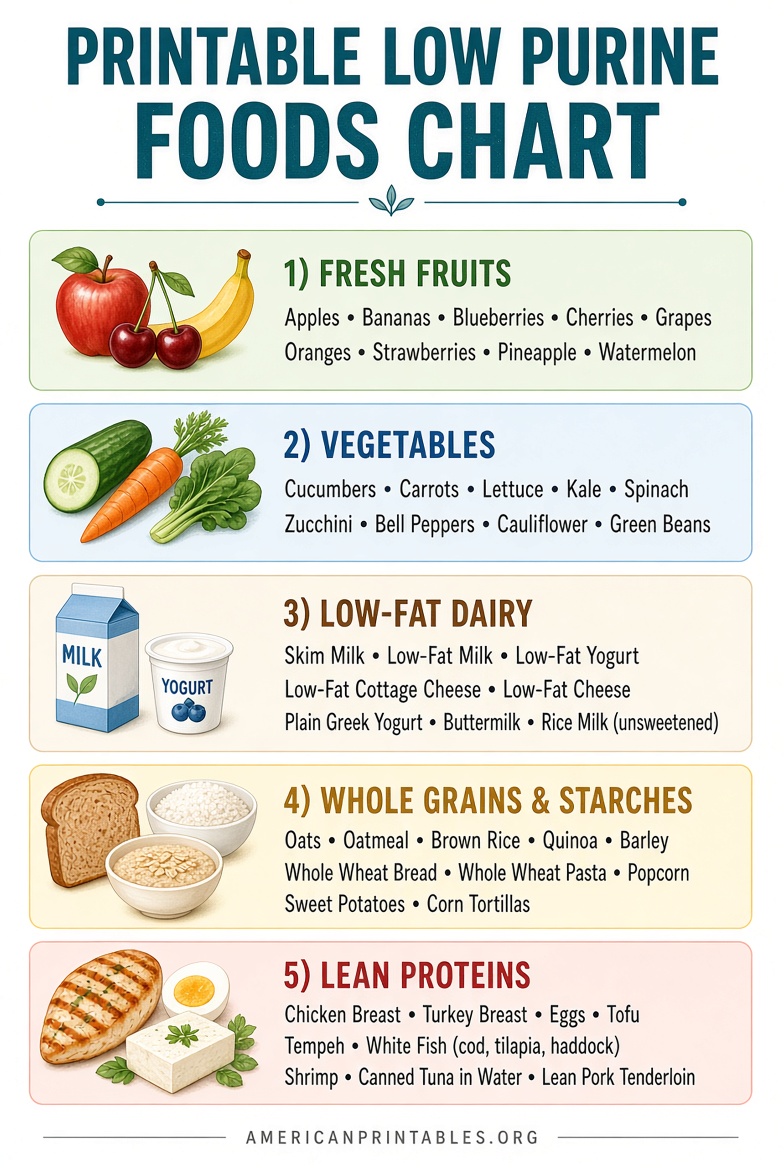
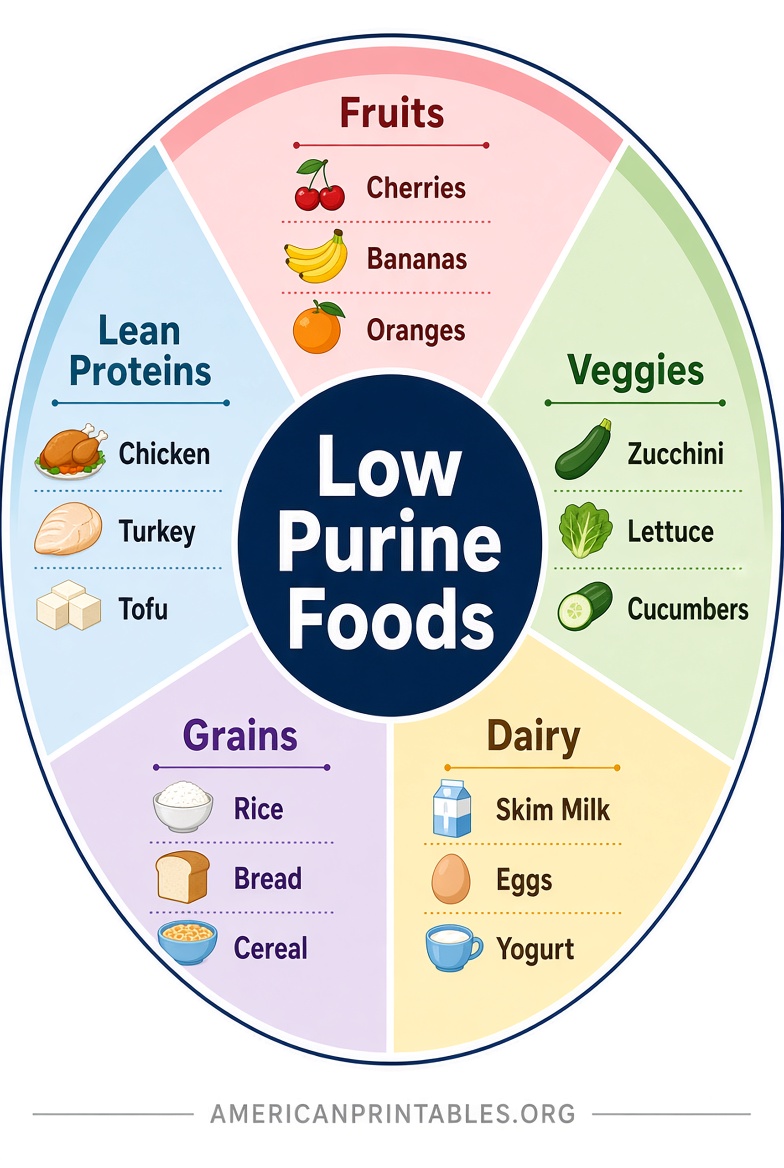
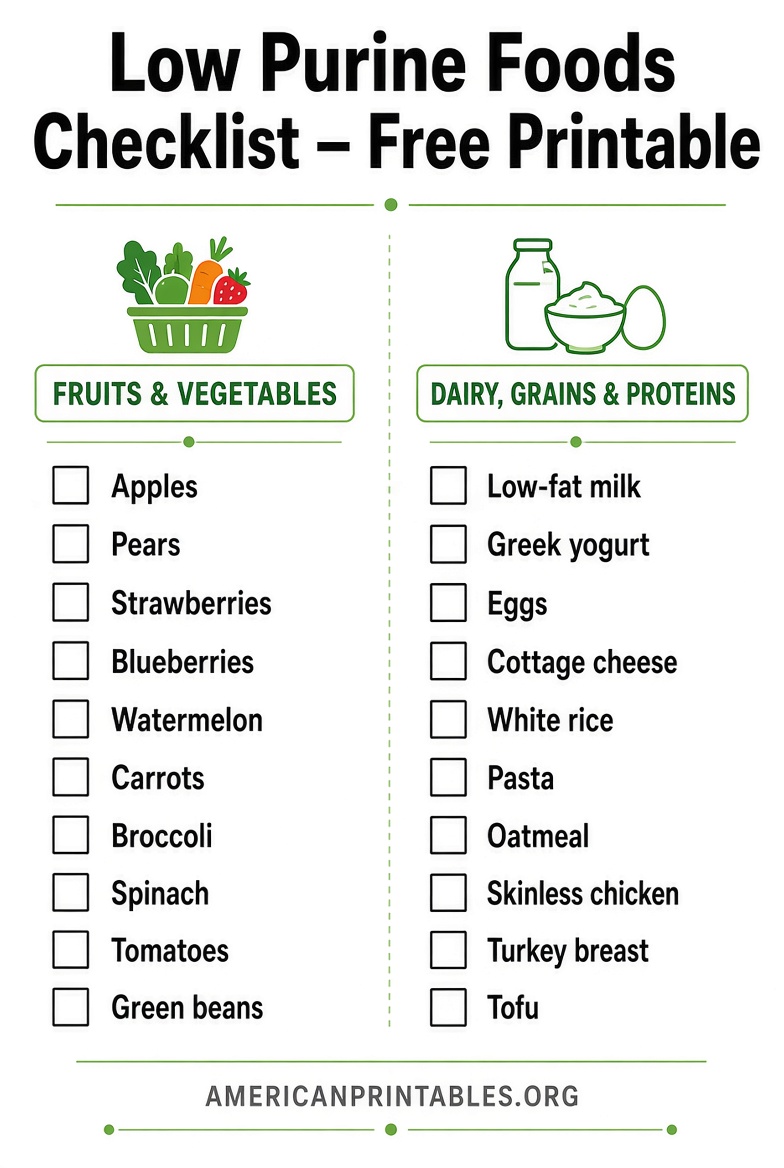
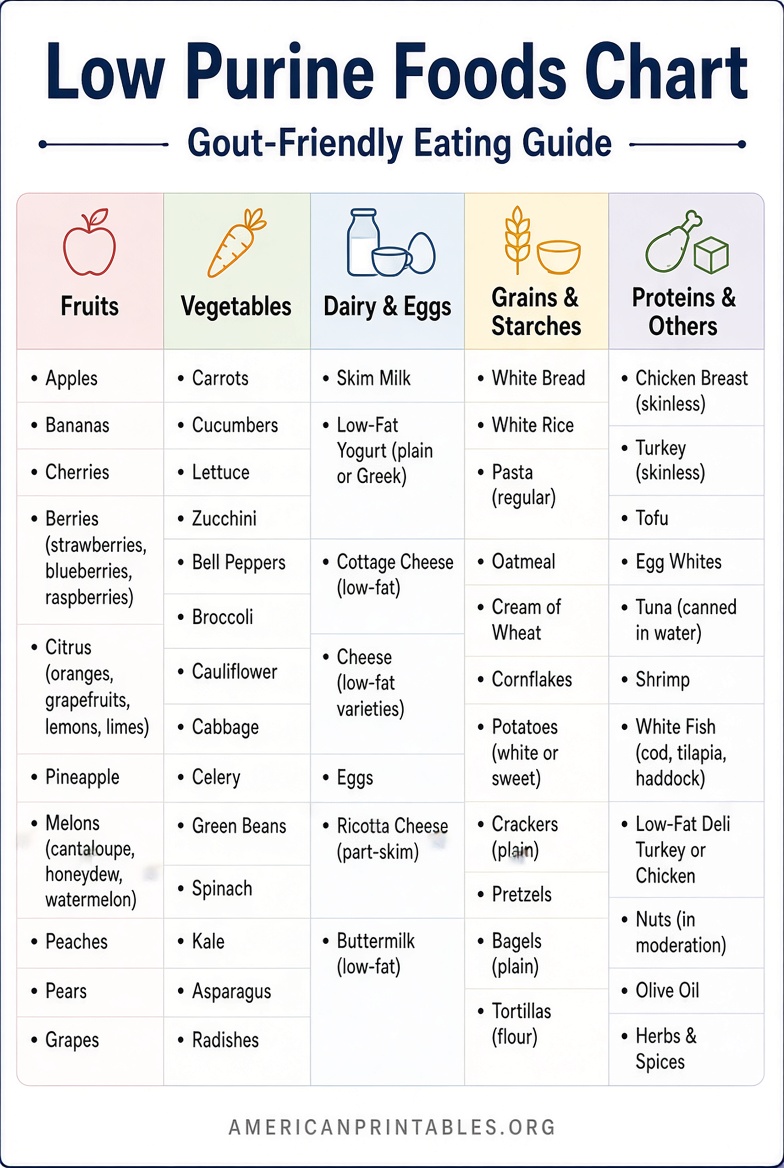
Dairy and eggs
Low-fat or fat-free milk, yogurt, cottage cheese, and eggs are excellent choices. Low-fat dairy may even support uric acid excretion.
Fruits
Most fruits are low in purines. Apples, berries, cherries, citrus, melons, and bananas work well. Cherries have additional research interest for potential gout benefits.
Vegetables
Nearly all vegetables fit. Carrots, cucumbers, tomatoes, lettuce, peppers, zucchini, potatoes, and green beans are solid everyday options. Even higher-purine vegetables like spinach or asparagus do not appear to raise gout risk the same way animal sources do.
Grains and starches
White or brown rice, pasta, bread, oatmeal (in moderation), and potatoes provide energy with low purine loads.
Other
Nuts, seeds, peanut butter, olive oil, and plenty of water round out a practical plan. Aim for adequate hydration to help the kidneys clear uric acid.
Printable Low Purine Foods Chart for Gout (Free)
Foods to Limit or Avoid
High-purine items to restrict
Organ meats (liver, kidney, sweetbreads), anchovies, sardines, herring, mussels, scallops, and certain other seafood rank highest. Limit red meat portions and avoid meat-based gravies or broths. Beer and other alcohol, plus sugary drinks with high-fructose corn syrup, also raise risk.
Moderate options
Lean poultry, some fish, and limited servings of shellfish can fit occasionally when overall diet stays balanced. Portion control matters more than total elimination for many people.
Where to Get a Free Printable Low Purine Foods Chart?
Trusted U.S. health systems and organizations provide accurate, no-cost resources you can download and print.
One clear, practical PDF chart comes from Queen’s Medical Center. It lists recommended low- and moderate-purine foods by group along with limits and high-purine items to avoid:
Download the Queen’s low-purine nutrition therapy PDF.
For broader guidance on what to eat and limit, review Mayo Clinic’s gout diet overview:
Mayo Clinic gout diet: What’s allowed, what’s not.
The Arthritis Foundation offers practical dos and don’ts focused on everyday choices:
Arthritis Foundation gout diet dos and don’ts.
Cleveland Clinic explains the low-purine approach and key foods:
Cleveland Clinic gout (low purine) diet.
These sources prioritize evidence-based information for American audiences and do not require payment or email signup for the core content.
Practical Tips for Using Your Chart
Print the chart and post it where you shop or cook. Build meals around low-purine staples: oatmeal with berries and low-fat milk for breakfast, a big salad with eggs or low-fat cheese for lunch, and grilled chicken or fish with rice and vegetables for dinner. Stay hydrated and maintain a healthy weight, as excess body weight raises uric acid.
Combine the chart with medical advice. Medication often works alongside diet for best results.
Brief FAQ
Is every vegetable safe on a low-purine diet?
Yes for most people. Plant purines do not appear to trigger gout the way animal sources can.
Can I still eat meat?
Small portions of lean poultry or limited red meat are often acceptable outside of flares. High-purine organ meats and certain seafood should stay off the regular menu.
Where does the data come from?
U.S. resources draw on clinical guidelines, hospital nutrition protocols, and databases such as USDA food composition work.
A printable low purine foods chart removes guesswork and supports consistent habits. Download one of the free authoritative PDFs listed above, pair it with professional medical guidance, and use it to build meals that help keep uric acid in check.